McDonald’s Crew Reports No Hot Water, Broken Women’s Sink While Open
A McDonald's crew member reported no hot water and a broken women's sink while the restaurant stayed open, raising food-safety and health-code concerns for frontline staff.
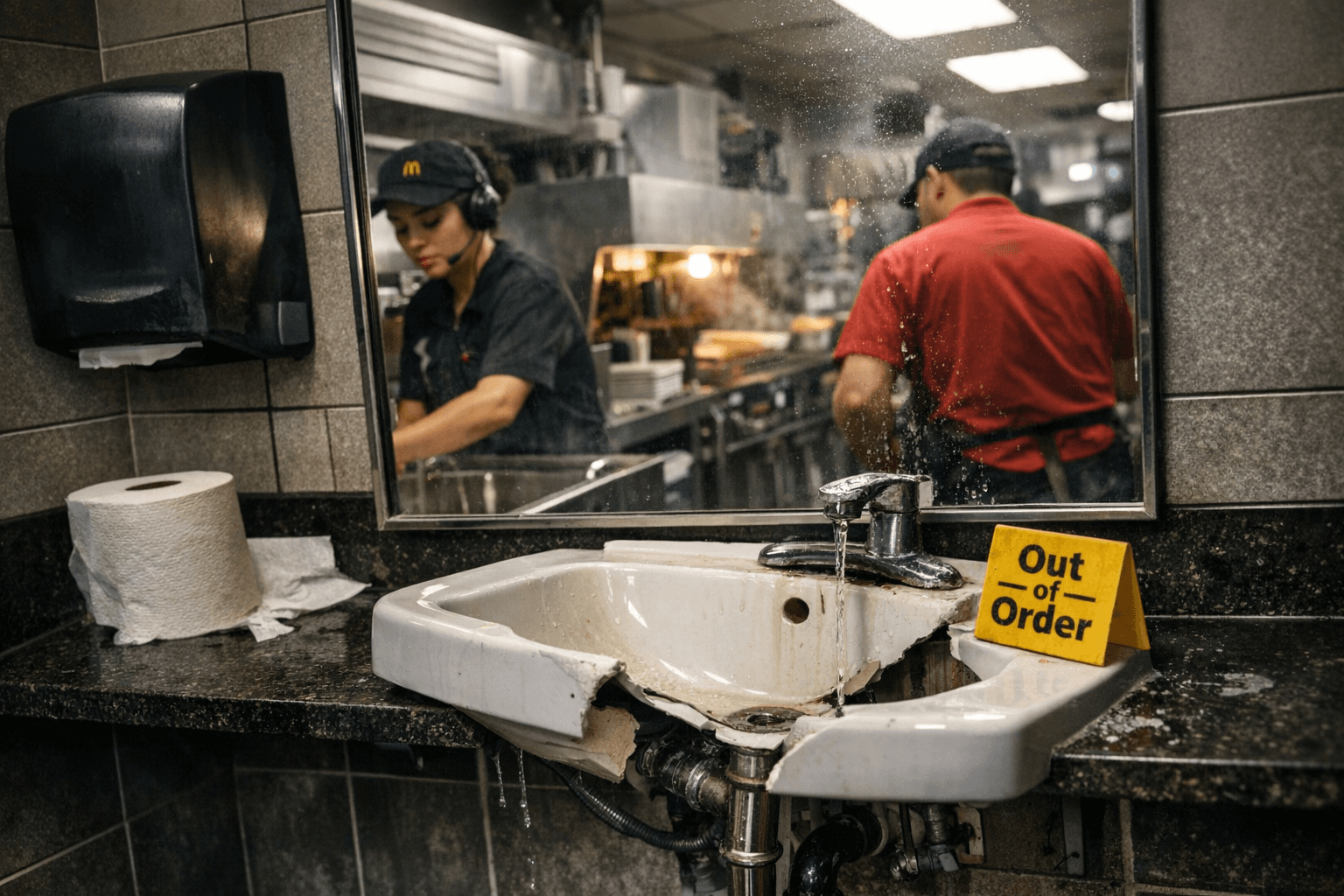
A crew member at a U.S. McDonald’s reported that the restaurant was operating without hot water and with a broken women’s restroom sink on January 17, creating immediate sanitation and compliance questions for employees and managers. The post described efforts to keep the restaurant open using temporary measures, including alternate water sources, and asked whether the conditions amounted to a health-code violation.
Frontline workers rely on hot water for basic handwashing, warewashing and cleaning tasks. When those systems fail, crew members face a hard choice: halt service until repairs are made or continue serving customers while implementing workarounds. In this case the crew member said staff used alternate water sources to maintain operations, a stopgap that other employees in replies warned can be insufficient and unsafe.
Responses from other crew members urged the original poster to contact the local health department and emphasized that lack of hot water can be a shutdown-level violation. Those replies reflect a common store-floor understanding: local public health authorities can mandate closure when critical sanitation requirements are not met, and employees can escalate conditions that endanger food safety or guest hygiene.
Beyond immediate sanitary risks, equipment failures affect staffing and morale. Crew members and shift managers must divert time from service and cooking to improvise sanitation procedures, track mitigation steps and communicate with corporate support or maintenance vendors. That shifts labor away from customer service and can increase stress on already tight schedules and limited staffing. For restaurants operating with small crews, the absence of a functioning sink in the women's restroom also raises accessibility and dignity concerns for affected employees.
The incident highlights the practical interface between maintenance, store management and regulatory compliance. Repair timelines, access to replacement parts, and whether management chooses to pause service are operational decisions that have direct implications for crew safety and liability exposure. Employees who feel pressured to keep a location open under unsafe conditions face both physical risk and potential conflicts with labor rules and health codes.
For crew members and managers, the situation underlines the importance of documenting failures, notifying the manager on duty and, when necessary, contacting local health authorities. For operators and corporate teams, it underscores the need for rapid maintenance responses, clear escalation policies and communication with staff about acceptable mitigation steps.
This case serves as a reminder that routine equipment - hot water heaters and restroom fixtures - is central to food-safety compliance and crew wellbeing. How management and local regulators respond will determine whether service continues safely or whether closure and repairs become the necessary next step.
This article was produced by Prism’s automated news system from verified source data, official records, and press releases, then run through automated quality and moderation checks before publishing. The system is built and supervised by the people who set the standards it runs under. Read our full AI policy.
Did this article answer your question?