McDonald's expands AI drive-thru trials to ease labor pressures
McDonald's is expanding AI drive-thru trials to boost throughput and reduce staff strain. The shift matters because frontline roles are moving toward monitoring systems and handling exceptions.

Major quick-service brands, including McDonald's, are accelerating the rollout of artificial intelligence in drive-thru operations, testing tools designed to speed service and blunt ongoing labor shortages. The technologies being explored range from voice-AI order taking to automated weight and accuracy checks, geofenced "ready on arrival" timing, and redesigned multi-lane drive-thru layouts aimed at increasing capacity.
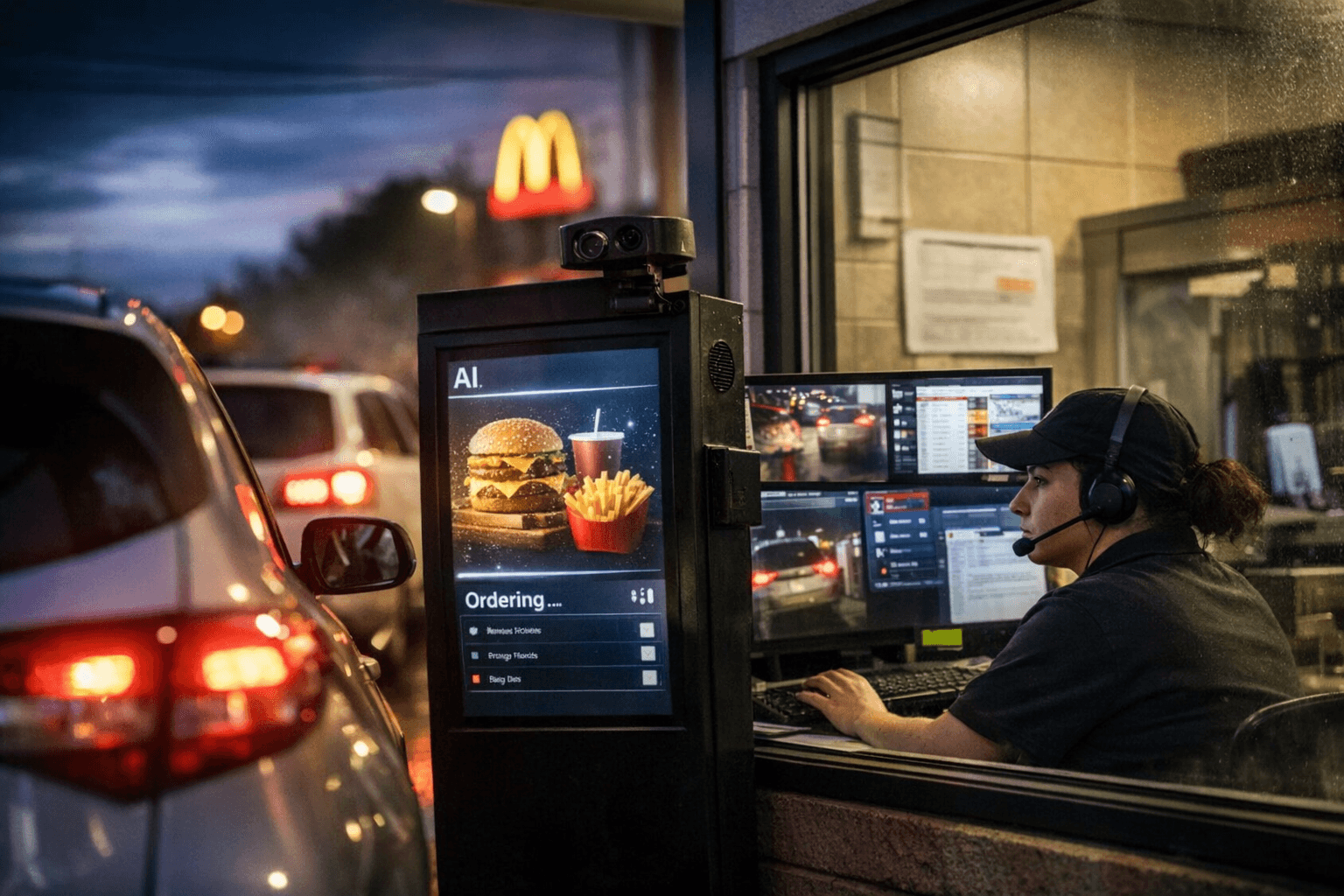
Operators say the promise is straightforward: faster throughput, fewer missed prep windows, and less pressure on crews during peak periods. Voice AI can take orders without a human at the speaker, geofencing can trigger kitchen prep as a car approaches, and AI-enabled scales can flag missing or incorrect items before they leave the window. Taken together, companies expect smoother order flow and shorter queues.
But the shift raises immediate operational questions for workers and managers. Early McDonald's pilots of automated order-taking encountered accuracy and practical problems, prompting more cautious redesigns and the addition of human-in-the-loop controls. Where AI is in use, crew responsibilities are changing: employees increasingly monitor AI confidence scores, intervene on low-confidence or complex orders, and handle exceptions that fall outside the system's scope. That transition requires different skills than traditional order-taking or front-line cooking.
Industry learning so far emphasizes training and clear escalation procedures. Without well-practiced protocols, errors can cascade: a misread voice order can trigger incorrect kitchen prep, which an AI scale might miss if not properly calibrated, and that can lead to customer complaints at handoff. To prevent that, restaurants need standardized checklists, fast routes for staff to override or re-enter orders, and routines to keep crews safe while interacting with new hardware and software.
Customer experience is another unsettled variable. Some diners appreciate faster service, while others report frustration when AI mishears accents, specialty requests, or combinations that fall outside the model's training. Multi-lane layouts and "ready on arrival" timing change the rhythm of interactions at the window, with implications for how crew members manage handoffs and cash or mobile payments.
For crew members, the near-term effect is often a shift toward oversight and exception handling rather than outright replacement. That can mean fewer traditional order-taker shifts but increased demand for employees who can troubleshoot systems, retrain models via feedback channels, and manage edge-case customer interactions. For managers, it means investing in training, clearer escalation ladders, and more rigorous quality checks as part of routine operations.
As deployments expand, how quickly restaurants standardize training and human-in-the-loop safeguards will determine whether AI reduces frontline strain or simply moves friction from the speaker to the window. For workers, the coming months will show whether new roles offer stability through upskilling or add stress through added technical responsibilities.
This article was produced by Prism’s automated news system from verified source data, official records, and press releases, then run through automated quality and moderation checks before publishing. The system is built and supervised by the people who set the standards it runs under. Read our full AI policy.
Did this article answer your question?