McDonald’s expansion, menu overhaul drive hiring, training and pricing shifts
McDonald’s announced expansion, menu and pricing changes that will increase hiring, require upskilling and alter local scheduling and pricing control for franchisees.
McDonald’s announced a systemwide package of expansion, menu updates and standardized pricing guidance that will reshape labor needs at franchised restaurants. The changes, outlined by the company on Jan. 21, 2026, include a push for new unit openings, menu additions that emphasize larger value items and beverage innovations, and more prescriptive pricing direction for franchisees.
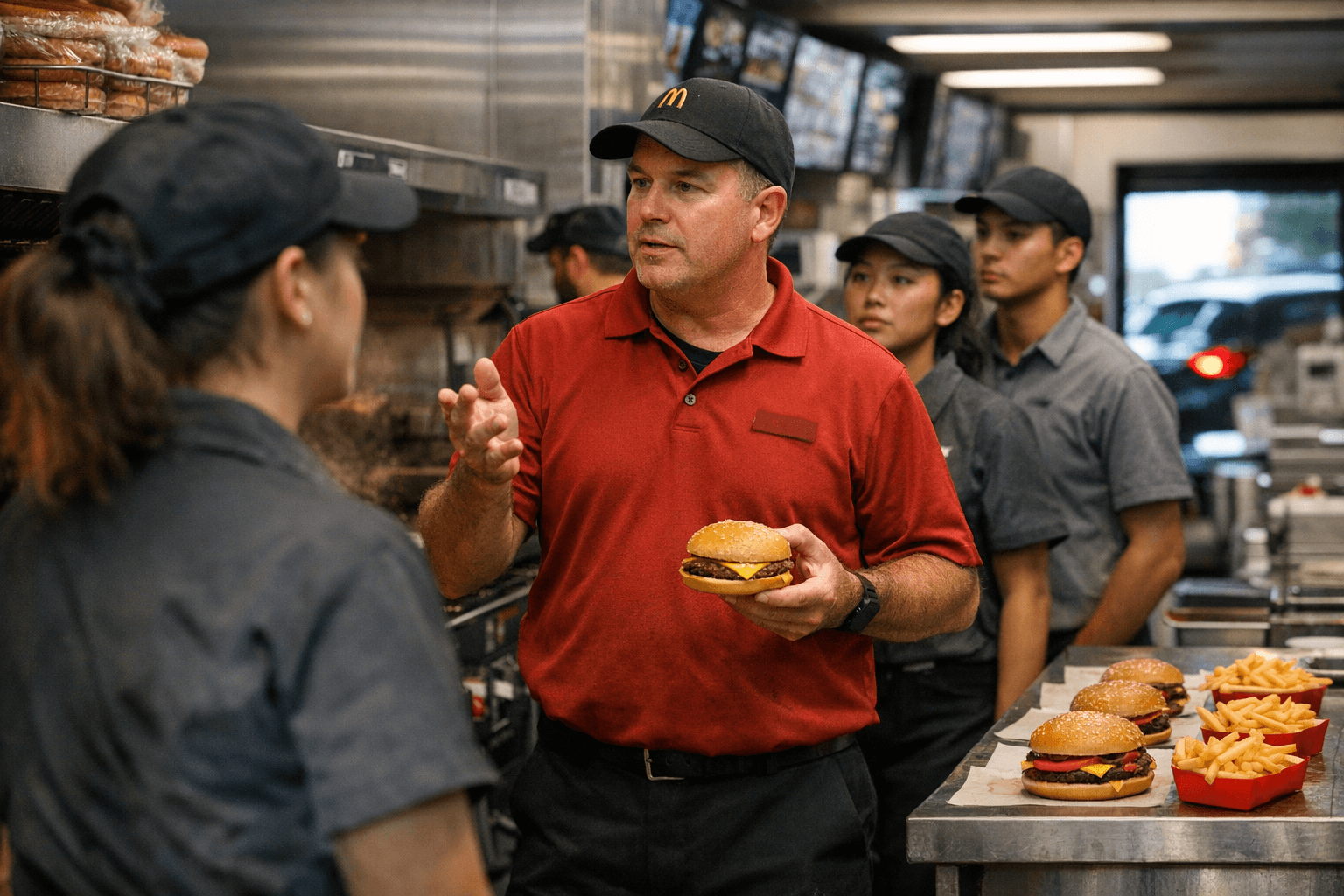
The expansion plan is expected to drive hiring demand for front-line crew, shift supervisors and store managers as new restaurants open. Recruiting teams will face the immediate task of staffing construction-to-open rosters and building training pipelines. Training teams will need to deliver orientation and certification at a faster cadence while franchise support teams coordinate onboarding across regions.
Menu changes will have operational consequences inside kitchens and at the front counter. Larger-value items and new beverage offerings add SKUs and complexity to order preparation, which can increase ticket times and stress kitchen flow if not paired with process changes. Operations leaders and store managers will need to adjust station staffing, sequence of prep tasks and POS programming to maintain drive-thru throughput and indoor-service speed. Upskilling will focus on beverage equipment operation, portion control for larger items and cross-training crew to handle multiple stations during peak windows.
Standardized pricing guidance from corporate tightens the range of acceptable local pricing decisions by franchisees. That shift affects labor planning because franchisees often balance wage budgets and staffing levels against price-driven sales and margin targets. Reduced local pricing flexibility could force some operators to rework schedules, reduce discretionary hours, or seek other cost controls to protect profitability while meeting corporate price architecture.
The combined rollout highlights shifting governance between McDonald’s corporate strategy and franchise operations. Franchisees will confront a juggling act: staffing and training for expanded store counts and menu complexity while adapting to more directive pricing policies. For store managers, that means closer coordination with regional franchise support on hiring timelines, training modules and labor models tied to new menu and pricing assumptions.
For workers, the changes translate into more hiring opportunities but also steeper early training demands and potential adjustments to schedules and roles as restaurants adapt. For company talent planners and franchise HR teams, the next steps are clear: ramp recruiting, update training curricula to cover new beverage and larger-item operations, and align labor models to updated ticket-time expectations. How smoothly McDonald’s executes these elements will determine whether the expansion and menu overhaul deliver sales growth without eroding service speed or crew conditions.
This article was produced by Prism’s automated news system from verified source data, official records, and press releases, then run through automated quality and moderation checks before publishing. The system is built and supervised by the people who set the standards it runs under. Read our full AI policy.
Did this article answer your question?