McDonald's franchise guide shows local ownership with strict brand rules
McDonald’s pitches franchising as entrepreneurship, but the fine print shows a tightly controlled system where local owners still answer to brand rules, training, and state-level regulation.
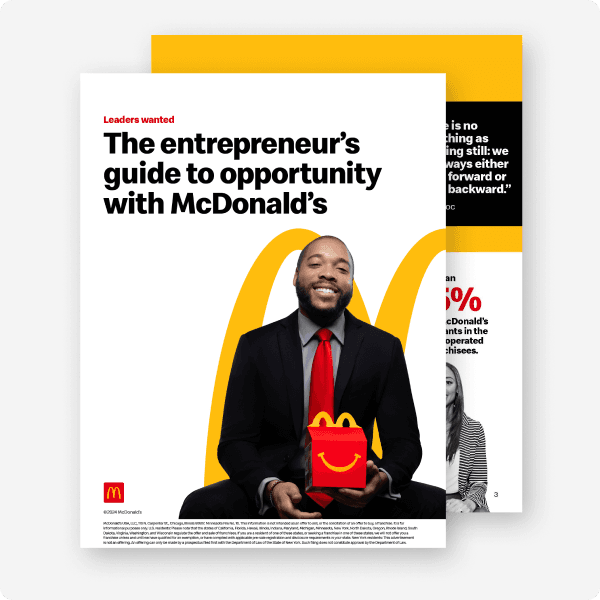
McDonald’s sells franchise ownership as a path to entrepreneurship, but the company’s own guide makes the tradeoff clear: you can run a local business under one of the world’s biggest brands, yet the system still sets the terms. The message is built around a familiar promise in fast food, that franchisees are “in business for themselves but not by themselves,” and that phrase captures the real operating model better than any glossy brochure.
Ownership comes with structure, not a blank slate
The franchise pitch leans on local investment and the idea that an owner can make a mark in their community. But McDonald’s pairs that pitch with disclosures, rules, and state-specific requirements, which tells you this is not a casual small-business purchase. The guide frames franchising as a serious legal and financial commitment, not just a way to hang your name on a storefront and improvise from there.
That matters for current managers and crew because the franchise system shapes the restaurant from the top down. McDonald’s is not just looking for people who can pay to operate a store. It is looking for operators who can run the brand the way the brand wants it run, with consistency treated as part of the business model rather than a preference.
Training is part of the control system
The guide emphasizes an intensive, hands-on training process, along with guidance and support from the McDonald’s system. That support is real, and for many prospective operators it is part of the appeal. A new franchisee is not left to figure out food safety, service routines, or store operations alone.
But training is also a way of standardizing how stores work. When a company puts that much effort into teaching the McDonald’s way, it is not simply sharing best practices. It is building a common operating language so restaurants across markets look and feel the same, from the menu board to the crew flow behind the counter.

For store leaders, that means the franchise path comes with a built-in playbook. Hiring, station coverage, food prep, service cadence, and daily routines all sit inside a framework that is meant to be repeatable. The training is there to make ownership possible, but it also narrows how much a local operator can freestyle once the doors open.
What franchisees can decide, and what they cannot
The biggest misconception about franchising is that ownership equals freedom. McDonald’s guide pushes back on that by making clear that the brand cares about operations, branding, and execution across the system. In practice, that means a franchisee has room to manage the business, but not to rewrite the business.
That limitation reaches into the parts of the restaurant that matter most to workers. Staffing decisions, scheduling patterns, labor deployment, and the pace of service are all shaped by a system that prioritizes consistency. A franchisee may hire the team and manage the schedule, but those choices sit inside brand expectations about how the restaurant should function.
The same is true for marketing, menu rollouts, and quality control. McDonald’s uses systemwide standards so a promotion, product launch, or service change lands the same way in different stores. That protects the brand, but it also means a local operator cannot treat the restaurant like an independent diner that can change direction overnight. The menu and the message are part of the franchise agreement in spirit, even when the day-to-day work happens on a local shift schedule.
Why this matters to people working the shifts
For crew members and managers, the franchise model explains why a store can feel locally owned and corporate at the same time. The owner may live in the community and make local hiring calls, but the restaurant still runs on centralized standards that affect how the job is done. That is why McDonald’s stores often feel so similar even when the names on the business licenses differ.
It also helps explain why labor fights around the chain have always been bigger than one restaurant. Campaigns like Fight for $15, along with minimum wage legislation, landed hard in franchise stores because labor is one of the clearest places where local ownership meets corporate rules. As AI and automation keep creeping into scheduling, ordering, and back-of-house systems, that tension only gets sharper: the technology may change, but the question of who actually controls the work stays the same.
The real McDonald’s franchise offer
McDonald’s is offering something attractive: a chance to build a business with a dominant brand, a deep support network, and a well-worn training structure. For many operators, that kind of backing lowers some of the risk that comes with opening a restaurant from scratch. The brand’s scale is the selling point.
But the guide also shows the cost of that scale. McDonald’s wants franchisees to act like entrepreneurs while behaving like system operators, and those are not the same thing. If you own a McDonald’s, you are not signing up for total autonomy. You are buying into a model where the brand’s standards shape the store as much as the owner does, and that is exactly what workers feel on the floor every day.
Know something we missed? Have a correction or additional information?
Submit a Tip