McDonald’s new hires are told to prioritize accuracy before speed
The first month at McDonald’s is about building trust, not chasing pure speed. Learn the menu, the rush points, and the manager’s rhythm fast enough to look dependable by week two.
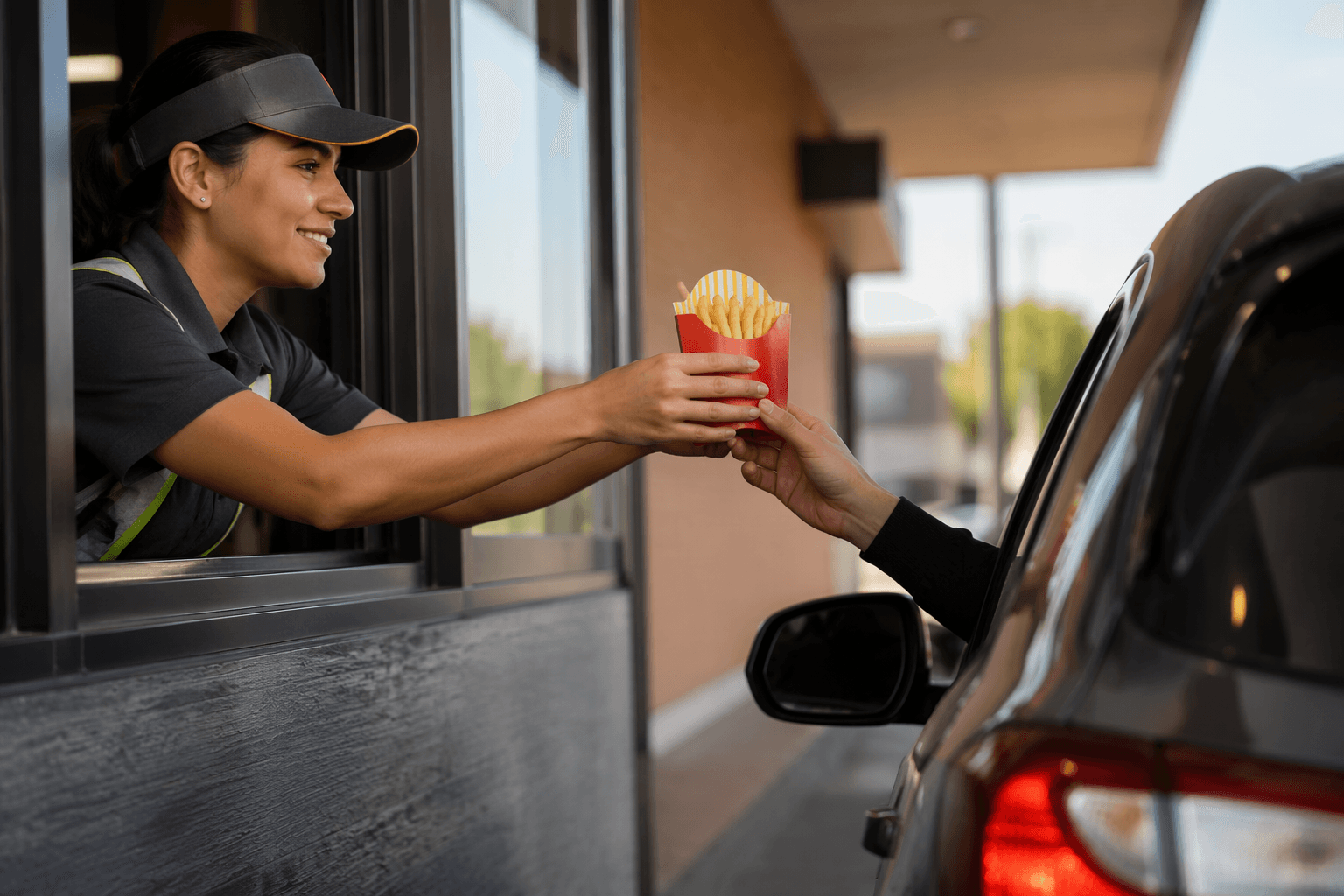
Accuracy comes first when every second is measured
At McDonald’s, the fastest new hire is not always the most useful one. In the first 30 days, the real job is to become predictable: show up on time, keep your station clean, learn the menu and common modifications, and know where the line can break down during a rush. In a system that spans more than 38,000 locations in over 100 countries, that kind of consistency matters because the work is never just one station, one lane, or one kind of customer flow.
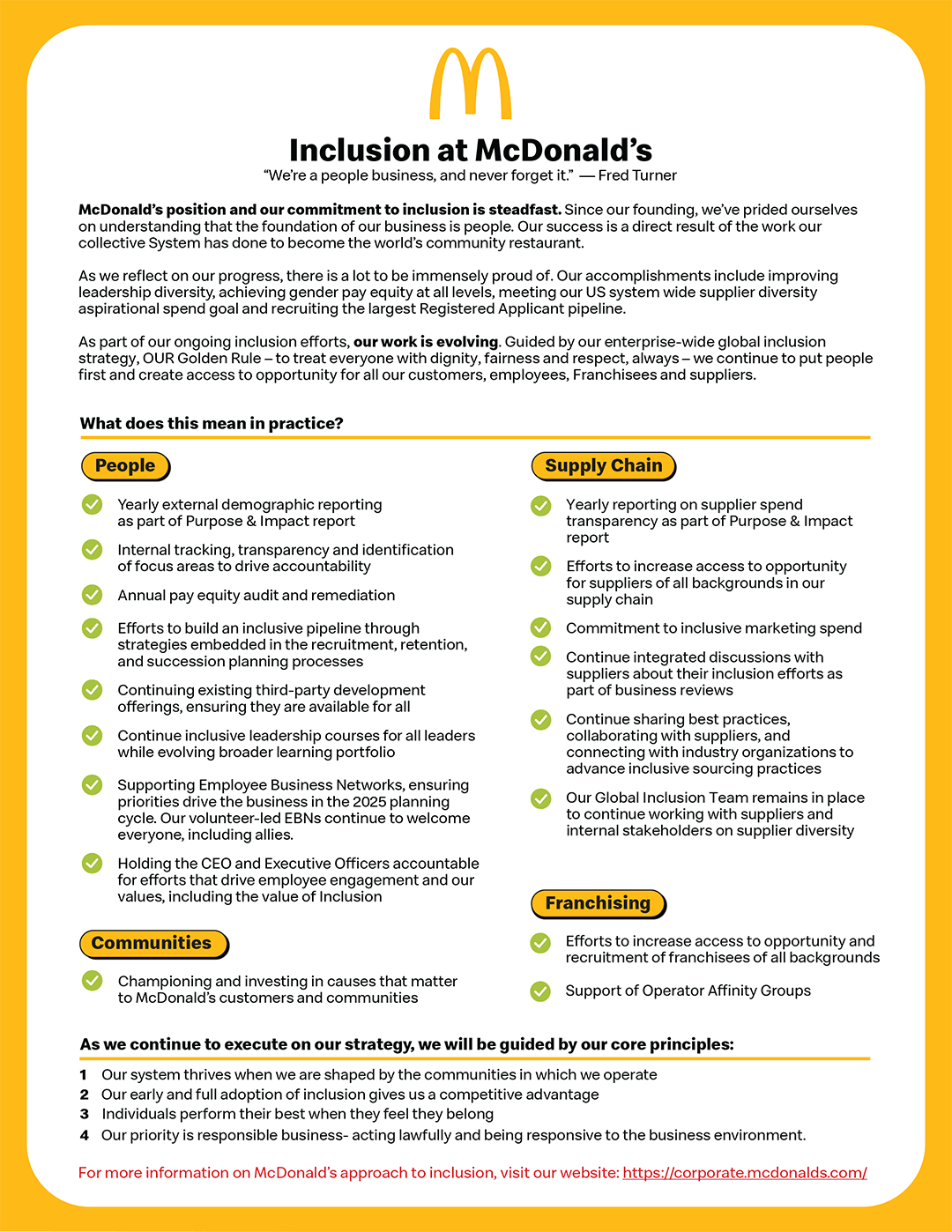
The company’s footprint also explains why the first month can feel different from store to store. McDonald’s says roughly 95% of restaurants worldwide are owned and operated by independent local business owners, and in the United States, almost 95% are owned and operated by conventional licensees. That franchise-heavy structure means you are learning both the brand’s core standards and the local manager’s version of how the store runs.
What the first 30 days are really for
The first month is less about mastering every task and more about building a routine that holds under pressure. A new hire who tries to be fast before being accurate usually creates more work for everyone else: wrong builds, missed modifications, messy handoffs, and avoidable re-makes. The safer path is to get the order right first, because accuracy builds trust, and trust buys you time to get faster.
That starts with the basics that seem small until lunch rush hits. Learn the menu cold enough to recognize the most common modifications without hesitation. Learn where bottlenecks happen, whether that is fry production, drink assembly, drive-thru handoff, mobile pickup, or a crowded counter during peak hours. And learn who to ask when something is unclear, because guessing at McDonald’s usually slows the whole line down.
How to look dependable by week two
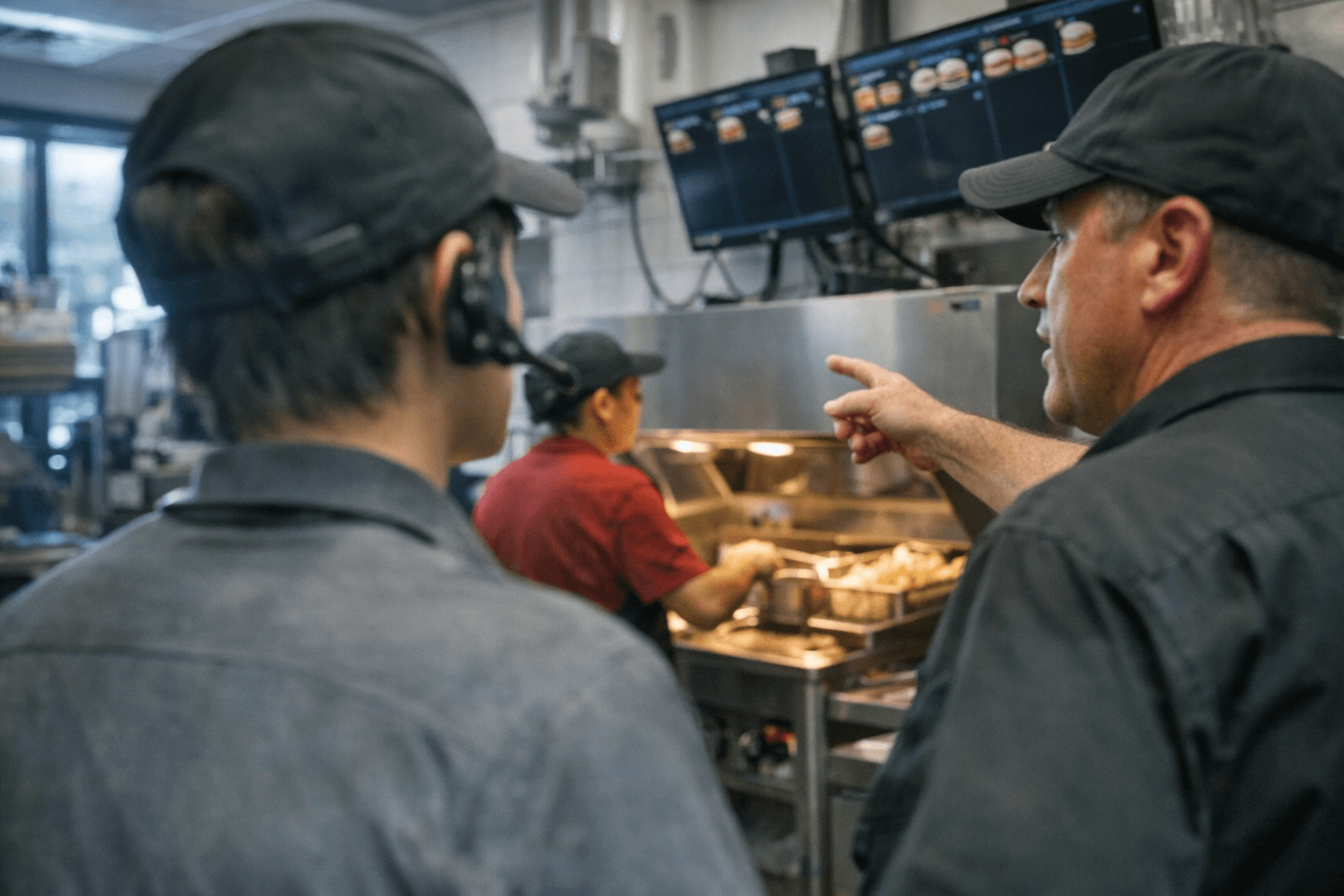
By the end of the second week, managers are not expecting perfection. They are looking for signs that you understand the rhythm of the store and that you are not creating avoidable friction. Show up early enough to be ready, not just present. Keep your area organized so you do not disappear into cleanup when the line spikes. And watch how experienced crew members move between tasks, because speed in quick-service work is often about anticipation, not running.
A practical first-month routine usually comes down to a few habits:
- Learn the most common menu builds and modifications until you can respond without freezing.
- Watch the handoff between stations so you know when a delay is yours and when it is upstream or downstream.
- Use slower moments for restocking, cleaning, and asking questions, rather than waiting until the rush exposes a problem.
- Keep communication short and clear, especially when the shift is packed and everyone is moving fast.
Those habits matter even more in a restaurant that is juggling dine-in, drive-thru, digital ordering, and delivery at the same time. The work is not just volume. It is coordination.
Why franchise variation changes the experience
McDonald’s training is not one-size-fits-all, and the company says new-hire orientation depends on the role. That matters because a crew member in one store may be learning a slightly different workflow than someone in another, even if the menu board looks the same. Local managers often add their own routines on top of the chain’s standards, especially in franchised restaurants where the owner-operator wants the store to run a certain way.
If you are in a franchised location, the smartest move is to mirror what the strongest crew members do well and notice what the manager corrects repeatedly. If you are in a company-operated restaurant, the principle is the same: every location has a rhythm, and your first task is to read it quickly. The sooner you understand how your store handles rushes, breaks, stocking, and customer handoff, the less often you will be the person holding up the line.
Training is bigger than the first shift
McDonald’s says its restaurant training system is designed to prepare people for success, and that learning and development are important parts of the employee experience. That is not just a slogan for crew members. The company says its franchise training program can include 12 to 18 months of restaurant training, self-directed part-time training for 20 hours per week, plus seminars, conferences, and one-on-one sessions.
That long runway tells you something about how the chain thinks about management. McDonald’s also says many restaurant managers started as crew members, which is why early reliability matters so much. A new hire who learns fast, communicates clearly, and stays composed during rushes is already building the kind of reputation that can lead to more responsibility later.
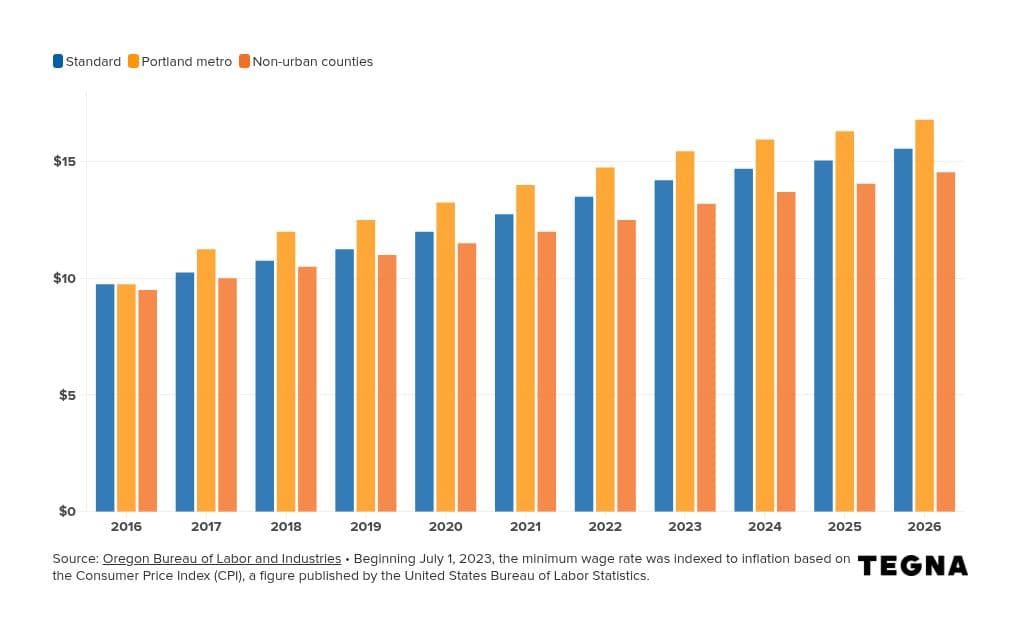
That ladder matters in a labor market shaped by years of Fight for $15 pressure, minimum wage fights, and constant debate over how much of fast food should be automated. As kiosks, apps, and kitchen tech spread, the jobs that remain human-facing are under more scrutiny, not less. The workers who stand out are the ones who can keep service accurate while the system around them gets more complicated.
Why the company keeps opening more restaurants
The scale of hiring is one reason training consistency gets so much attention. McDonald’s said it expected 2025 capital expenditures of $3.0 billion to $3.2 billion and planned to open about 2,200 restaurants globally. It also said about 600 of those openings would be in the U.S. and International Operated Markets segments, and in a 2025 U.S. development brochure it planned for 195 new U.S. restaurants.
That kind of expansion creates a constant need for entry-level workers who can ramp up quickly without making the store slower. New openings, remodeled units, and steady turnover all put pressure on the same basic skill set: learn the system, fit into the station handoffs, and become someone the shift can count on. In a chain this large, the first month is not just onboarding. It is the test of whether you can turn a busy, highly scripted job into a reliable routine.
This article was produced by Prism’s automated news system from verified source data, official records, and press releases, then run through automated quality and moderation checks before publishing. The system is built and supervised by the people who set the standards it runs under. Read our full AI policy.
Did this article answer your question?