McDonald’s says food safety starts with daily habits across every shift
A missed glove change or expired label can snowball fast at McDonald’s. The company says the fix is the same on every shift: wash, check, separate, label, and stop the line when something looks off.
A mistake at the station spreads fast
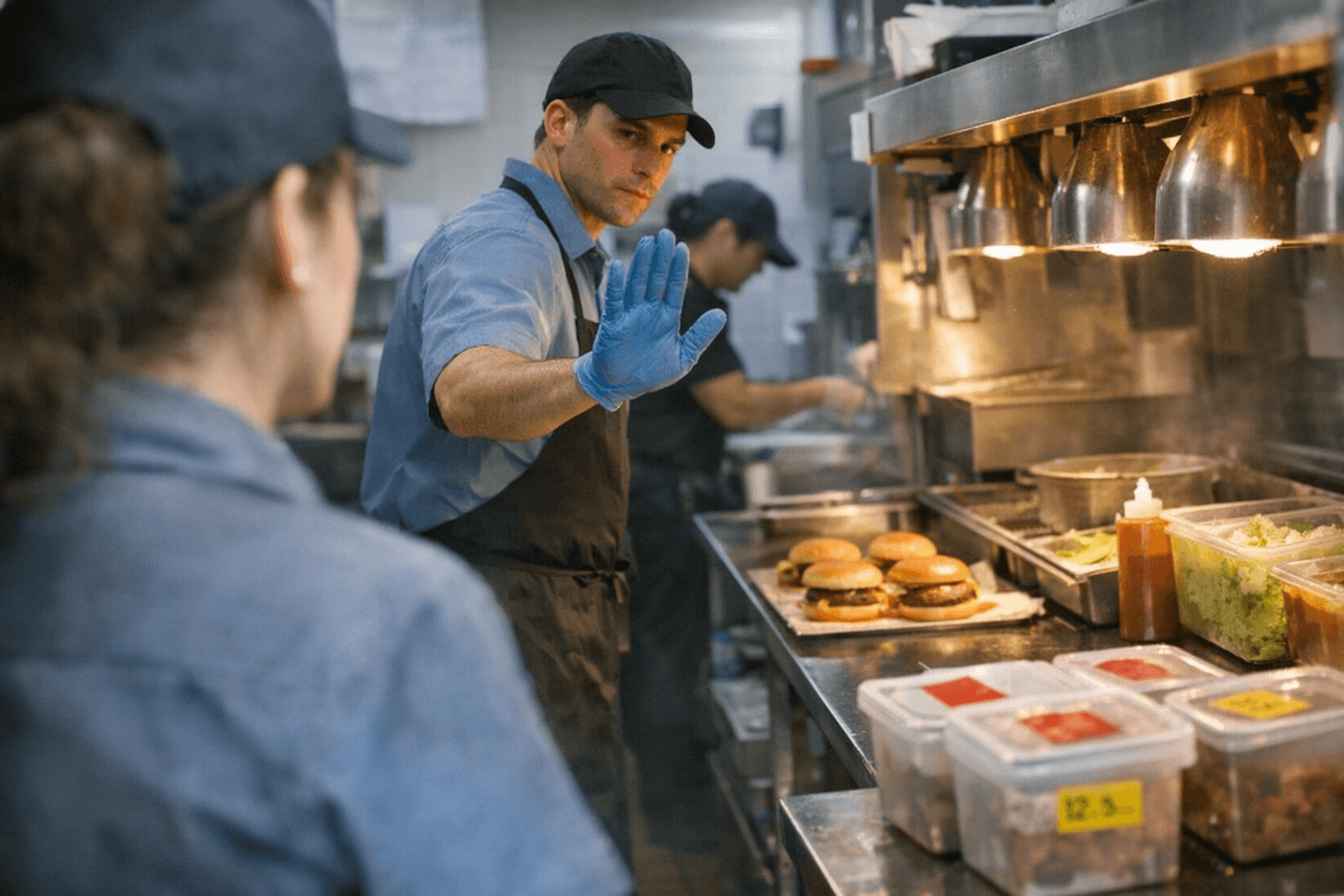
At McDonald’s, food safety is not supposed to live in a binder. It lives in the seconds between one order and the next, when a crew member washes up, checks a temp, relabels a tray, or stops to clean before the mess becomes a complaint. With more than 43,000 restaurants in over 100 countries serving millions of customers every day, a small lapse can turn into waste, a remake, or a manager intervention before anyone has time to call it a policy issue.
That is why the company’s own message is so practical: speed and safety are not opposing goals. A clean, organized station is usually the faster station because there is less searching, less guessing, and less fixing what could have been caught early.
Safety starts before the food reaches the counter
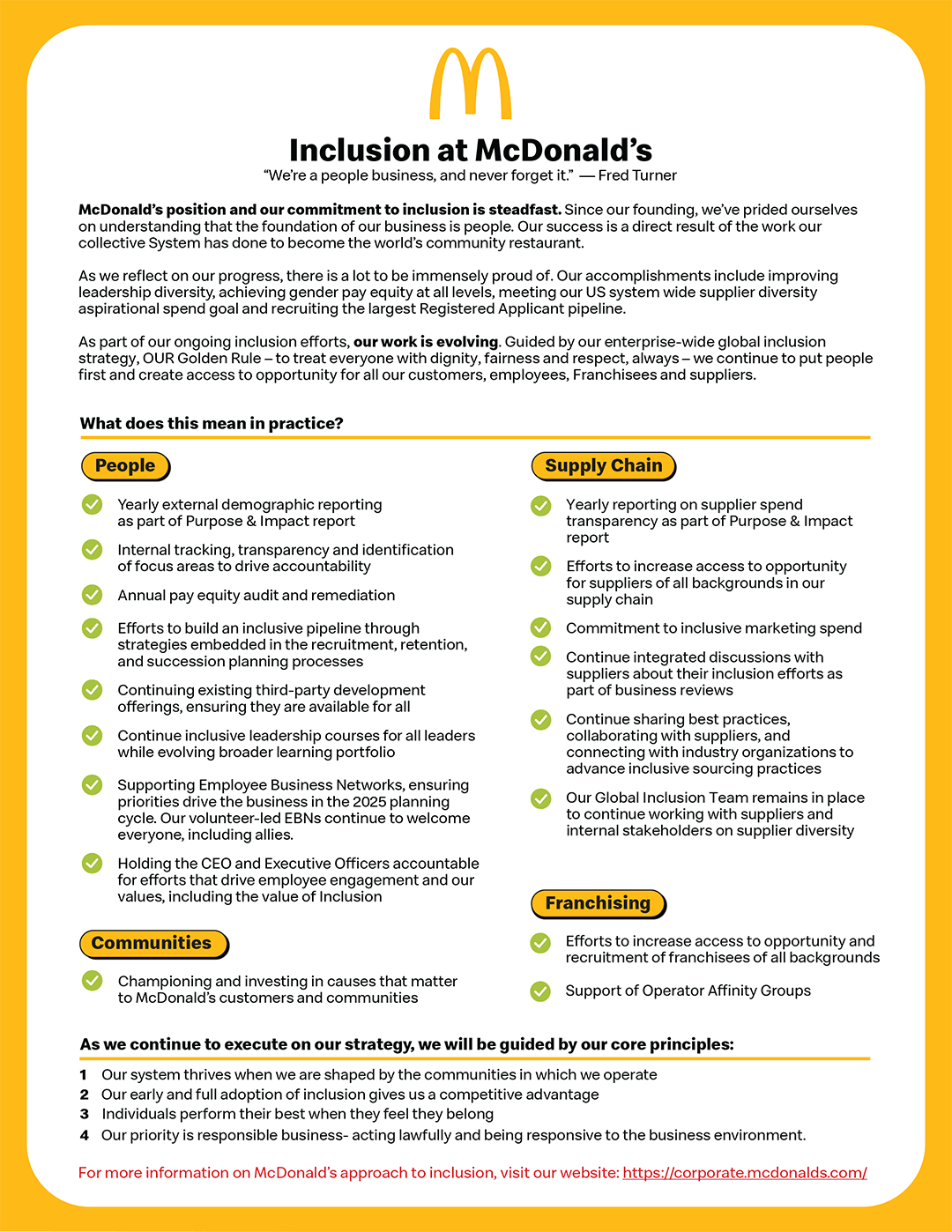
McDonald’s says its food safety standards run from sourcing through menu development, packaging, distribution, and restaurant operations. It says the system is built around customer obsession, a science-based “one McDonald’s way” approach, and leadership in identifying and managing risk.
The company also says it works with suppliers, franchisees, and outside experts across the chain, which matters in a business built on a split between corporate standards and franchise reality. In a system this large, restaurant crews do not just inherit rules from headquarters. They have to make those rules work during lunch rushes, drive-thru surges, and the kind of shift where one missed handoff can throw off the whole line.
McDonald’s says a Food Safety Advisory Council of internal experts, suppliers, and external academics meets annually. It also says third-party audits verify standards at restaurants, supplier locations, and distribution centers. The message is clear: the company is trying to make food safety look less like a one-time training topic and more like a system that can be checked, measured, and repeated.
The habits that matter most on the floor
For crew members, the best food-safety habits are the boring ones, and that is exactly why they matter. Wash and sanitize consistently. Keep raw and ready-to-eat items separate. Label product correctly. Follow holding times. Never assume someone else already checked the basics.
The easiest way to think about it is as a chain. Start with clean hands, then follow the order of operations, then think about the handoff to the next person. If you are restocking, do it so old product does not mix with new. If you are cleaning, do it before the spill becomes a full reset. If you are unsure about a hold time or a temperature check, ask immediately instead of improvising.
That habit is not just about avoiding a guest complaint. It also protects the crew from rework, stress, and the kind of shift that gets away from the team because nobody wanted to slow down for 30 seconds.
Temperature control is where shortcuts show up first
The U.S. Food and Drug Administration says the food temperature danger zone is usually between 41°F and 135°F. That range is where time and temperature start to work against you, so every hold, cool, reheat, and discard decision matters. For ready-to-eat food, date marking is not busywork. It is one of the basic tools used to control time and temperature and reduce the risk of harmful bacteria such as Listeria monocytogenes.
On a busy McDonald’s shift, that means the label on the container is not just paperwork. It is the difference between product that can stay in rotation and product that has to go. A tray left too long, a label written badly, or a product rotated out of order can become waste fast, and waste in a restaurant is usually the visible cost of a missed basic.
McDonald’s says its restaurants perform daily food-safety temperature checks for each product type, use validated cooking temperatures, and rely on state-of-the-art storage. Those are the controls that keep a line moving without turning speed into a gamble.
Handwashing, gloves, and sickness are not side issues
The Centers for Disease Control and Prevention says more than half of all U.S. foodborne outbreaks are associated with restaurants, banquet facilities, schools, and similar institutions. That is one reason the CDC keeps returning to the same worker behaviors: wash hands when you should, use gloves properly, check cooked food with a thermometer, and do not work when you have vomiting or diarrhea.
That guidance fits the reality of a McDonald’s kitchen, where the pressure is to keep product moving and the temptation is to skip a step because the screen is flashing and the next order is already stacked. But the CDC’s point is blunt: food safety is shaped by what workers do in the moment, not by what the poster on the wall says.
McDonald’s says its restaurants use hourly handwashing, and that consistency is the point. One missed handwash can contaminate a surface. One bad glove habit can spread the problem from raw to ready-to-eat food. One sick worker on the line can create a problem that reaches far beyond the shift.
What managers have to enforce, not just announce
McDonald’s says it is strengthening food-safety culture, proactive risk management, and digital transformation. On the floor, that should translate into managers who treat food safety as part of pre-shift huddles and the middle of the rush, not just as something covered during formal training.
The strongest restaurants make safety visible. They check temperatures without being reminded. They keep stations organized so tools are where they should be. They label product the moment it is set down. They stop and correct mistakes quickly instead of hoping they will disappear. That is the difference between a kitchen that merely says it is safe and a kitchen that can survive a bad hour without turning it into a bad day.
At McDonald’s scale, the company cannot afford for food safety to depend on memory alone. The system only works when the same careful habits repeat in every store, on every shift, under pressure, where the real test is not the policy and not the slogan, but the moment a crew member spots something wrong and fixes it before the order goes out.
This article was produced by Prism’s automated news system from verified source data, official records, and press releases, then run through automated quality and moderation checks before publishing. The system is built and supervised by the people who set the standards it runs under. Read our full AI policy.
Did this article answer your question?