McDonald's Owner Puts People First, Investing in Crew Development and Growth
A local McDonald's owner/operator is backing crew development with tuition support and a people-first philosophy that goes beyond standard franchise practice.
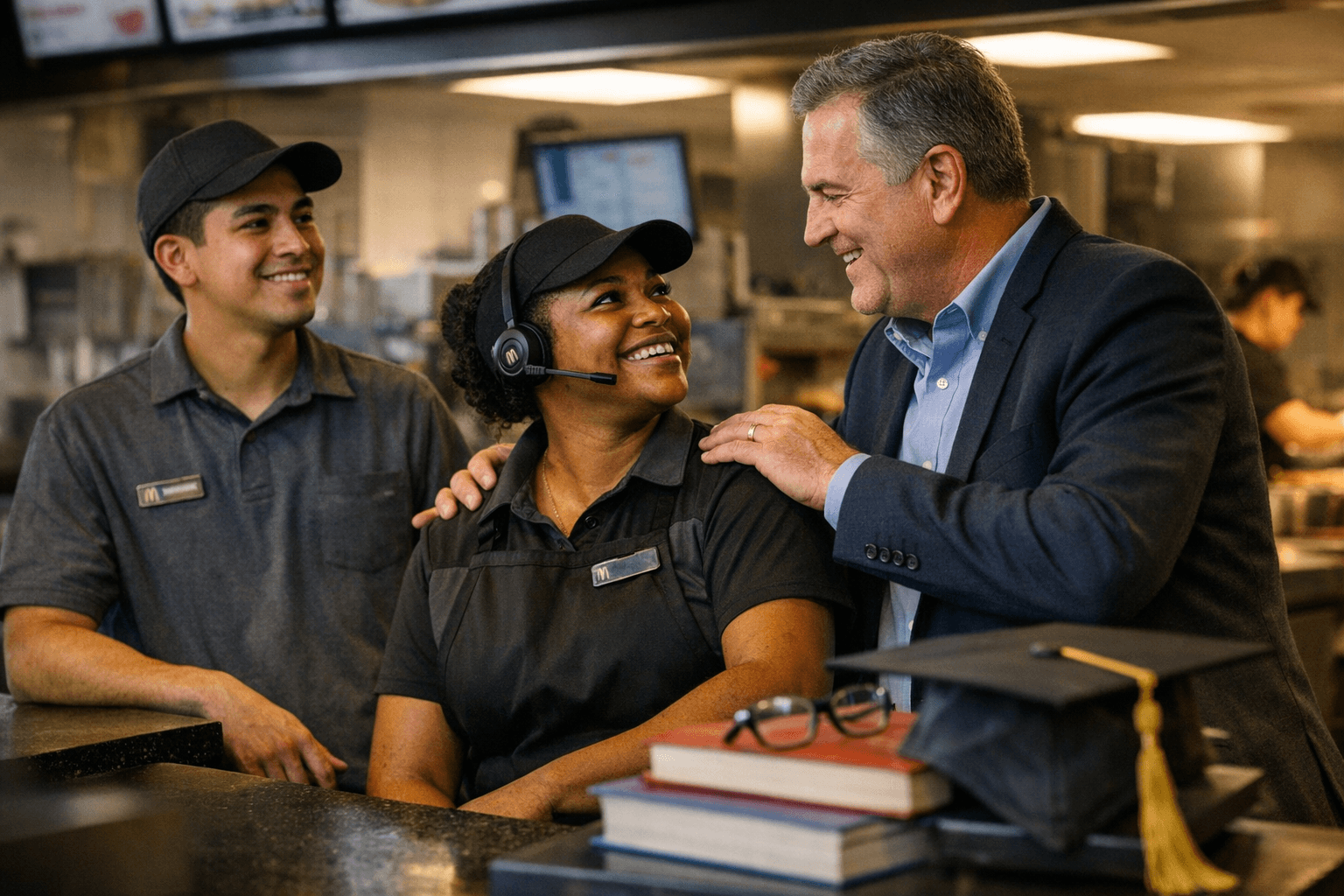
Tuition support at a fast-food job is not the norm, but one McDonald's owner/operator in the Louisville area is making it a centerpiece of how the business runs. A profile published by the Courier-Journal spotlights the operator's deliberate approach to workforce investment, one that treats crew development not as a recruiting pitch but as an operating principle.
A Philosophy Built Around People
The foundation of this operator's approach is straightforward: when crew members grow, the business grows with them. That framing shapes decisions at every level of the organization, from how new hires are onboarded to how long-tenured employees are supported in pursuing goals outside the restaurant. It is a management posture that runs counter to the high-turnover, low-investment model that has defined much of the quick-service industry for decades.
What makes this notable is not just the sentiment but the specificity. The operator has put concrete programs behind the philosophy, including tuition assistance that gives crew members a financial bridge toward education they might not otherwise afford. In an industry where the median tenure at a single location is often measured in months, that kind of benefit signals a different kind of employer-employee relationship.
Tuition Support as a Retention Tool and a Real Benefit
Tuition support is increasingly common among large employers, but its implementation varies widely. At the corporate McDonald's level, the Archways to Opportunity program has offered education benefits for years, providing English language courses, high school completion programs, and college tuition assistance to eligible employees. What distinguishes individual owner/operators is how aggressively they promote and fund those benefits locally, and whether crew members actually know the support exists and how to use it.
This operator's profile suggests an active, not passive, approach to education investment. Rather than listing tuition assistance as a line item in an employee handbook, the philosophy here treats it as part of a broader commitment to crew development, one the owner/operator is willing to put in front of the public as a defining characteristic of the business.
For crew members weighing whether to stay in a position or pursue education, the existence of employer-backed tuition support can be a deciding factor. When that support comes with genuine managerial backing rather than bureaucratic friction, it changes the calculus of working in fast food entirely.
What Crew Development Looks Like in Practice
People-first language is easy to put in a mission statement. The harder work is building systems that reflect it. Owner/operators who invest in crew development typically do so across several dimensions:
- Structured training that goes beyond minimum compliance requirements and prepares employees for advancement
- Clear promotion pathways so crew members can see a route from entry-level positions to shift management and beyond
- Education benefits that reduce the financial barrier between a current job and a longer-term career goal
- Management practices that treat retention as a strategic priority, not just a cost-reduction measure
The Courier-Journal profile frames this operator's approach within that broader context of people-first management, suggesting the investment is systemic rather than occasional. That kind of consistency matters because crew members in any service environment are quick to recognize the gap between stated values and daily reality.
The Franchise Variable
McDonald's operates through a franchise model, which means that while corporate sets baseline standards for training, safety, and operations, individual owner/operators have significant latitude in how they treat and develop their workforce. Benefits like tuition support, scheduling flexibility, and advancement opportunities can vary considerably from one franchise location to the next, even within the same city.
That variation is what makes this profile meaningful. Two McDonald's restaurants on the same street can offer genuinely different employment experiences depending on who owns and operates them. An owner/operator who centers crew development in their management philosophy is making a choice that is not required by the franchise agreement; it reflects a deliberate investment of time and resources.
For workers evaluating which McDonald's location to apply to, or whether to stay at a current one, understanding the owner/operator's values and programs matters as much as the hourly wage posted on the job listing.
Why This Model Has Staying Power
The quick-service industry faces persistent labor challenges: high turnover, a competitive hiring market, and increasing pressure to justify employment conditions as wages rise. Owner/operators who have built loyal, trained workforces have a structural advantage in that environment. Crew members who feel invested in are less likely to leave, and experienced staff translate directly into faster service, fewer errors, and stronger customer satisfaction scores, all metrics that affect the bottom line.
The operator profiled here appears to understand that math. Investing in a crew member's tuition is not philanthropy; it is a long-term wager that the employee will stay, grow, and contribute more than the cost of the benefit. In tight labor markets, that wager has been paying off for operators willing to make it.
The Courier-Journal profile positions this owner/operator as a model worth examining, not as a corporate announcement but as a ground-level example of what thoughtful franchise ownership can look like when the emphasis shifts from transaction to development.
This article was produced by Prism’s automated news system from verified source data, official records, and press releases, then run through automated quality and moderation checks before publishing. The system is built and supervised by the people who set the standards it runs under. Read our full AI policy.
Did this article answer your question?