McDonald’s Price Hikes and Complex Menu Slow Drive-Thrus, Strain Staff
McDonald's recent price increases and a more complex menu have slowed drive-thrus and increased pressure on front-line workers, affecting speed, consistency, and staff workload.
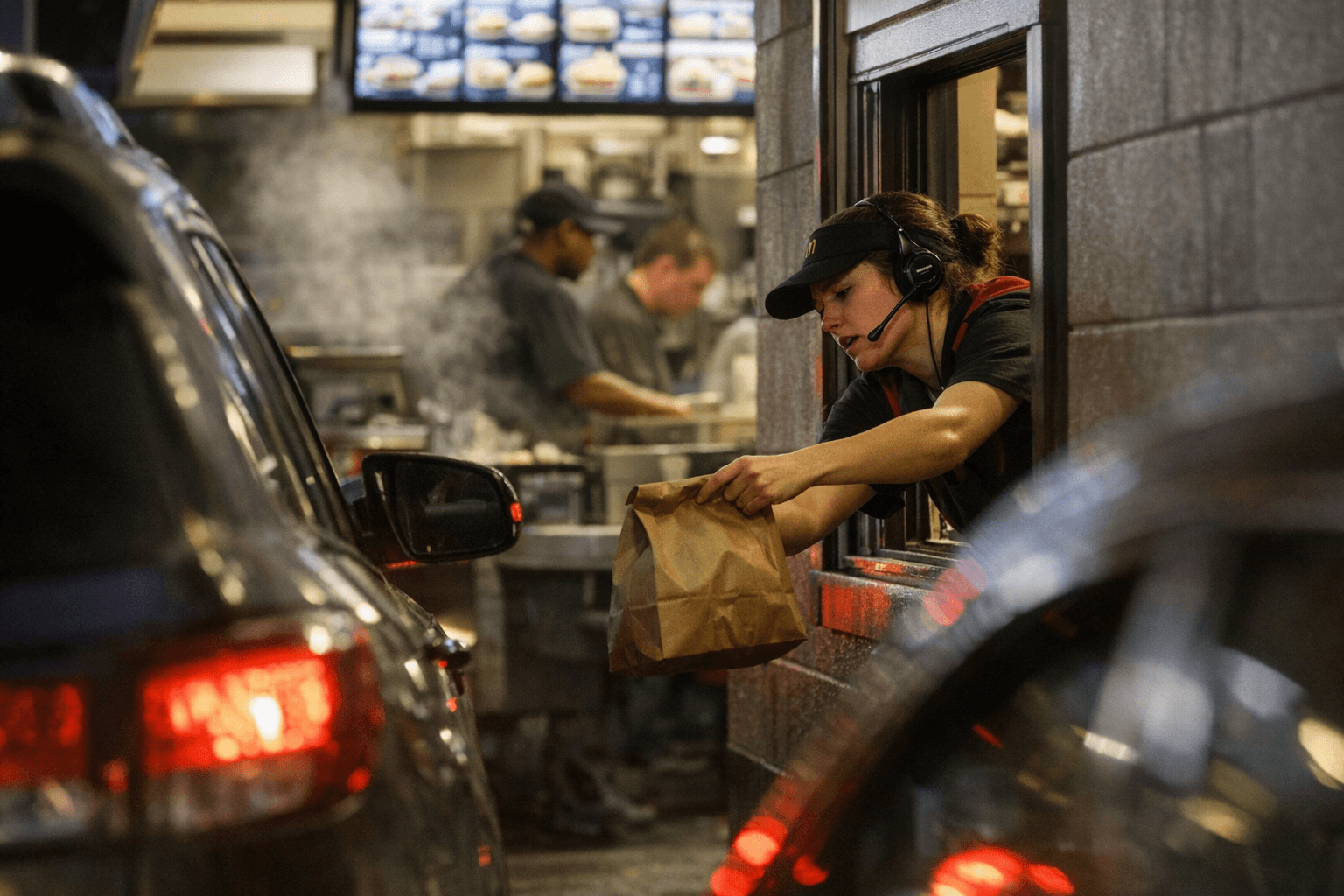
Slow drive-thrus and rising menu prices have turned into a mounting operational headache for McDonald's that is being felt most acutely by front-line employees. Customers have voiced complaints about value and slower service, and the company’s pricing and menu decisions appear tied to longer order times and heavier workloads for crew members.
The company expanded its menu and implemented price hikes in recent months. Those moves have driven more complicated orders and added steps at the point of sale and in the kitchen. Longer average ticket times have reduced throughput at peak periods, producing lines and wait times that customers increasingly notice. For employees, that translates into pressure to move orders faster while maintaining accuracy and hospitality.
Staffing levels and scheduling choices have amplified the problem. Franchise managers balancing labor costs and service expectations have sometimes kept crews lean, particularly on late shifts and in lower-volume locations. When staffing is thin, crew members frequently must perform multiple roles - taking orders at the register, expediting drive-thru trays, running the fry station, and handling bagging and handoffs. Cross-training helps, but it raises the cognitive and physical load on workers who are already managing speed-of-service metrics and customer complaints.
Operational complexity from add-on items and customizations increases the number of steps between order placement and handoff. Point-of-sale modifiers, upsells, and specialty items add prep tasks and require coordination between the cook line and the expeditor. That coordination breaks down under staff shortages or during surges, producing inconsistency in service and more remakes. For crew members, the result is longer shifts, more trips to the window, and more time spent fixing orders rather than serving new customers.
Restoring faster, more consistent service typically requires adjustments in three areas: staffing, training, and process design. Adding crew members during peak hours or altering schedules to match demand can ease the immediate pressure. Targeted training in cross-station roles and in efficient order assembly can speed handoffs and reduce remakes. Process redesign - for example, simplifying menu choices during peak windows or streamlining POS modifiers - can reduce order complexity without eliminating popular items.
For front-line workers, the stakes are practical and personal: fewer remakes, clearer role definitions, and adequate staffing can reduce burnout and improve performance metrics tied to pay and scheduling. For managers and franchisees, the trade-off is between labor cost control and customer throughput. How McDonald's balances pricing, menu variety, and crew investment will determine whether drive-thru speed and service consistency rebound or whether complaints and staff strain continue into the next quarter.
This article was produced by Prism’s automated news system from verified source data, official records, and press releases, then run through automated quality and moderation checks before publishing. The system is built and supervised by the people who set the standards it runs under. Read our full AI policy.
Did this article answer your question?

