McDonald’s proxy ties DEI and representation goals to executive pay
McDonald's ties DEI and representation targets to executive pay, a move that could reshape hiring, promotion and training priorities for company employees.

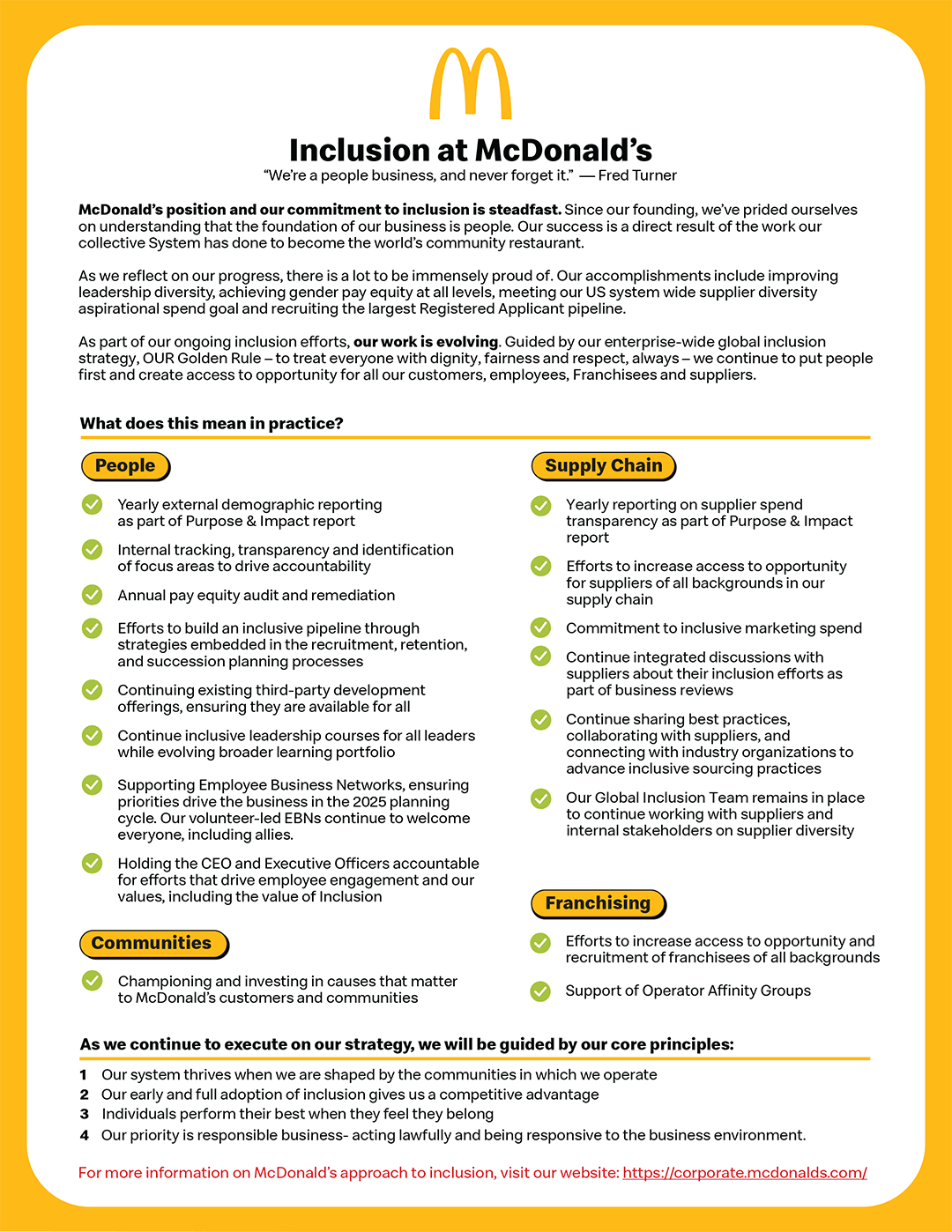
McDonald's Corporation filed its definitive Proxy Statement (Form DEF 14A) on Jan. 23, 2026, and included a notable shift in how the company links people strategy to leadership incentives. The filing lays out a renewed statement of corporate values, an updated global Diversity, Equity & Inclusion strategy, specific representation goals and explicit language tying aspects of human-capital management to executive incentive metrics.
The proxy describes targets to increase women and historically underrepresented groups in leadership roles and says those representation goals will factor into compensation decisions for top executives. The filing also details governance and oversight practices related to workforce matters and references programs intended to support training, inclusion and equitable pay among Company employees. Those elements make the proxy a primary corporate-document source for formal commitments and the mechanisms that will drive policy and practice at McDonald's.
For crew members, store managers and corporate employees, the immediate implications are concrete. Human resources and talent teams are likely to prioritize recruitment pipelines, leadership development and promotion reviews that feed the new representation targets. Training budgets and inclusion programs detailed in the proxy could expand or be redesigned to accelerate measurable progress on those targets. Tying executive pay to human-capital metrics creates financial incentives for senior leaders to deliver results on representation and pay equity rather than treating DEI as a voluntary or reputational initiative.
Company employees should also expect new reporting and accountability routines. The proxy's human-capital disclosures set expectations for regular measurement and oversight, which could introduce more frequent internal audits, scorecards or performance metrics shared with managers. Those tools can boost transparency but also create pressure to meet numeric goals, which may change how promotions and talent moves are timed.
The proxy raises governance questions that matter to workers as well. Board-level oversight of workforce strategy means McDonald's leadership will face clearer scrutiny from investors and stakeholders on progress toward representation goals. That scrutiny can accelerate change, but it can also produce short-term focus on meeting metrics over more sustained culture change. How McDonald's balances numerical targets with substantive inclusion at the store level will shape everyday workplace dynamics for employees.
The filing frames these shifts as part of an integrated people strategy linking values, DEI and human-capital performance to compensation. Employees should watch upcoming human-capital disclosures and company communications for specifics on targets, timelines and how progress will be measured. Those details will determine whether the proxy produces lasting improvement in diversity and equity for McDonald's workforce or simply changes the incentives at the top.
This article was produced by Prism’s automated news system from verified source data, official records, and press releases, then run through automated quality and moderation checks before publishing. The system is built and supervised by the people who set the standards it runs under. Read our full AI policy.
Did this article answer your question?