McDonald’s ties food safety to suppliers, technology and daily checks
McDonald’s says food safety begins long before the grill, with supplier rules, daily temperature checks and third-party audits that reach into every shift.
Food safety starts before the first order
At McDonald’s, food safety is treated like a system, not a slogan. The company says its standards are science-based, validated by outside experts and built to manage risk from farm to customer, which means a shift manager is responsible for more than what happens on the line. The chain ties safety to sourcing, packaging, distribution, restaurant operations and menu development, so a missed step in one part of the supply chain can become a problem in the store.
That is the practical reality for crew members and franchise teams. Receiving, storage, prep, cleaning and cooking are all part of the same safety chain. McDonald’s says its approach depends on a “three-legged-stool” relationship among the company, franchisees and suppliers, with all three accountable for food-safety culture. In a system that large, the expectation is not that one person catches everything, but that every handoff is controlled.
The supplier side is part of the shift
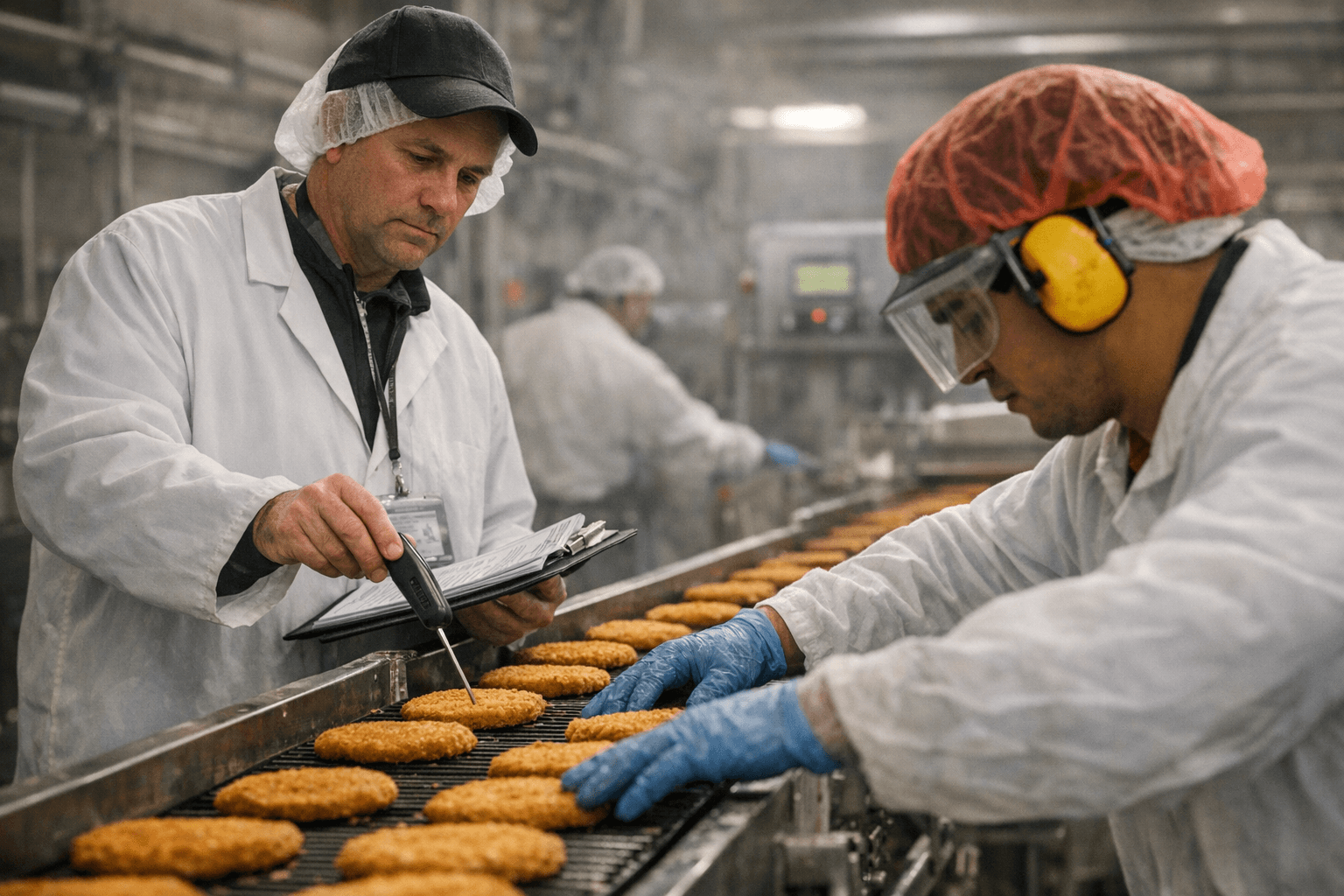
McDonald’s says food safety begins with supplier policies and procedures and continues through training for farmers and suppliers. The company works with external organizations such as GLOBALG.A.P. to train farmers on food-safety standards, and its fact sheet says raw material and food processing suppliers must comply with science- and risk-based standards including GLOBALG.A.P., SQMS, GMP and DQMP.
For restaurant workers, that upstream work matters because it shapes what arrives at the back door and how it should be handled. The company’s message is that a crew member checking a box on a delivery sheet is not doing a clerical task, but verifying the last link in a chain that began on the farm. That is also why McDonald’s leans so heavily on third-party validation: it wants the rules on paper to match what is happening in real kitchens, warehouses and supplier facilities.
What daily food safety looks like on the floor
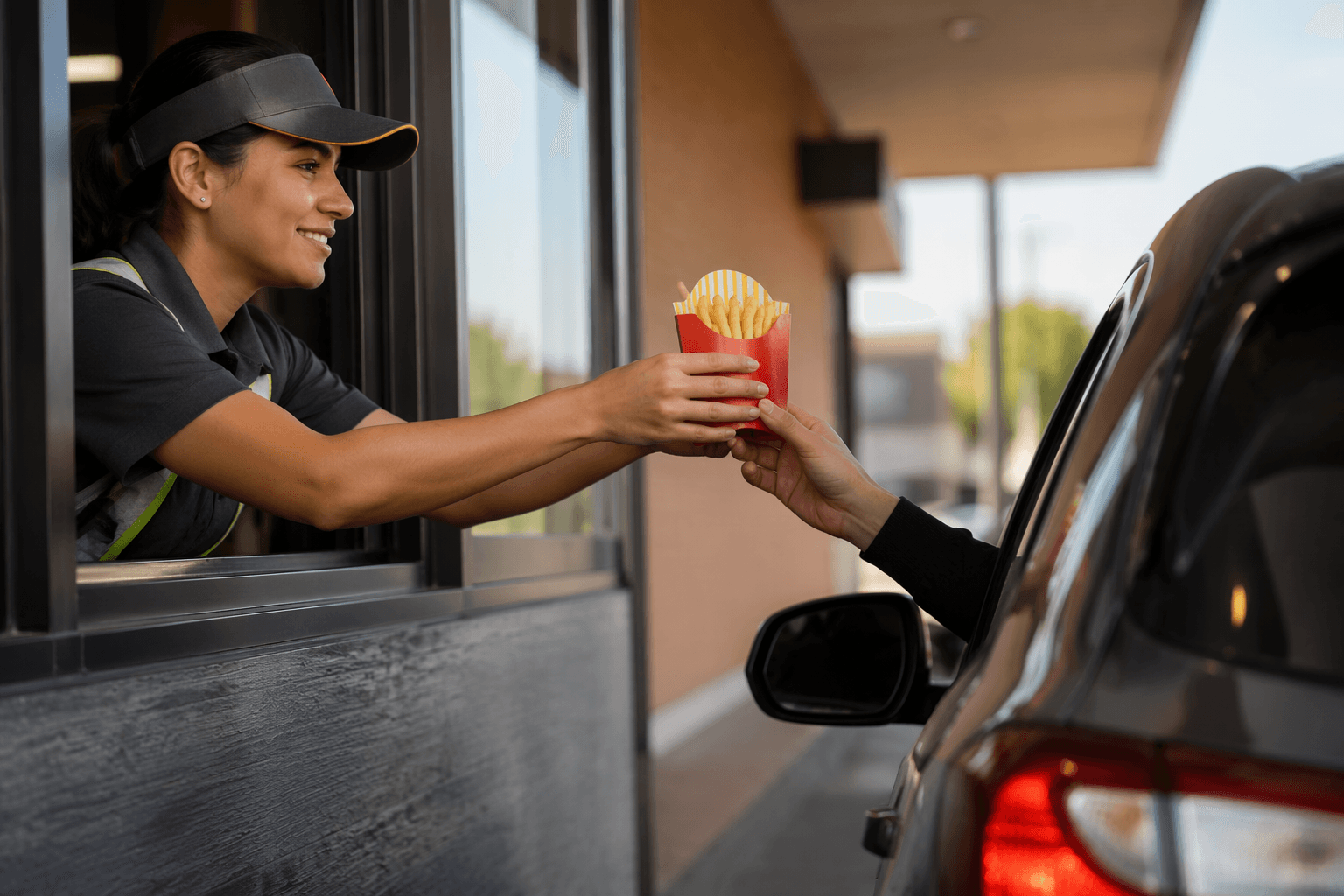
The strongest food-safety habits at McDonald’s are routine, not special. The fact sheet says restaurants conduct daily temperature checks for each product type, which means managers are expected to track product conditions as a normal part of the day rather than waiting for a problem to show up. For crew, that turns food safety into a series of repeatable habits: check the holding temperature, confirm storage conditions, keep raw and ready-to-eat items separated and clean equipment before the next task changes the risk.
McDonald’s says Quarter Pounder patties are received and stored at 40°F or below and cooked to 175°F. Those numbers are not trivia for back-of-house workers. They are the operating limits that tell a shift manager when a product can stay in use and when it needs to be pulled, held or discarded. In a lunch rush, when the clock is moving fast, those thresholds are the difference between a safe line and a risky one.
The company also says some equipment is designed specifically for McDonald’s so critical safety and cleanability requirements are met. That matters on the floor because the design of a grill, warmer or prep station can make it easier or harder to keep up with cleaning, sanitation and safe workflow during a busy shift. Food safety is not only about training people well. It is also about building equipment that reduces the chance of mistakes.
Technology is becoming part of food safety, too
McDonald’s says digital transformation is helping improve efficiency and reduce risk, which is a reminder that food safety is increasingly tied to technology as much as to habit. The fact sheet says many restaurants now have Remote Temperature Systems that alert management if a temperature is approaching a non-compliant limit. That changes the job from purely reactive to partly preventative: a manager can respond before a product slips out of range.
For workers, that means a screen, sensor or alert can now be as important as a clipboard or thermometer. If the system flags a problem, the expectation is that the shift team moves quickly, checks the product and decides whether the food is still acceptable. McDonald’s also says it runs an annual third-party grill certification program in all restaurants and onsite third-party food-safety audits twice a year, which adds another layer of oversight to daily work. The message is clear: safety is monitored by people, but also by systems designed to catch what a busy team might miss.
Why franchisees cannot treat this as optional
Food safety is one of the clearest areas where McDonald’s expects systemwide alignment, whether a restaurant is company-owned or franchised. The brand’s standards are supposed to apply across the system, which is why the same temperature checks, audits and equipment expectations show up regardless of who owns the store. For franchise employees, that means food safety is not just a local management style issue. It is a brand requirement.
That matters because the chain’s size makes any lapse fast-moving and widely visible. A problem in one restaurant can quickly become a problem for the brand, and for the franchisee that runs it. In practice, that is why food-safety training, hand hygiene, cross-contamination controls and supplier oversight get so much attention. Those controls are not extras. They are the everyday guardrails that let a store keep moving without putting customers at risk.
The 2024 E. coli outbreak showed the stakes
The recent E. coli outbreak linked to McDonald’s made those systems impossible to ignore. The Centers for Disease Control and Prevention said 104 people in 14 states were sickened in the October 2024 outbreak linked to onions served at McDonald’s, and the U.S. Food and Drug Administration said the outbreak was tied to recalled yellow onions distributed by Taylor Farms and served at McDonald’s restaurants in certain states. The CDC later said the investigation was closed and the outbreak was over as of December 3, 2024.
For restaurant workers, that episode is a blunt reminder of why McDonald’s keeps returning to supplier oversight and rapid response. A problem did not begin in the fryer or at the counter. It moved through the supply chain and landed in restaurants, which is exactly the kind of risk the company says its system is built to track. When a chain serves millions of meals, food safety cannot depend on one point of control. It has to travel with the product at every step.
What workers should take from McDonald’s approach
The clearest takeaway is that McDonald’s treats food safety as an operating discipline. The company says the rules are science-based, validated externally and reinforced through supplier training, daily checks, remote monitoring and third-party audits. For crew and managers, that translates into a shift routine where temperature control, clean equipment, careful storage and fast response are not separate tasks. They are the job.
That is why McDonald’s keeps returning to the same theme: safety has to work the same way every day, in every restaurant. At this scale, consistency is not just a brand promise. It is the only thing standing between a normal shift and a preventable problem.
This article was produced by Prism’s automated news system from verified source data, official records, and press releases, then run through automated quality and moderation checks before publishing. The system is built and supervised by the people who set the standards it runs under. Read our full AI policy.
Did this article answer your question?