McDonald's Values Page Highlights Community, Inclusion, and Integrity
McDonald’s values page reads like branding until you see the scale. For crew and managers, community, inclusion, and integrity are built into hiring, training, service, and day-to-day restaurant discipline.
What McDonald’s says its culture is built on
McDonald’s presents itself as more than a burger chain. The company says its purpose is to “feed and foster communities,” and its values page frames the brand as a global community of crew, farmers, suppliers, franchisees, and countless others working under the Golden Arches.
Those words matter because McDonald’s does not operate like a small neighborhood shop. It says it runs 44,000 locations and serves 68 million people a day, with a company and franchise system that includes more than two million employees and crew. At that scale, a values statement is not just wall art. It becomes the shorthand for how the system expects people to work together when the line is backed up, a customer is upset, or a manager has to make a fast decision.
The five values that define the brand
McDonald’s says its five core values are Community, Inclusion, Family, Service, and Integrity. Read together, they describe a workplace culture that is supposed to connect customer experience with employee experience and local responsibility, not separate them.
Community means the restaurant is expected to operate as part of the neighborhood, not just in it. Inclusion points to a workplace where people from different backgrounds are supposed to be treated as part of the same team. Family and Service are reminders that McDonald’s wants the shift to feel organized, fast, and cooperative, while Integrity is the backstop that is supposed to guide conduct when the pressure rises.
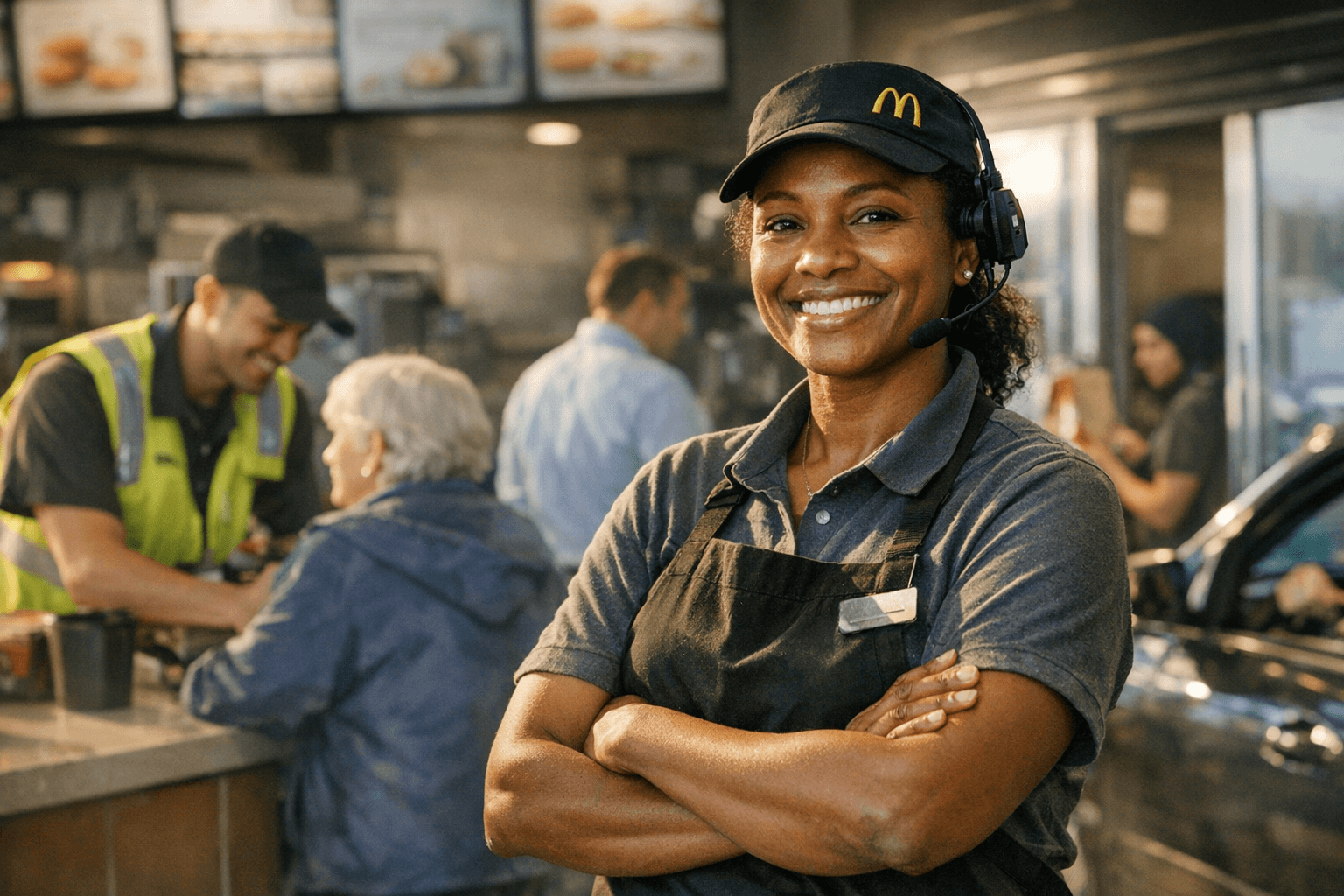
For crew members, those values are not abstract. They show up in how shifts are covered, how teammates help each other during a rush, how managers handle complaints, and whether the restaurant stays functional when the workload spikes. For managers, the values are a standard for leadership, because the job is not just about keeping food moving. It is also about keeping the workplace steady enough that people can do the job without chaos becoming the norm.
How the values page translates into restaurant-floor expectations
McDonald’s says its People Brand Standards are meant to promote safe, respectful, and inclusive workplaces, and that they apply across all restaurants, whether company-owned or franchised. That makes the values page more than a mission statement. It is tied to the basic operating rules that shape what employees should expect from the job.
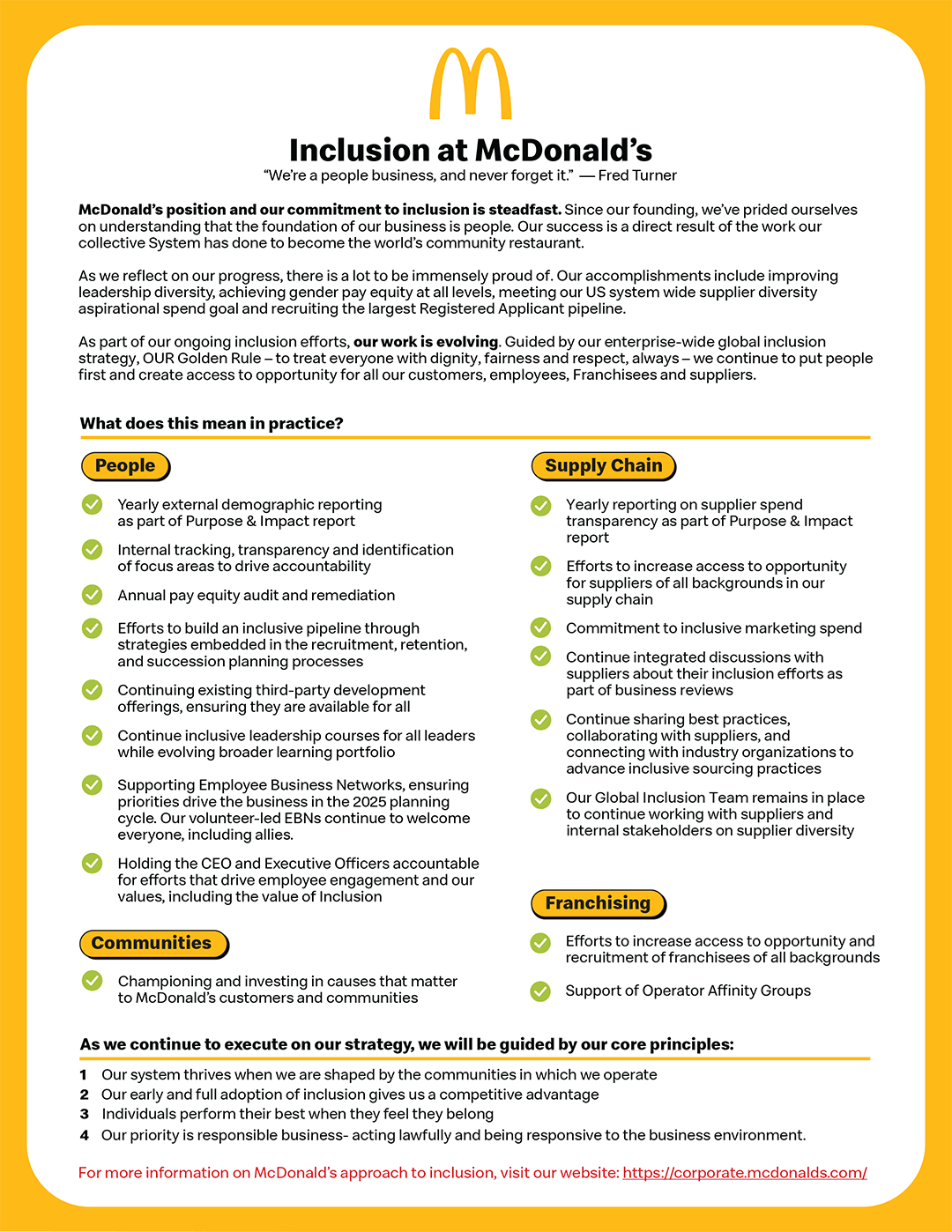
The company’s inclusion language also says the Golden Rule means treating everyone with dignity, fairness, and respect. In practice, that is the clearest bridge from corporate language to a shift in the restaurant. It implies that customer service standards and employee treatment are supposed to reinforce each other, not compete with each other.
That matters for workers because McDonald’s culture often gets tested in the ordinary moments that define a shift: schedule changes, short staffing, customer conflict, and the pressure to keep service speed up while maintaining a respectful tone. The values page suggests the company wants those moments handled in a way that protects both the guest experience and the people doing the work.
Why scale makes the values more than branding
McDonald’s says its restaurants serve a locally relevant menu in more than 100 countries. That global footprint is why the values language has to function across different labor markets, franchise systems, and local expectations. A values page that sounds generic in a corporate setting becomes operational when it has to work in restaurants with different crews, different managers, and different customer demands.
The company has also said that it listened to employees, franchisees, and suppliers around the world to understand what its values meant in practice. That listening tour matters because it shows the values were not written as a slogan in isolation. They were shaped by people inside the system who deal with the realities of labor, supply, and service every day.
That is also why McDonald’s workplace culture often intersects with broader labor issues. When a company says it wants to improve the lives of its people, its industry, and the planet by putting customers and employees first, sourcing quality food, reducing waste, and expanding job opportunities, it creates a public standard that workers can measure against. If the values are serious, they should show up in scheduling, training, workload, staffing, and how the chain responds when a restaurant is under strain.
Training, advancement, and the role of Hamburger University
McDonald’s says Hamburger University is its signature learning approach for upskilling and reskilling employees. That gives the values page a concrete workforce angle: the company is not just saying it values people, it is presenting training as part of how the system is supposed to operate.
The company also says it wants to be an iconic talent destination, known for people experience as much as for the Golden Arches. That is a big claim in a business where many jobs are seen as entry-level and where turnover has long been a structural issue across the fast-food industry. By putting learning and advancement in the same frame as service and inclusion, McDonald’s is signaling that the job should offer more than a paycheck and a uniform.
Its workforce numbers reinforce that point. McDonald’s said company employees totaled more than 150,000 at year-end 2024, and about 70% were based outside the United States. That means the company’s training and culture systems have to work across languages, regions, and local labor norms, not just in U.S. stores.
What the values mean in the business, not just the lobby
McDonald’s recent results show why these ideas are tied to hard business decisions. The company said global comparable sales rose 5.7% in the fourth quarter of 2025, and full-year 2025 systemwide sales increased 7% to more than $139 billion. It also said value leadership was working and that listening to customers improved traffic and value-and-affordability scores.
That connects directly back to the values page. Service, inclusion, and community are not just internal language when the company links them to traffic, affordability, and sales. They become part of how McDonald’s explains performance, from pricing and customer loyalty to the day-to-day execution happening in restaurants.
For workers, that is the real test. A values page can sound polished, but at McDonald’s scale it only matters if it shapes what happens on the floor: who gets trained, how teams are treated, how managers lead, and whether the company’s promise of community and integrity reaches the people doing the work.
This article was produced by Prism’s automated news system from verified source data, official records, and press releases, then run through automated quality and moderation checks before publishing. The system is built and supervised by the people who set the standards it runs under. Read our full AI policy.
Did this article answer your question?