McDonald's UK Responds to Small-Scale Union Industrial Action at Restaurants
Nine workers across six London-area McDonald's restaurants considered industrial action, but the company said all six locations stayed open.
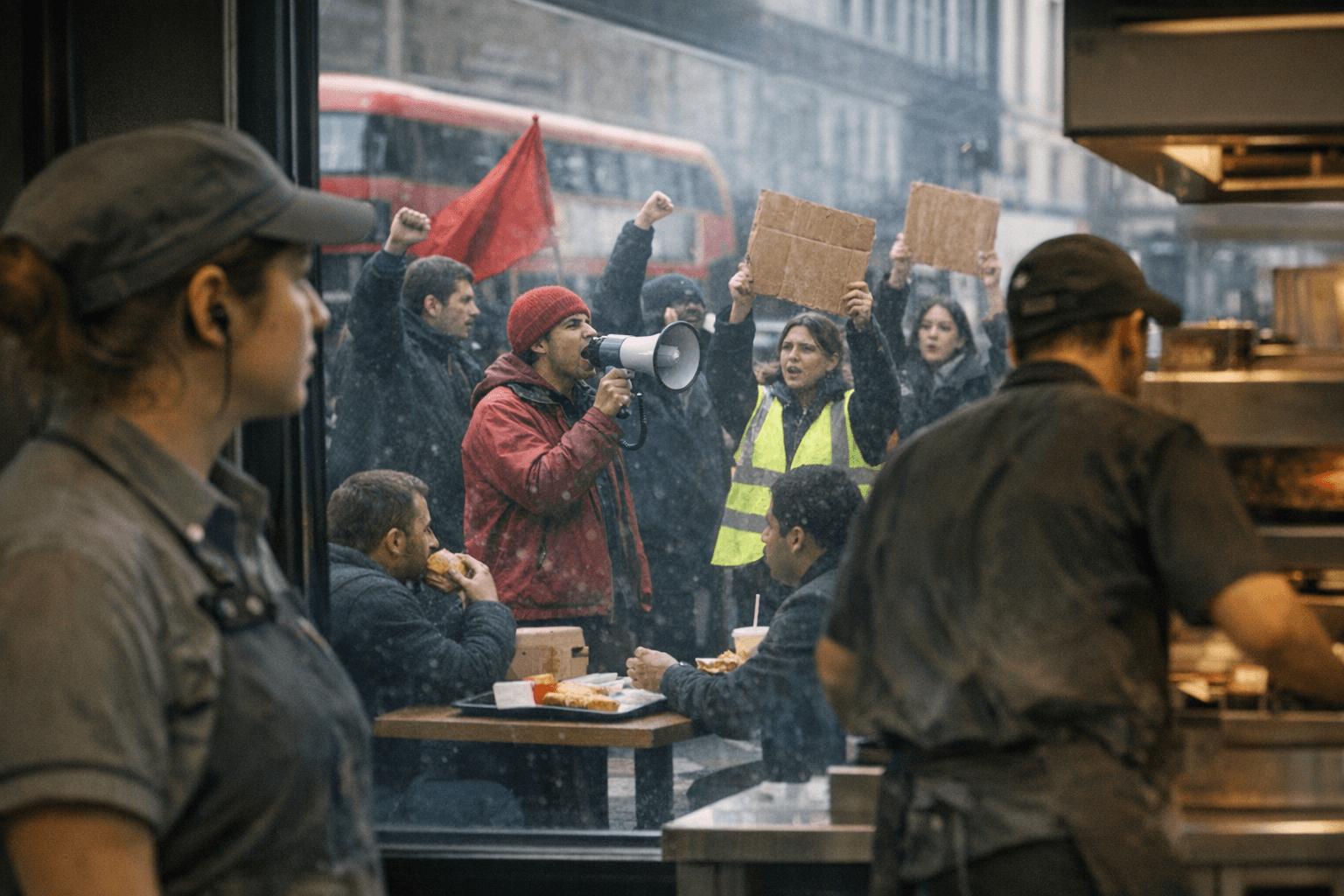
Nine employees across six McDonald's restaurants in London and the South East considered industrial action, McDonald's UK & Ireland said in a statement, framing the potential walkout as representing a fraction of its 130,000-strong workforce across 1,300 restaurants.
The company said it was "extremely disappointed" but moved quickly to reassure customers that all six affected restaurants remained open. The statement did not name the restaurants or identify the workers involved.
The Bakery, Food and Allied Workers Union, known as the BFAWU, also organized what McDonald's described as "additional small scale events" at some locations. The company was categorical in how it characterized those: "These are not strikes, and we believe very few of our people are involved." The BFAWU's own characterization of the events was not available, and the union had not publicly responded at the time the company statement was issued.
At the center of the dispute is a demand McDonald's says the BFAWU has made for 40-hour guaranteed contracts. The company's response: it already offers them. "The BFAWU is calling for 40 hour guaranteed contracts, which is something we already offer, but has been chosen by very few of our people," the statement read. McDonald's says roughly 90 percent of its employees have opted for flexible contracts instead, "valuing the ability to work their shifts around their lives." Whether that framing reflects genuine worker preference or the reality of how zero-hours and flexible arrangements function in practice is a question the statement does not address.
On pay, McDonald's said its rates sit "well above the government minimum wage" and are "ahead of many of our competitors" in the quick-service sector, without providing specific figures. Those claims remain unverified against current national minimum wage rates or industry pay surveys.
The company drew a historical comparison to put the action in context. In October 2018, the last time McDonald's workers were balloted for industrial action, no one ultimately walked out. McDonald's noted that the number of workers balloted had seen "a steady decrease" since then, pointing to the nine-person figure as evidence of diminishing union traction inside its restaurants.
The franchise dimension matters here. McDonald's said it and "our franchisees" would continue investing in staff, but the statement offered no detail on whether the six affected restaurants are company-operated or franchisee-run, a distinction that directly affects which workers' pay and contract offers are governed by corporate policy versus individual operators. That gap is one of several the company's statement leaves open.
This article was produced by Prism’s automated news system from verified source data, official records, and press releases, then run through automated quality and moderation checks before publishing. The system is built and supervised by the people who set the standards it runs under. Read our full AI policy.
Did this article answer your question?