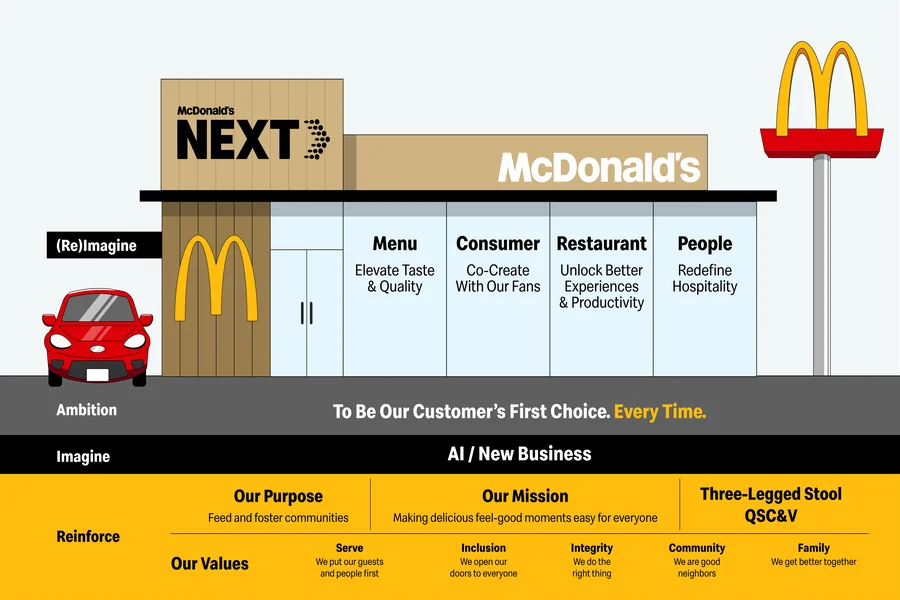
McDonald’s uses Hamburger University and Speedee Labs to train operators
McDonald’s training ladder runs from restaurant floor to Hamburger University. Speedee Labs shows how corporate tests become the next shift change for crews, managers, and franchisees.
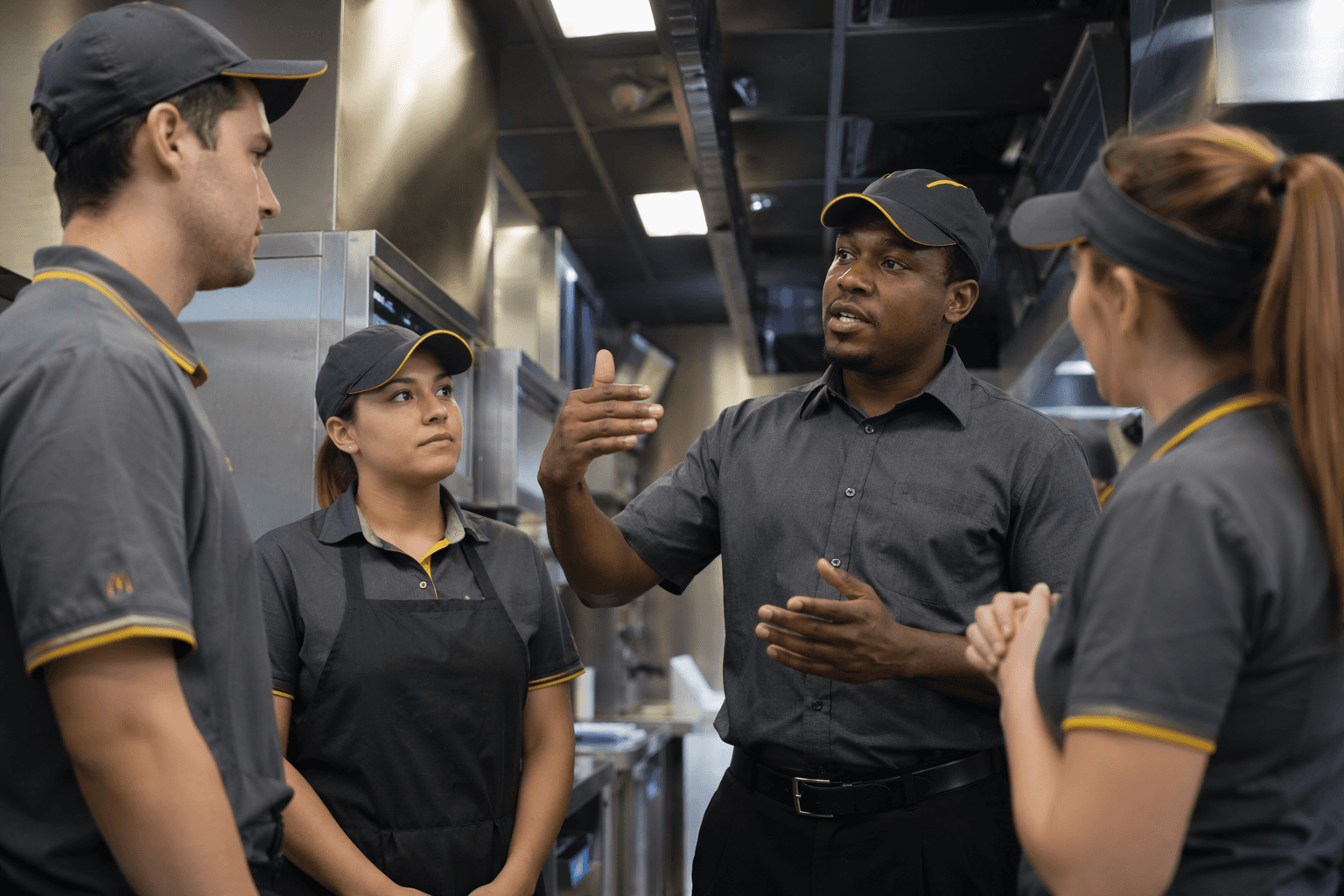
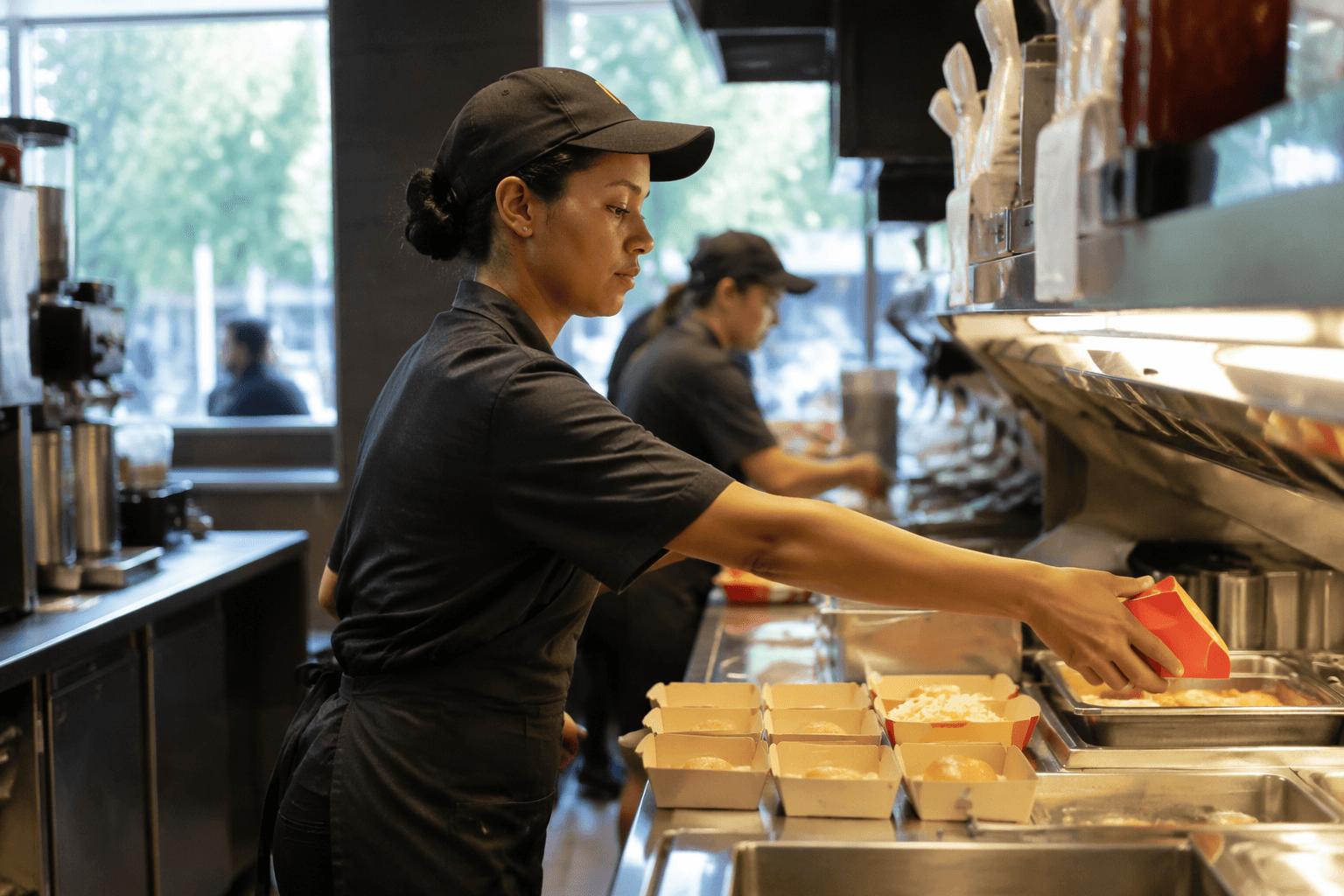
McDonald’s does not treat training as a side benefit or a polished talking point. Hamburger University and Speedee Labs sit at the center of a system built to turn restaurant operations into something repeatable, teachable, and scalable across thousands of locations. For crew members, managers, and franchisees, that means the company’s biggest changes often start as a test, move through a formal training pipeline, and end up shaping daily work at the drive-thru, on the grill, and in the dining room.
The training ladder
The company’s franchising model rests on a blunt idea: McDonald’s says it succeeds only if its Owner/Operators succeed. That is why training is not just about learning the menu or memorizing service standards. It is about preparing people to run restaurants in a system where one weak operation can drag down speed, consistency, and customer experience across a market.
McDonald’s says its world-class franchise training program includes 12 to 18 months of restaurant training, self-directed part-time training for 20 hours per week, seminars, conferences, one-on-one training sessions, and competency-based operator classes. That is a long runway, and it signals how much the company expects an operator to absorb before taking on full responsibility for labor, food quality, guest recovery, and throughput.
The real point for workers is that the company treats restaurant know-how like a ladder. Someone moving from the floor into leadership is not simply getting promoted. They are being folded into a system that uses structured instruction to decide who is ready to supervise shifts, manage performance, and eventually operate a restaurant.
Why Hamburger University still matters
Hamburger University is the clearest symbol of that pipeline. McDonald’s describes it as a global training center where franchisees and managers get a crash course in restaurant operations so the same standard can travel across the world. Its management courses are taught in 28 different languages, which tells you this is not a local perk for a few U.S. managers. It is a corporate engine for moving McDonald’s operating rules across borders and time zones.
The scale matters because McDonald’s is a global employer. The company said it had more than 150,000 employees at year-end 2024, with about 70 percent based outside the United States. That footprint explains why the company leans so hard on standardization. When the workforce is that dispersed, a manager in one market cannot build a restaurant from scratch on instinct alone. The company has to teach the same basics again and again, in the same language of service, speed, and restaurant control.
The history behind Hamburger University also shows how old this system is. Dick and Mac McDonald introduced the Speedee Service System in 1948, paired with 15-cent hamburgers, then Ray Kroc opened the first McDonald’s east of the Mississippi in Des Plaines, Illinois, on April 15, 1955. McDonald’s acquired rights to the brothers’ company in 1961 for $2.7 million, and Hamburger University began that same year. The training culture is not a recent corporate add-on. It is part of the operating model that built the brand.
Speedee Labs and the route from test to rollout
Speedee Labs is the newer piece of the same machine. McDonald’s announced the facility on September 14, 2022, and said it would open in 2024 at its global headquarters in Chicago’s West Loop. The company framed it as an innovation center built to bring corporate office teams, the Innovation Center in Romeoville, Hamburger University students, franchisees, suppliers, and restaurant teams together under one roof.
That combination is the key to understanding how ideas move inside McDonald’s. A concept does not just appear in a restaurant because someone at headquarters likes it. It gets tested in a place like Speedee Labs, where the company can simulate service, inspect workflow, and see how a change might affect the front counter, the drive-thru, and kitchen pace before it spreads more widely.
McDonald’s says the former Innovation Center in Romeoville, which opened in 1995, helped develop or refine Mobile Order and Pay, McDelivery, and cooking practices that were rolled out around the world. That is the most concrete proof of how these labs matter: they are where corporate experiments turn into front-line routines. For restaurant teams, that can mean a better process or a smoother order flow. It can also mean another operational change that arrives from above and quickly changes the tempo of a shift.
What it means on the floor
For crew members, the practical lesson is simple: McDonald’s uses testing and training to justify change. If drive-thru flow shifts or kitchen layout gets adjusted, it is usually because the company has already tried to prove the concept in a controlled environment. That can reduce chaos when a system works, but it can also compress the timeline for adaptation on the floor, where new tools and new rules land on top of already tight labor and service demands.
For managers and aspiring operators, the upside is real. McDonald’s is signaling that there is a formal path into leadership, and that path includes classroom instruction, one-on-one coaching, and competency-based classes rather than pure trial and error. In a chain that has long been shaped by Fight for $15, minimum wage fights, and pressure over staffing levels, that promise of advancement matters because it gives workers a visible route to better pay bands and more authority, even if the climb is demanding.
The company also ties this system to its local footprint. When it announced Speedee Labs, McDonald’s said its system supported more than 14,000 jobs in Cook County and had about a $2 billion annual impact on the county economy in the 12 months ending June 30, 2022. Chicago Mayor Lori E. Lightfoot welcomed that investment, underscoring that McDonald’s headquarters is not just a brand address but a major employer and economic actor in the city.
The lesson for anyone working under the arches is that McDonald’s does not separate training from business strategy. Hamburger University creates the operators who keep restaurants consistent. Speedee Labs helps decide which ideas are ready to reach the floor. Together, they show a company trying to manage the distance between headquarters and the crew station, one tested process at a time.
This article was produced by Prism’s automated news system from verified source data, official records, and press releases, then run through automated quality and moderation checks before publishing. The system is built and supervised by the people who set the standards it runs under. Read our full AI policy.
Did this article answer your question?