New Brand for Former McDonald’s Russia Unveiled, Employees Face Uncertainty
A company that took over many former McDonald’s locations in Russia unveiled a new circular hamburger-and-fries logo, signaling continuity at restaurants but raising questions about jobs, contracts, and workplace rules.
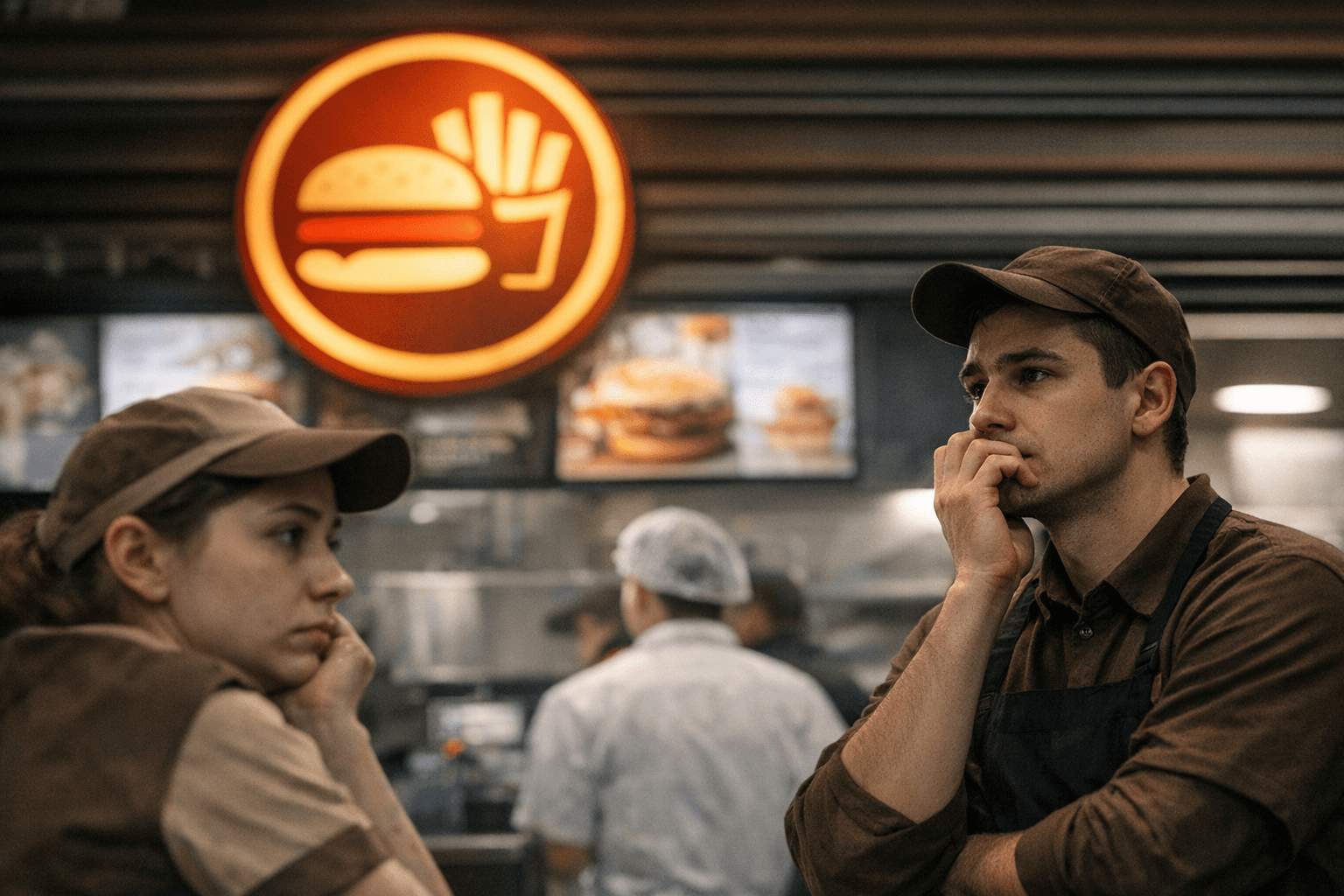
A company that assumed control of many former McDonald’s restaurants in Russia unveiled new branding on Jan. 22, 2026, introducing a circular hamburger motif with fries as the visual centerpiece. The operator said it planned to reopen selected sites under the new brand, a move that keeps restaurants running but shifts employment relationships away from McDonald’s Corporation.
For employees, the rebrand is both reassurance and uncertainty. Reopening under a new name suggests kitchen crews, shift managers, and back-of-house staff could return to work without long breaks in operations, preserving wages and local income streams. At the same time, staffing, human resources, and employment terms will be determined by the new operator rather than McDonald’s, exposing workers to potential changes in schedules, pay structures, benefits, training protocols, and workplace policies.
The takeover traces back to McDonald’s exit from Russia in 2022, when the company sold or transferred many of its Russian assets. Those sites have been in a state of transition ever since, subject to new ownership, supply-chain adjustments, and menu retooling. Rebranding marks the next phase: converting recognizable fast-food locations into outlets that will compete on the basis of local management and operational choices rather than the McDonald’s global system.
Practical implications for staff include the likelihood that previous employment contracts signed with McDonald’s Corporation are no longer in force. Workers rehired by the new operator may sign new contracts with different seniority rules, probationary periods, or compensation formulas. Training and certification standards may change as the new brand adopts its own operating procedures and vendor partnerships. Local management teams will play an outsize role in shaping daily workplace culture, scheduling flexibility, and performance expectations.
Labor protections under Russian law will continue to apply, but enforcement and interpretation can vary by region and by employer. For employees used to McDonald’s corporate systems for dispute resolution, grievance procedures, and standardized benefits, adaptation to a new employer may require careful review of written terms and documentation. The rebrand also affects workplace dynamics: managers who previously followed McDonald’s global playbook may now implement distinct operational priorities, which could alter career pathways and internal promotion practices.
What comes next is a period of close watching for workers and labor advocates. Reopenings under the new brand will reveal how many former staff are rehired and on what terms, how menu and supply changes affect shift workloads, and how the new operator structures pay and benefits. Employees considering a return should review any new contracts carefully, request written employment terms, and seek local labor advice if unclear about rights. The rebranding preserves many restaurants as places of employment, but it also replaces a global employer with a local operator whose policies will determine workers’ day-to-day realities.
This article was produced by Prism’s automated news system from verified source data, official records, and press releases, then run through automated quality and moderation checks before publishing. The system is built and supervised by the people who set the standards it runs under. Read our full AI policy.
Did this article answer your question?