Russian Strike Damages Kyiv’s Oldest McDonald’s; Employees Evacuated Under Safety Protocols
A Russian strike damaged Kyiv’s oldest McDonald’s, leading staff to evacuate to shelters under established safety protocols and the site now closed pending repairs.
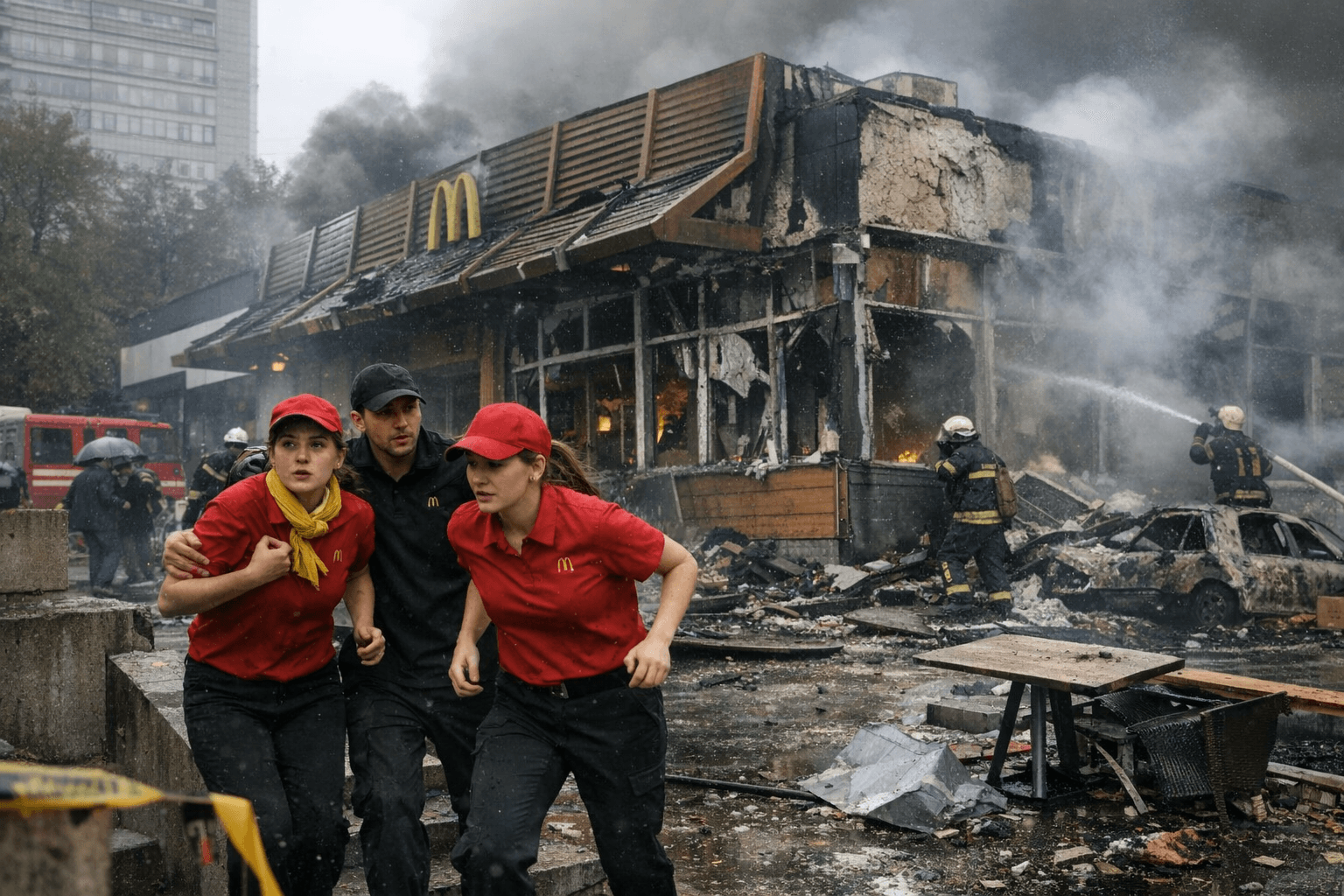
A Russian aerial attack on January 18 damaged the McDonald’s restaurant near the Lukianivska metro station in Kyiv, the site known as the city’s oldest McDonald’s since it opened in 1997. Crew members working that shift evacuated to nearby shelters in line with the company’s safety procedures, and McDonald’s Ukraine confirmed the restaurant was damaged and remains closed while repairs and safety checks are carried out.
The company’s operating rules in Ukraine require restaurants to close during air-raid alerts and to shelter employees until authorities declare it safe to return to work. Reopening any affected location requires both equipment checks and staff safety clearances, steps that can extend downtime beyond immediate repairs. For frontline workers at the Lukianivska location, that means an uncertain pause in regular schedules and a focus on safety and recovery rather than service.
For employees and managers, the incident highlights how crisis-era protocols shape day-to-day work life. Evacuation and sheltering are routine parts of operating in an active conflict zone, yet each triggered alert displaces crews, disrupts shifts, and complicates payroll, scheduling, and staffing. The damaged restaurant’s closure will likely necessitate temporary reassignments for staff or short-term reductions in hours if neighboring restaurants cannot absorb extra shifts. Training and drills that emphasize rapid sheltering and equipment shutdowns remain critical to preventing injury and avoiding further property damage.
Operationally, the company must balance repair timelines, supplier coordination for replacement equipment, and regulatory or safety inspections before reopening. Back-of-house systems such as fryers, ventilation, and refrigeration are subject to detailed checks after blast or debris exposure; until technicians certify functionality and management confirms staff clearance, the restaurant cannot resume service. Those steps protect employees from unsafe working conditions and protect the brand from liability, but they also extend the period during which affected crew members may be out of their regular routines.
The human element extends beyond physical safety. Workers displaced by closures often face logistical challenges - commuting to alternate sites when possible, managing family safety needs, and coping with stress from working in a conflict environment. Employers that operate in such conditions typically need clear communication channels, contingency staffing plans, and access to support services to maintain workforce stability.
For McDonald’s crew and managers across Ukraine, the Lukianivska strike is a reminder that safety protocols govern operations first, and service comes second. The immediate focus will be on completing repairs, conducting mandated equipment checks, and securing staff safety clearances so that affected employees can return to work under safe conditions.
This article was produced by Prism’s automated news system from verified source data, official records, and press releases, then run through automated quality and moderation checks before publishing. The system is built and supervised by the people who set the standards it runs under. Read our full AI policy.
Did this article answer your question?