S-R M Notes McDonald's India Among Alleged Ransomware Extortion Targets
McDonald's India was named as an alleged ransomware extortion target, part of a spike in leak-group disclosures that could disrupt store operations and employee data security.
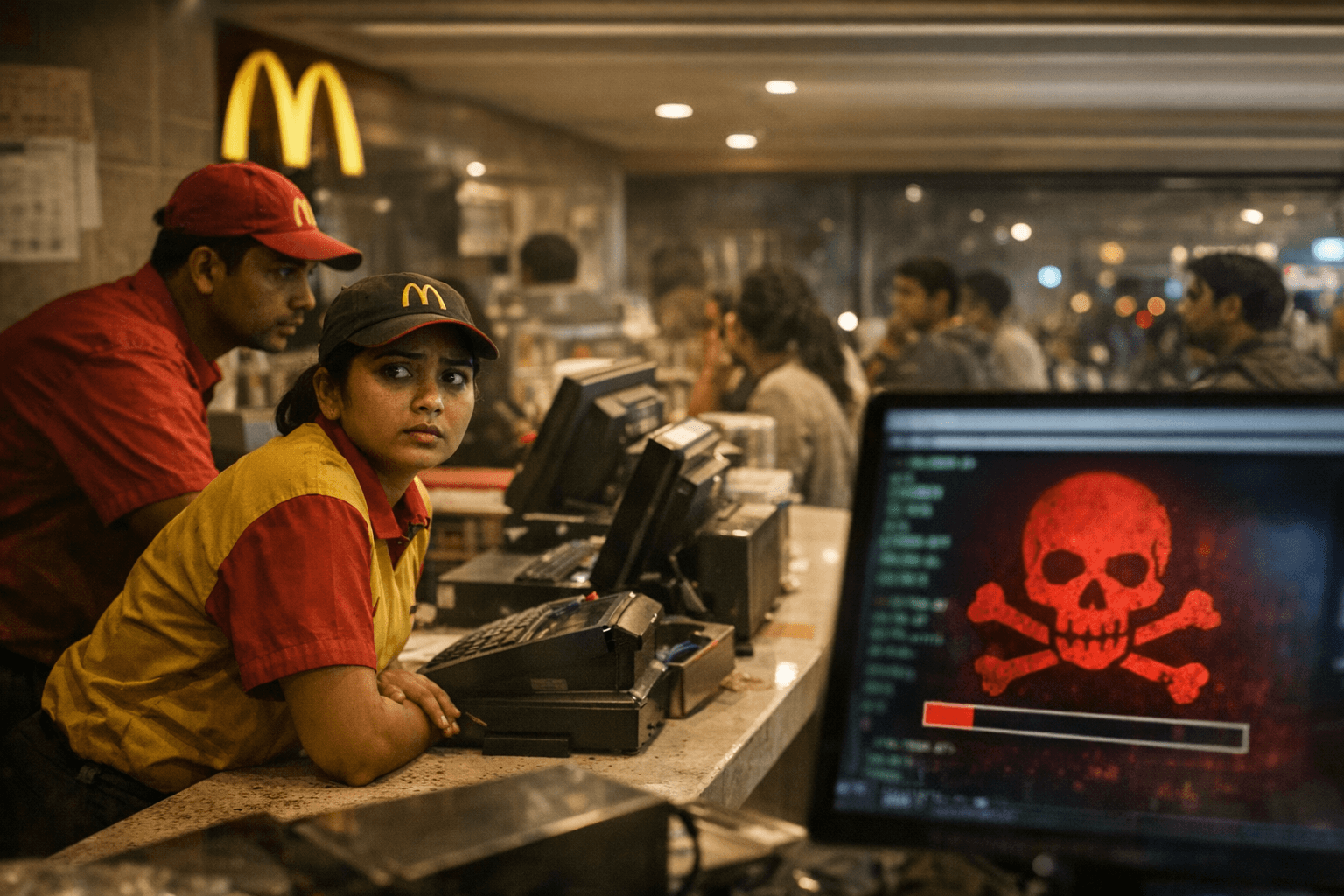
McDonald's India was publicly named as an alleged victim of ransomware extortion, according to a cyber intelligence roundup on January 23. The briefing said ransomware and leak groups publicly listed several large organizations that week, citing open-source reporting and dark-web posts. The intelligence note placed the McDonald's India claim in a broader pattern of extortion-style disclosures and warned that threat actors often publish countdowns and portions of stolen data to increase pressure on victims.
The immediate operational risk for restaurant staff centers on disruptions to point-of-sale systems, back-office payroll and scheduling platforms, and franchisee-corporate communications. Even when an incident is limited to corporate systems, franchise networks like McDonald's India rely on integrated technology for inventory, digital orders and shift management, so outages can translate into longer drive-thru lines, delayed pay processing and extra work for shift managers and crew. The intelligence briefing emphasized that organizations should prioritize rapid identification of impacted systems and the types of data involved to limit harm to employees and customers.
For workers, the biggest near-term concerns are service interruptions and uncertainty about personal data. Human resources records, payroll files and personal employee information are common targets in extortion cases; when groups leak partial datasets during countdowns, employees can face heightened risk of identity theft and prolonged administrative burdens. Store managers often absorb much of the fallout, juggling manual transaction processes and customer communications while IT and corporate teams investigate.
The cyber intelligence note urged immediate action steps that apply to McDonald's India and its franchise partners: strengthen detection capabilities, inventory critical systems, and coordinate with law enforcement and breach response partners. Those measures aim to shorten incident response timelines and reduce the time crews and managers spend on contingency workarounds. Small franchise operators without dedicated security teams are particularly vulnerable; the briefing highlighted the need for centralized support when multiple locations share services.
This incident fits into a wider industry trend of leak groups escalating public pressure through staged disclosures, making timely, transparent communication a workplace priority. For employees, that means expecting official updates from managers or corporate HR rather than relying on social media or third-party posts. For managers and IT leads, it means validating impacted systems, safeguarding payroll and HR data, and confirming backup and continuity plans.
What comes next for employees and managers is verification and containment: confirm whether McDonald's India acknowledges any breach, follow company guidance on payroll and data security, and watch for official directives on shift operations. The broader takeaway for restaurant workers and operators is clear - plan for digital disruptions now, because extortion-style disclosures have become a recurring operational risk.
This article was produced by Prism’s automated news system from verified source data, official records, and press releases, then run through automated quality and moderation checks before publishing. The system is built and supervised by the people who set the standards it runs under. Read our full AI policy.
Did this article answer your question?

