Springtown McDonald's Drive-Thru Employee Arrested for Skimming $680
A Springtown McDonald's drive-thru worker was arrested after allegedly "tapping" customers' cards a second time, skimming about $680; the case highlights card security risks for employees and customers.

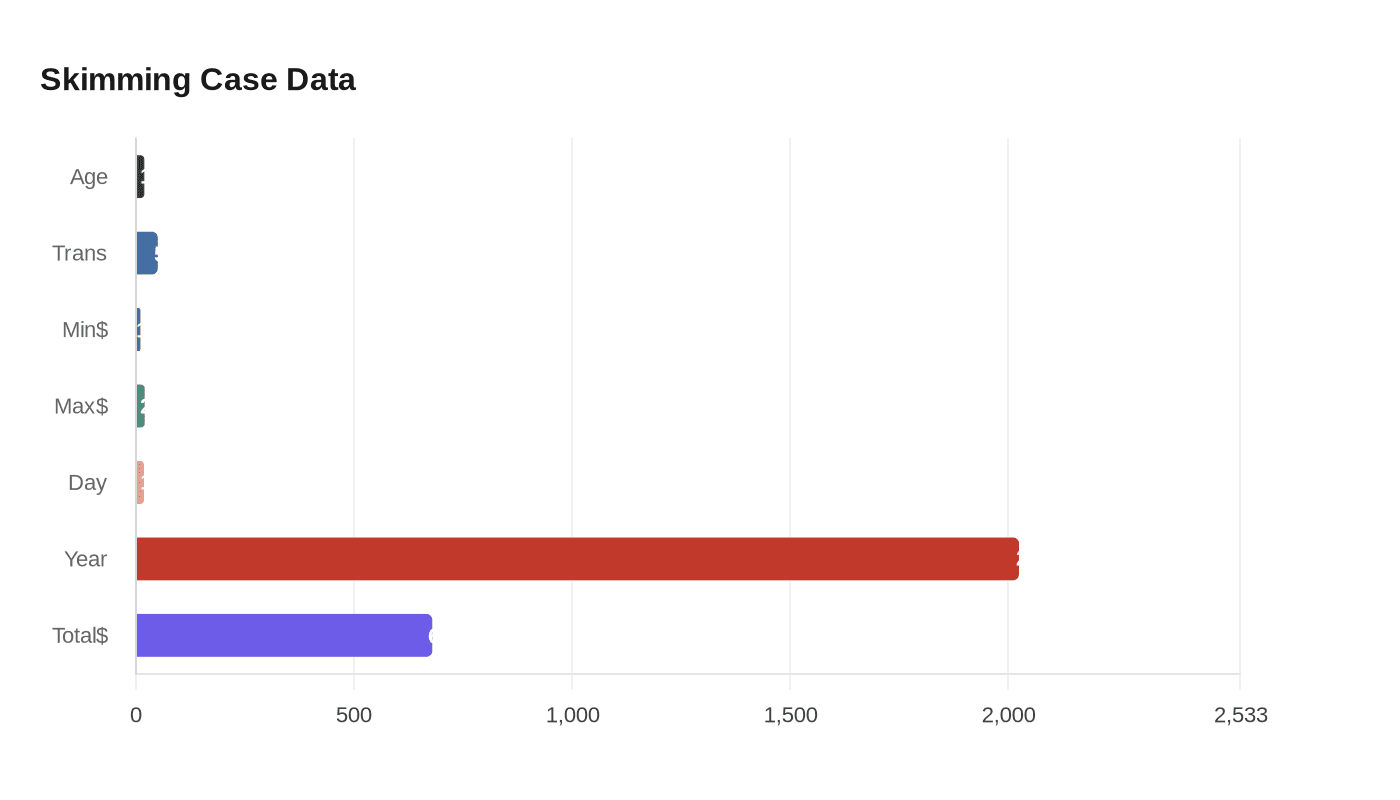
A 19-year-old drive-thru employee at a McDonald's in Springtown, Texas, was arrested after investigators say he processed legitimate payments for customers and then used a personal device to "tap" customers' cards a second time, generating extra charges. Authorities say roughly 50 fraudulent transactions occurred, with the employee obtaining about $680 before being stopped.
Springtown Police Department investigators arrested Giovanni Primo Blount on Jan. 18, 2026 following a customer report and a local investigation. Police allege Blount added unauthorized $10–$20 charges to individual payments by charging cards a second time after the valid transaction was completed. Blount posted bond and was released pending further legal proceedings.
The alleged scheme was detected after at least one customer noticed unexpected charges and reported them to police. Investigators traced multiple suspicious payments to the McDonald's drive-thru and to a personal device they say was used to re-charge cards. Police have advised customers who used cards at the Springtown location around that period to review bank and credit-card statements and to report any unfamiliar charges.
For workers, the arrest underscores several workplace issues. First, it highlights how point-of-sale vulnerabilities can be exploited by employees with access to customer payment information. Second, such incidents can strain relationships among crew members and between staff and management, as trust and morale suffer when a coworker is accused of theft. Third, employees face increased scrutiny and pressure whenever management or law enforcement conducts investigations, which can affect scheduling, staffing and the workplace atmosphere.
Employers in the fast-food sector should view the case as a prompt to review controls around payment terminals, employee access to card data, and policies on personal-device use during shifts. Clear rules banning personal devices near payment processing areas, routine audits of transaction logs, and prompt follow-up on customer complaints can help limit opportunities for impropriety. For hourly workers, awareness of these policies and of how quickly suspicious activity can lead to criminal charges is now especially relevant.
The case remains in the early stages as legal proceedings continue. For customers, the practical next steps are to check recent statements and dispute unauthorized charges with card issuers. For McDonald's crew members and managers, the broader lesson is to tighten procedures and restore customer and staff confidence through transparency and stronger payment controls.
This article was produced by Prism’s automated news system from verified source data, official records, and press releases, then run through automated quality and moderation checks before publishing. The system is built and supervised by the people who set the standards it runs under. Read our full AI policy.
Did this article answer your question?