USDA Lead Contamination Alert Prompts Supply Chain Vigilance for Fast Food Operators
Lead at up to five times the safe limit for children was found in Walmart's Great Value Dino Nuggets; here's the first-hour playbook when a food-safety alert hits your supply chain.
The lead found in Walmart's Great Value Dino Nuggets was not a trace amount. State surveillance testing turned up levels that FSIS confirmed could be as much as five times higher than the FDA's interim reference level of 2.2 micrograms for children. FSIS issued its public health alert on April 1, directed at 29-ounce bags of approximately 36 fully cooked dinosaur-shaped chicken breast nuggets produced by Dorada Foods on February 10, 2026, and shipped to Walmart stores nationwide.
McDonald's is not part of this alert. But every food-service manager who saw the headline and moved on has already made a mistake.
The operational reality: those nuggets moved through the same cold-chain logistics and third-party distribution infrastructure that feeds food-service supply chains across the country. Cross-dock distributors don't always draw clean lines between retail and food-service channels. FSIS warned that its investigation is ongoing and that additional products could be added to the alert if further testing identifies similar risks. That's a prompt to call your supply-chain contact before the next shift starts.
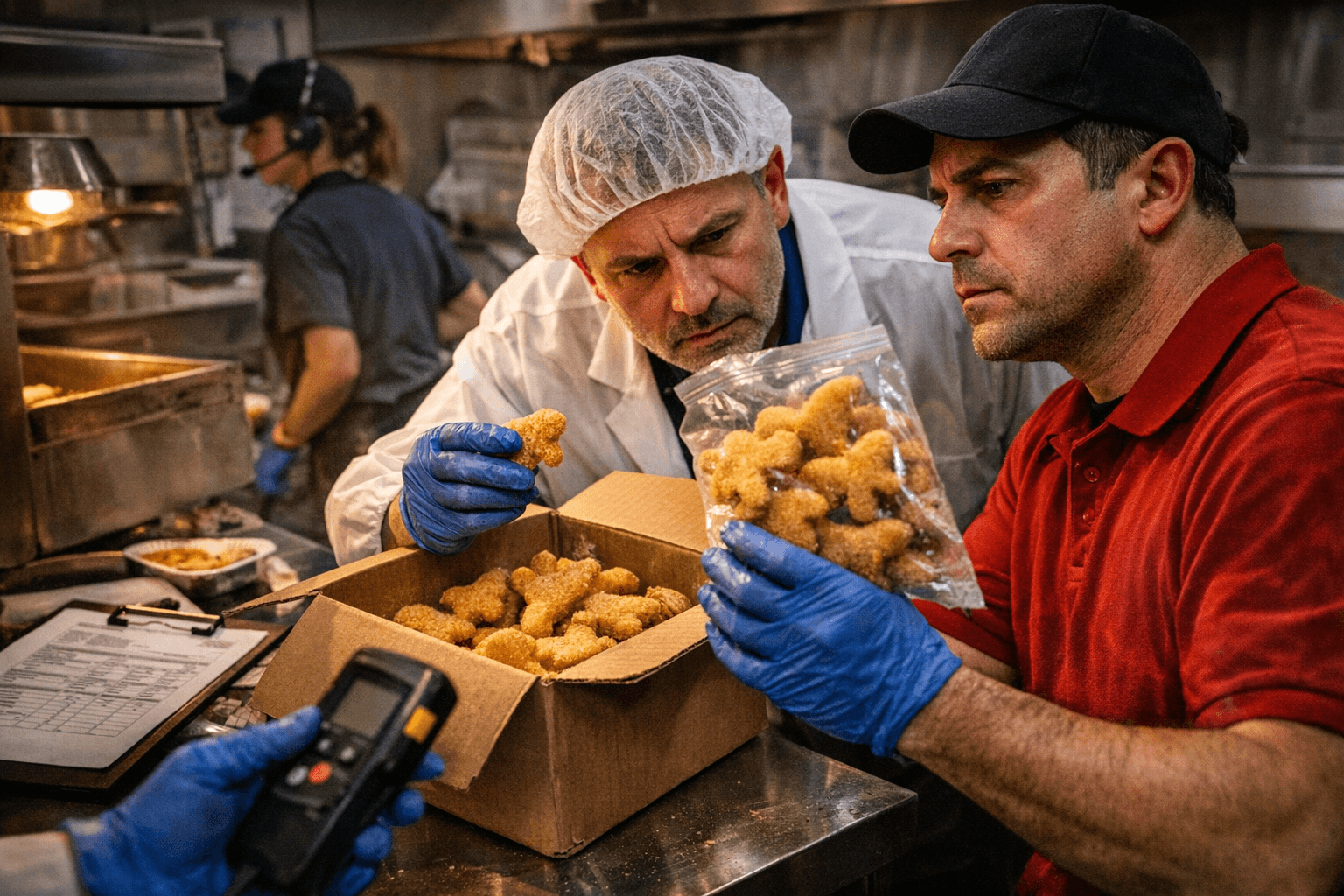
Start with inventory. The affected product carries lot code 0416DPO1215, establishment number P44164, and a best-by date of February 10, 2027. Check primary coolers, secondary storage, and employee refrigerators against those identifiers. If there's a match, quarantine it before it moves and document the chain: date, time, lot number, how the product was handled, and how it was disposed of or returned to the vendor. That paper trail is what a health inspector will ask for.
The customer question is coming whether you're ready or not. Social media moves faster than official guidance, which means crew members will field questions before any briefing has happened. A two-sentence script prepared before the rush does the job: confirm what the restaurant carries, direct personal concerns to the USDA Meat and Poultry Hotline at 888-674-6854. Crew members left without a consistent answer will improvise one, which compounds the problem.
Lead is particularly dangerous for pregnant women and young children because it can harm developing brains and nervous systems; no safe exposure level exists. Health departments tend to increase scrutiny after high-profile alerts, and documented supplier checks shorten those inspections considerably.
The checklist before the next shift: confirm with your supply-chain contact that no affected product entered your inventory; physically check all storage areas against the FSIS lot code and establishment number; document any quarantine, disposal, or vendor return; and make sure every crew member has a consistent customer-response message ready before the next rush. The investigation is ongoing and the product list could grow. Operators who file this as yesterday's news are betting their inspection record on someone else's vigilance.
Know something we missed? Have a correction or additional information?
Submit a Tip