AI-fueled layoffs reshape tech labor market, raising monday.com stakes
AI is now the cover story for restructuring across tech, and monday.com’s own AI push makes the hiring, retention and product bets more visible to its workers.

On May 6, 2026, monday.com said it had become an “AI Work Platform,” calling the move the biggest change in its history. Companies are using AI to explain org redesigns, role compression and tighter hiring, even when the economics also include overhiring, margin pressure and shifting product priorities. For monday.com, the labor-market backdrop is more than a headline, because the company is building its own AI story at the same time the broader SaaS market is becoming less forgiving.
AI is becoming the explanation, not the whole story
By July 6, the pattern in major tech layoffs tied to AI was clear: companies cited AI as a reason for cuts, but the reductions also reflected cleanup from the pandemic-era hiring surge. The market is not simply punishing AI laggards; it is also rewarding smaller, more tightly scoped organizations.
For engineers, product managers and sales teams, “AI-driven layoffs” often describe a broader restructuring playbook. Leadership can point to AI while also reworking layers of management, consolidating overlapping roles and shifting spend toward product bets that promise faster returns. The result is a labor market where hiring is more selective, compensation leverage is narrower and the margin for work that is hard to tie to revenue or customer retention is shrinking.
That dynamic changes the way workers should read any company’s public language around AI. When executives say the technology is the reason for a reorganization, the mix includes efficiency targets, product changes and the long tail of earlier hiring decisions.
Why monday.com is in the middle of this shift
monday.com is not just watching the AI-driven labor reset from the sidelines. Less than two months before the May 2026 rebrand, on March 11, 2026, the company said it was welcoming AI agents to its platform, and on March 23, 2026, it launched Agentalent.ai, a hiring platform for enterprise AI agents. Taken together, those moves show a company trying to reframe itself around people and agents working together, not simply automating tasks away.
monday.com has been signaling this shift since July 2025, when it unveiled a platform-wide AI push under the banner “The Work Execution Era Arrives,” saying the capabilities were built in response to customer needs. The May 2026 relaunch was an escalation of a strategy that had already been in motion for a year.
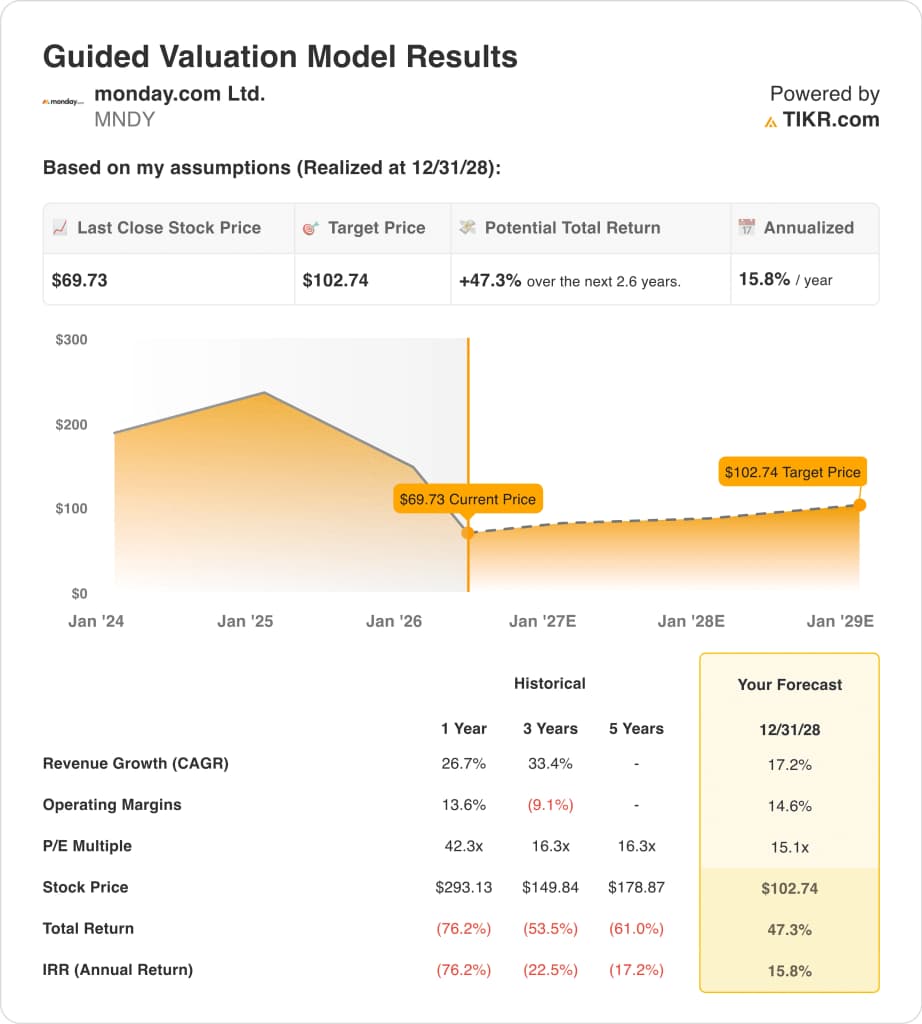
In Q1 2026, monday.com reported revenue of $351.3 million, up 24% year over year, and said it delivered record GAAP and non-GAAP operating income. In FY 2025, the company said revenue grew 27% and non-GAAP operating margin was 14%. It also said monday vibe was the fastest product in company history to surpass $1 million in ARR. The company is growing, but growth now has to coexist with a more disciplined operating model.
monday.com says it has about 3,200 employees, more than 250,000 customers and users in 200+ countries and territories. It also says the platform includes four end-to-end products.
monday.com filed its 2025 annual report on Form 20-F on March 13, 2026, after filing its 2024 annual report on March 17, 2025. It held its Q1 2026 earnings webcast on May 11, 2026.
What engineers, PMs and sales teams should take from it
For engineers, the defensible skills are shifting toward the parts of AI that require judgment, integration and trust. monday.com’s move toward native agents makes workflow design, reliability, data handling and system orchestration more valuable than generic feature shipping. If the company is rebuilding around people and agents, the strongest technical profiles will be the ones that can make automation work inside real customer workflows without breaking governance or uptime.
For product managers, the market is rewarding people who can connect AI to measurable customer value. monday.com’s four-product platform and its enterprise concentration, with customers over $50,000 in ARR representing 41% of total ARR in FY 2025, mean product decisions now need to work for larger accounts that care about workflow continuity, implementation risk and roadmap credibility. The PM job is less about piling features into a release and more about deciding where agents create leverage, where humans stay in the loop and how to prove that the change improves retention.
Sales teams face a different version of the same shift. A market full of AI-fueled layoffs makes buyers more cautious about vendor stability, especially when competitors are visibly reshaping their workforces around AI bets. That puts a premium on messages about durability, platform strategy and customer support, not just speed of innovation. At monday.com, where larger accounts already carry more of the ARR mix, sales has to show that AI is not a costume for efficiency, but a credible extension of the platform customers already rely on.
- enterprise AI implementation, not just surface-level feature familiarity
- workflow design across humans and agents
- data governance, reliability and security
- customer communication that can explain AI without overselling it
- the ability to connect product choices to revenue and retention
A few skills look especially durable across all three functions:
How teams should plan from here
The smartest staffing plans will assume that AI is changing both headcount math and role design. That does not mean fewer people across the board, but it does mean fewer excuses for vague jobs that do not map to customer outcomes. Teams should be thinking in terms of smaller pods, clearer ownership and roles that can absorb both product work and AI fluency.
This article was produced by Prism’s automated news system from verified source data, official records, and press releases, then run through automated quality and moderation checks before publishing. The system is built and supervised by the people who set the standards it runs under. Read our full AI policy.
Did this article answer your question?