AI spending drives tech layoffs, signaling tighter hiring ahead
AI is now a layoff rationale, with 21,490 April cuts tied to it and monday.com betting that agents can grow revenue without matching headcount.
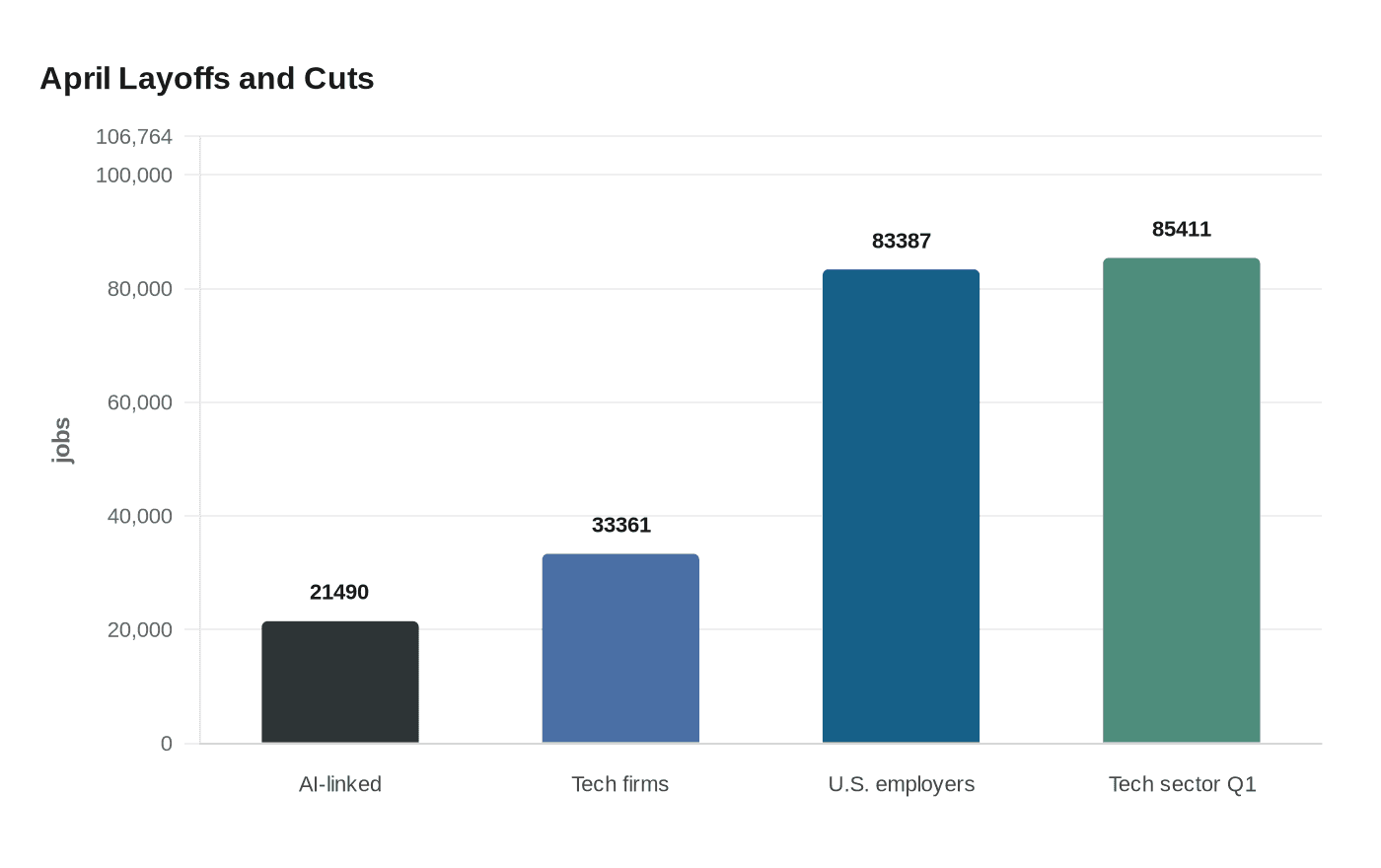
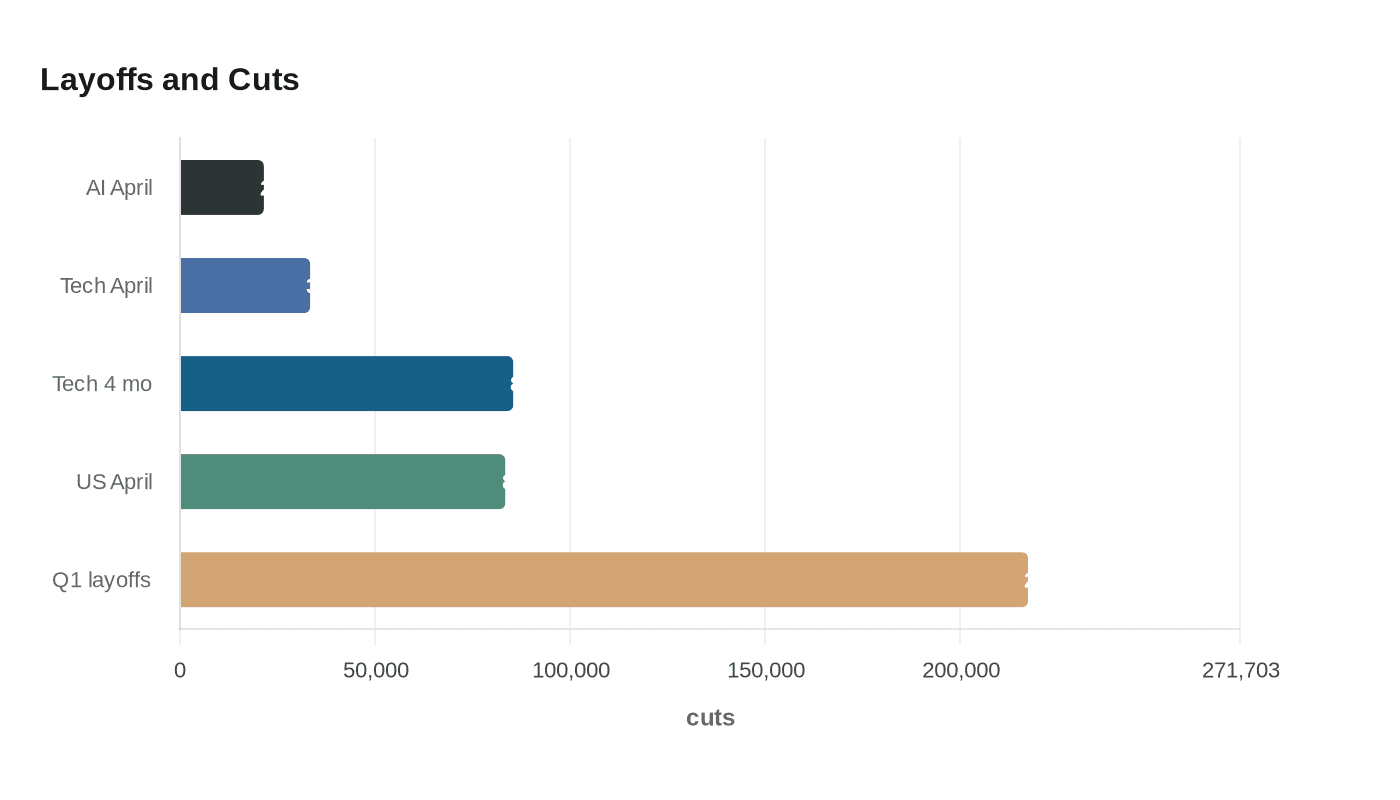
AI is no longer just an investment theme on earnings calls. In April, companies cited it in 21,490 job cuts, and tech companies announced 33,361 layoffs, pushing the sector to 85,411 cuts in the first four months of 2026, a 33% increase from a year earlier. Challenger, Gray & Christmas said AI was the leading reason for workforce reductions across sectors for a second straight month, and companies are increasingly tying cuts to AI spend and innovation.
That matters inside monday.com because the company is leaning into the same technology from the other side of the ledger. monday.com said first-quarter revenue rose 24% from a year earlier to $351.3 million and delivered record GAAP and non-GAAP operating income. CFO Eliran Glazer said AI productivity gains inside the company are allowing revenue to grow without headcount rising in lockstep, a signal that leverage, not just growth, is now part of the hiring equation.

The product roadmap points in the same direction. In March, monday.com said it had built new infrastructure for AI agents to sign up, authenticate and operate directly inside the platform, with the ability to organize projects, update workflows, trigger automations, generate reports and coordinate work across teams. In its annual report filing, monday.com said more than 250,000 customers worldwide use the platform and described its vision as one where AI does not just assist, it executes. The company says Microsoft Azure OpenAI is its primary model provider, with GPT and AWS Bedrock models such as Mistral and Anthropic also integrated, and it says customer data is not used to train its AI models.
For workers, the message is not that every role disappears. It is that every role is now being judged against an AI efficiency test. In sales, prospects are likely to ask for automation that offsets staffing pressure. In product and engineering, budget-worthy people will be the ones who can ship AI features, connect them to real workflows and prove adoption. In marketing, the bar is shifting toward AI-assisted content, image generation and personalization that can be linked to pipeline or retention. In operations, the most valuable operators will be the ones who can cut steps, shorten cycle times and quantify the labor saved.
Challenger’s broader April data shows how deep the reset runs. U.S.-based employers announced 83,387 cuts that month, the third-highest monthly total since 2009, and first-quarter layoffs reached 217,362, the lowest Q1 since 2022. The psychological shift is hard to miss: AI is no longer just what companies promise to build. It is also what they invoke when deciding which teams expand, which roles shrink and who looks indispensable in a tighter hiring market.
This article was produced by Prism’s automated news system from verified source data, official records, and press releases, then run through automated quality and moderation checks before publishing. The system is built and supervised by the people who set the standards it runs under. Read our full AI policy.
Did this article answer your question?