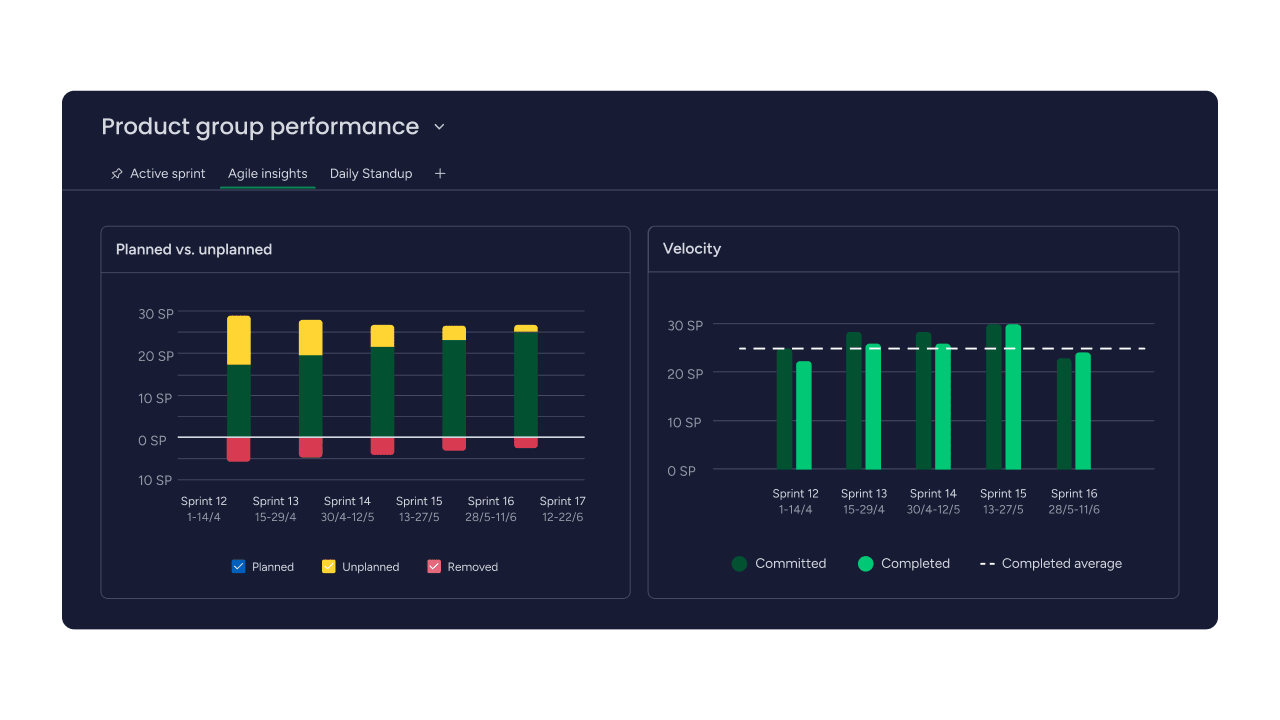
Atlassian search shift shows monday.com stakes in context-aware retrieval
Atlassian’s new search layer shows the real AI race is finding the right work, not just generating text. monday.com’s edge will depend on whether its AI can do the same inside messy team data.
Search is becoming the new productivity battleground
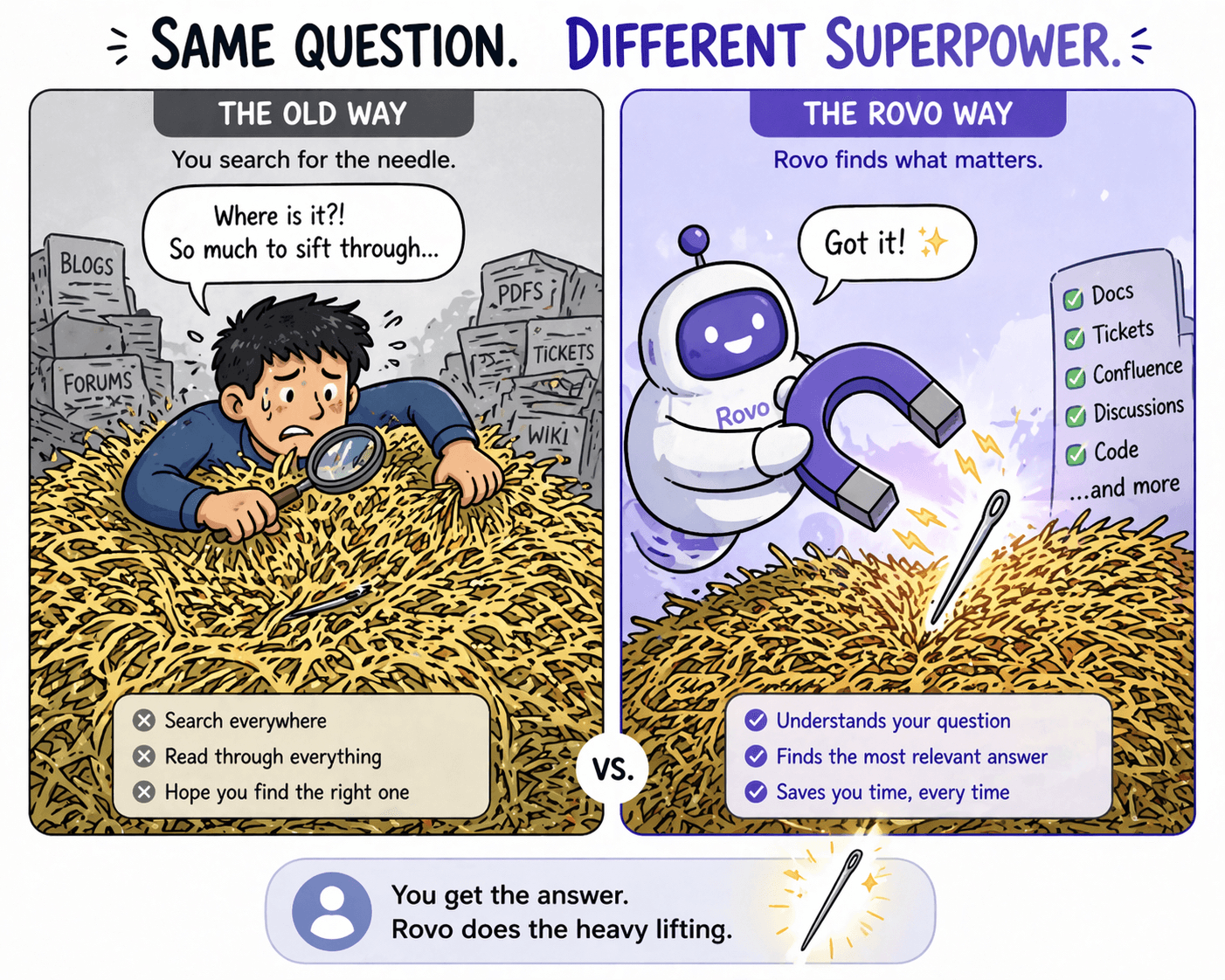
The most important AI feature in workplace software may be the one employees barely notice when it works: search. Atlassian’s structured queries push that idea to the center of the product stack by letting people search in natural language while the system pulls out filters such as app or source, content type, time range, and people involved. That is a direct answer to how work actually happens inside a modern company, where people remember the teammate they worked with, the rough timing, and the kind of file or page they need, but not the exact title.
For monday.com, that shift matters because the platform is competing in the same moment enterprise software is moving from generic chat toward context-aware retrieval. If search can surface the right board, doc, ticket, or decision faster, the AI feels useful. If it cannot, it feels like another layer of noise on top of already messy team data.
Why Atlassian’s move matters
Atlassian is not treating this as a one-off experiment. In 2023, the company said Jira could translate natural-language queries into Jira Query Language, which was an early sign that it wanted to reduce the burden of rigid syntax. In May 2024, Atlassian launched Rovo as an AI assistant with search across first- and third-party tools, then said Rovo became generally available in October 2024. By January 2026, Atlassian described Rovo’s semantic search as depending on entity linking and a knowledge graph.
That sequence points to a bigger strategy: move from keyword search to semantic retrieval, then add structure, permissions, and context so users can get to the right answer without knowing the exact label for it. Structured queries are the latest proof that the company sees search not as a utility feature, but as the core of how work gets found and resumed.
The practical implication is straightforward. Atlassian is trying to solve the everyday problem of fragmented memory inside knowledge work. Employees do not search like databases; they search like humans. They remember context, not metadata. Atlassian’s new approach tries to turn that human memory into machine-readable filters.

What this means for monday.com users
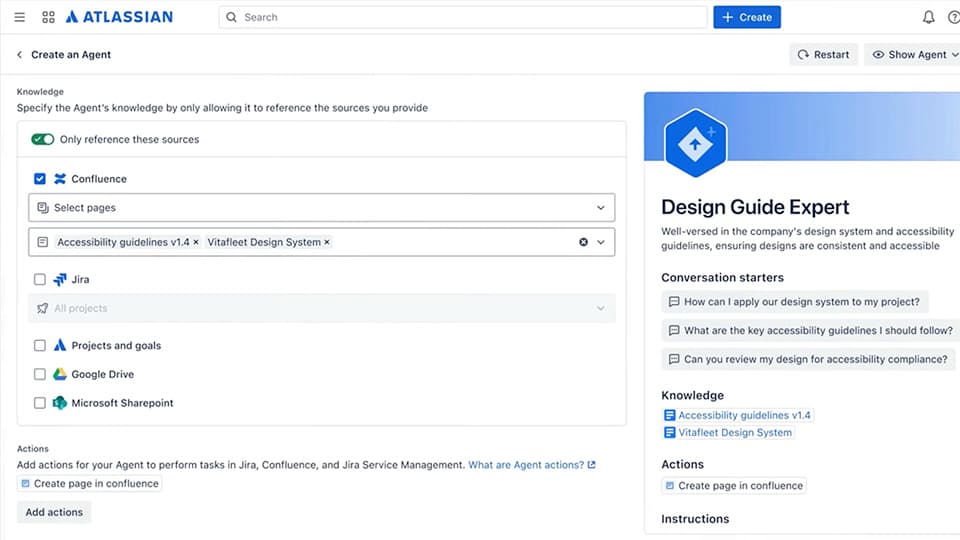
monday.com is already leaning into the same category shift. Its support docs describe monday AI as offering “intelligent, context-aware assistance,” and say monday sidekick can use monday content, attached files, web search, and advanced language models. The company also says its AI agent builder can understand context using boards, data, docs, workflows, and permissions.
That combination is important for anyone building or selling inside monday.com because it shows where the product is headed: not just automating tasks, but interpreting the work around them. In a platform built on boards and workflows, context is the product. A search or AI layer that understands permissions, attached files, and related docs can save employees from digging through disconnected artifacts one by one.
The stakes are especially high because monday.com says it now has more than 250,000 customers worldwide. At that scale, retrieval is not a nice-to-have polish feature. It becomes part of the core promise of the work OS.
For product managers, this is a feature race about friction
PMs at monday.com should read Atlassian’s announcement as a reminder that users judge work software by how quickly it removes uncertainty. The winning experience is not the one that gives the most verbose answer. It is the one that gets someone to the right board, the right discussion, or the right decision with the fewest failed searches.
That is why structured search is such a meaningful product signal. Natural language alone is not enough if the system cannot extract reliable filters and rank the result set intelligently. In practice, users want a blend of flexibility and determinism: they want to ask a question the way they would say it in Slack, then let the system narrow the field by source, time range, content type, and person.
For monday.com, that suggests search quality should be treated like workflow design. The better the context model, the less time teams spend reconstructing where work lives. The worse it is, the more the platform risks becoming a repository full of hard-to-find work.
For engineers, the architecture trend is clear
Atlassian’s search direction also signals where enterprise AI infrastructure is going. The emphasis on entity linking, knowledge graphs, and structured filters points to a model where natural language is only the entry point. Underneath it, the system needs to resolve people, documents, projects, and sources with enough consistency to support permissions-aware ranking.
That matters because the future of enterprise AI is not just a better interface. It is a better routing layer between unstructured human language and structured company knowledge. Engineers at monday.com should see this as a broader standard emerging across the category: combine generative models with precise retrieval, then make sure access control and context stay intact as results are assembled.
This is where retrieval starts to look less like search and more like navigation. Workers are not asking the system to think for them. They are asking it to find the right things fast enough that work can continue without friction.
For sales teams, the message is about outcomes, not AI theater
Sales teams at monday.com should expect buyers to ask sharper questions about what the platform can actually find, connect, and surface. In a market crowded with AI claims, the most persuasive story is not “we have AI.” It is “our AI understands your work well enough to reduce the time between question and action.”
That framing matters because monday.com is now describing itself as an “AI work platform,” and its February 2026 results showed 2025 revenue growth of 27% alongside a 14% non-GAAP operating margin. The company also said monday vibe became the fastest product to surpass $1 million in ARR in its history. Those numbers matter because they show AI is no longer a side feature in the company’s revenue story. It is becoming part of the main economic narrative.
Sales motion in that environment should lean into concrete workflow benefits: less hunting across boards and docs, faster follow-up on customer context, and better retrieval of the decisions that already exist inside the system. Buyers are increasingly comparing products on how quickly they can find the right answer inside messy team data, not on how impressive the demo sounds.
The broader market is moving the same way
Atlassian is not alone in this shift. TechCrunch has reported that Google is pushing Search toward an AI assistant model, that Apple is considering adding AI search engines to Safari, and that Glean is positioning itself as an intelligence layer underneath enterprise interfaces. Those moves all point in the same direction: the interface is changing, but the real competition is still retrieval.
That is the key lesson for monday.com employees. The next phase of workplace AI will not be won by whoever writes the best-sounding response. It will be won by whoever can surface the right work, the right people, and the right decisions fastest, while respecting permissions and context. Atlassian’s structured queries are one more sign that the category is moving there quickly, and monday.com will be judged by how well its own AI stack keeps up.
This article was produced by Prism’s automated news system from verified source data, official records, and press releases, then run through automated quality and moderation checks before publishing. The system is built and supervised by the people who set the standards it runs under. Read our full AI policy.
Did this article answer your question?