Atlassian warns AI fragmentation is costing Fortune 500 billions yearly
Atlassian pegs AI fragmentation at $161 billion a year for the Fortune 500, while only 6% of executives can prove ROI.
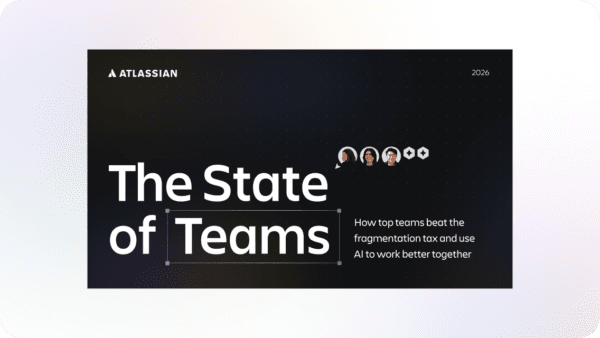
Atlassian says the AI fragmentation tax is costing the Fortune 500 $161 billion a year, even as 89% of executives say AI has accelerated speed and only 6% are sure they can point to specific ROI across their organizations. The State of Teams 2026 report frames the damage as duplicative work, misaligned priorities and coordination chaos, not a lack of model power.
That framing matters because Atlassian is no longer treating AI as a standalone feature set. Its State of Teams 2026 Tech Leadership Brief pushes the same message up the chain, and Atlassian’s separate piece, AI takes a seat on the team, casts AI as part of team workflows and coordination. The company’s argument is straightforward: enterprises are adding more AI tools, but too many of them create another layer to manage instead of a cleaner path from task to task.

For monday.com, that is a direct product and go-to-market signal. The company said in 2025 that it was expanding AI-powered agents, its CRM suite and enterprise-grade capabilities, describing the shift as technology that “doesn’t just manage work, but does the work for you.” It also fully launched monday service as an AI enterprise service management platform built to centralize service operations, a positioning that depends on proving the platform reduces handoffs rather than adding another one.
The numbers in monday.com’s own business update show why that proof matters. In Q3 2025, the company said new products accounted for more than 10% of total ARR, and that more than 60,000 apps had been built on monday vibe in roughly three months. Investor relations materials say more than 250,000 customers worldwide use the platform. For engineers, that puts pressure on integration quality, permissions and data coherence. For product managers, it points toward workflows that keep context in one place. For sales teams, it gives a concrete way to talk to enterprise buyers already wrestling with tool sprawl, duplicated AI subscriptions and messy handoffs between chat, docs and task systems.
Atlassian’s warning lands because it shifts the AI conversation from raw speed to organizational flow. The companies that keep winning will be the ones that make AI part of a single execution system, with clear ownership and fewer places for work to get lost.
This article was produced by Prism’s automated news system from verified source data, official records, and press releases, then run through automated quality and moderation checks before publishing. The system is built and supervised by the people who set the standards it runs under. Read our full AI policy.
Did this article answer your question?