EEOC guidance outlines pregnancy protections under three federal laws
Pregnancy protections often start long before leave and continue after birth, and monday.com managers who miss the gray areas risk real compliance failures.
The legal frame every manager needs
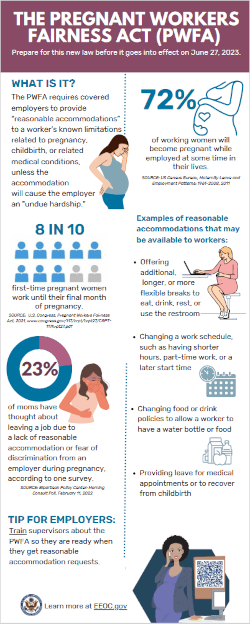
Pregnancy discrimination is illegal, but the hardest mistakes usually happen in ordinary management moments: a shift change, a temporary remote-work request, a leave question, or a medical file handled too casually. The Equal Employment Opportunity Commission’s guidance makes clear that pregnant workers and new parents are protected by three federal laws that often operate together: Title VII as amended by the Pregnancy Discrimination Act, the Pregnant Workers Fairness Act, and the Americans with Disabilities Act.
That overlap matters because the protections are broader than many supervisors realize. The Pregnant Workers Fairness Act went into effect on June 27, 2023, the EEOC issued its final rule on April 15, 2024, the rule was published in the Federal Register on April 19, 2024, and it took effect on June 18, 2024. The agency also received more than 100,000 public comments on the proposed regulations, a sign of how much attention the law drew before it even fully landed in workplaces. In fiscal year 2024, the EEOC reported 798 PWFA charge receipts and 25 resolutions, showing that the statute is already generating real disputes, not just policy debates.
Where managers most often miss the moment
The biggest blind spot is assuming pregnancy protections only show up when someone asks for leave. In practice, the issues surface earlier and more often: when a manager assigns travel, sets deadlines, plans coverage, or decides whether a worker can temporarily work from home. The EEOC says these protections apply across employment decisions, including hiring, pay, promotions, training, benefits, leave, firing, and other terms and conditions of employment.
A useful way to think about the law is as a series of moments where a request can be mishandled before HR even sees it:
- An employee shares a pregnancy-related limitation and the manager treats it as informal rather than a protected request.
- A supervisor says the team is too busy to adjust a schedule or location, without considering whether a reasonable accommodation is required.
- A worker is denied flexibility because the manager thinks pregnancy is never a reason to change duties.
- A medical detail is discussed in public channels or left visible to people who do not need to know.
- A return-to-work plan is built around assumptions instead of an actual conversation about what the employee needs.
For supervisors, the practical rule is simple: do not wait for a request to become a conflict. The earliest response often decides whether the company is solving a problem or defending one.
Why the ADA still matters here
The Americans with Disabilities Act adds another layer that managers sometimes overlook. The EEOC’s guidance says pregnancy-related impairments can qualify as disabilities, which can trigger a different set of accommodation obligations. That means the law is not limited to the fact of being pregnant. It can also cover a medical condition tied to pregnancy or childbirth that affects how a person works.

The confidentiality rules matter too. The EEOC says employers must keep pregnancy-related medical records confidential and in separate medical files. For a monday.com team, that is not an abstract compliance point. In a distributed SaaS company where project coordination happens quickly and often across functions, managers can easily overshare if they do not know what belongs in an accommodation conversation and what belongs in a general status update.
What this means inside monday.com
For monday.com, the legal guidance lines up with the company’s own public employment posture. Its careers pages say it is an equal-opportunity employer and list pregnancy and family or parental status among protected characteristics. Job postings also include parental leave among employee benefits. That makes pregnancy protections part of the employee experience the company already presents to the market, not a side issue reserved for HR audits.
The stakes are especially visible in a work-OS business built on coordination. Engineers, product managers, and sales teams move fast, work across time zones, and rely on clean handoffs to keep launches and customer commitments on track. That same operating style can either support a request for adjustment or bury it under urgency. A manager who knows how to route an accommodation request can preserve both the employee’s dignity and the team’s delivery schedule.
The broader message is that pregnancy and caregiving rules are not a niche HR topic. They are part of everyday management hygiene, especially in a company that depends on distributed work and cross-functional execution. Supporting a worker through pregnancy, childbirth, or a related medical condition is not just a legal checkbox. It is part of keeping a modern workplace credible to the people who build its product and sell it to the market.
The policy fight behind the rule
The legal framework did not appear out of nowhere. A Better Balance says it helped launch and lead the campaign that resulted in the Pregnant Workers Fairness Act, underscoring how long advocates pushed to close gaps in workplace protection. The National Women’s Law Center and the American Civil Liberties Union have argued that the EEOC’s regulations are key to enforcing the statute and protecting workers denied accommodations.
That history helps explain why the issue resonates beyond compliance circles. The debate has always been about whether workers should have to choose between health and employment, or between caregiving and career continuity. The EEOC’s guidance answers that question with a clear practical standard: managers need to recognize the request, understand which law may apply, keep medical information confidential, and move quickly enough that the employee is not left carrying the burden alone.
For monday.com managers, the lesson is direct. Pregnancy protections do not begin and end with leave paperwork. They show up in scheduling, flexibility, privacy, benefits, and how leaders respond the first time an employee asks for help.
This article was produced by Prism’s automated news system from verified source data, official records, and press releases, then run through automated quality and moderation checks before publishing. The system is built and supervised by the people who set the standards it runs under. Read our full AI policy.
Did this article answer your question?