How monday.com equity compensation works, from options to RSUs
monday.com equity can look like a bonus, but vesting, taxes, and stock moves decide what you actually keep. Here’s how options and RSUs differ, and why the details matter.
Why monday.com equity deserves a close read
At monday.com, equity is not just a line item in an offer letter. It is tied to a public-company stock price, a vesting schedule, and a tax bill that can show up before you have any cash in hand. That matters at a company with 3,211 employees, more than 250,000 customers worldwide, and 4,547 customers paying more than $50,000 in annual recurring revenue, because the stock is being judged against a business that is still growing fast and still moving around in the market. In its first quarter of fiscal 2026, monday.com reported revenue of $351.3 million, up 24% year over year, plus $19.8 million in GAAP operating income and $104.7 million in operating cash flow.

That combination is exactly why equity at monday.com can feel confusing. The company is a Nasdaq-listed foreign private issuer headquartered in Tel Aviv, Israel, so employees are dealing with public-company mechanics, not startup shorthand. If you are an engineer, product manager, or salesperson trying to compare offers or decide whether to stay for another vesting cycle, you need to know what you own, when you own it, and when the tax clock starts ticking.
Options and RSUs are not the same thing
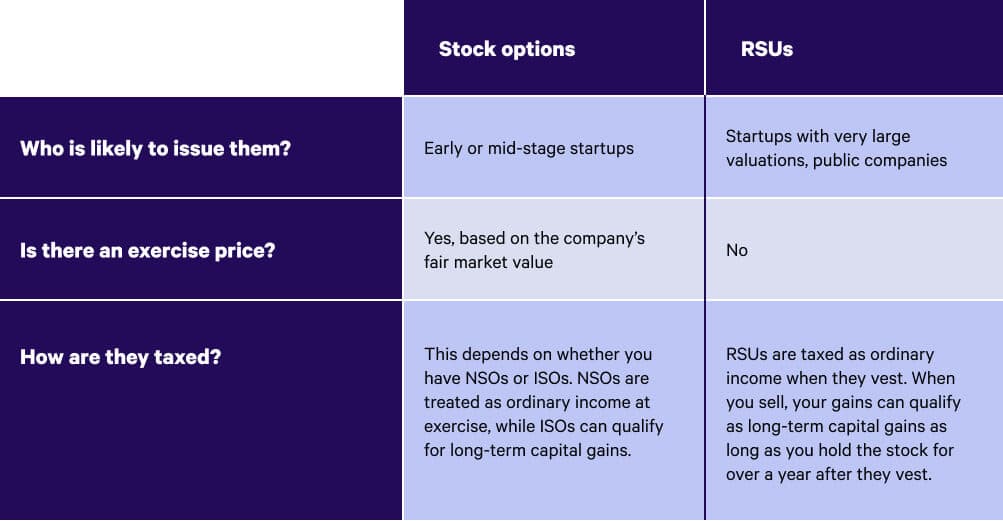
The basic distinction is simple, but it is easy to miss when compensation letters get dense. Stock options give you the right to buy shares later at a preset price. Restricted stock units, or RSUs, are a promise to deliver shares later if vesting conditions are met. IRS Publication 5992 treats equity-based compensation broadly, covering stock options, restricted stock, RSUs, and other awards tied to company stock.
That difference changes the risk. With options, you usually have to decide whether to exercise, and that decision depends on whether the market price is above your strike price. With RSUs, you do not pay to get the shares, but you still have to wait for vesting and then deal with taxes when the shares are delivered. JPMorgan Workplace Solutions notes that public-company RSUs are typically time-based, while pre-IPO RSUs can use double-trigger vesting, which adds another layer of timing before anything becomes yours.
For monday.com workers, this is not an abstract distinction. Public-company equity is part of total compensation, and the value can swing based on the stock, not just the size of the grant. A larger grant can still disappoint if the share price falls before vesting; a smaller grant can beat expectations if the stock climbs.
Vesting is where the real ownership question starts
Vesting is the part employees often skip past, and that is where surprises begin. Fidelity’s vesting guidance explains that vesting can happen all at once, over time, or after performance milestones, and that until vesting occurs, the employee may not fully own the entitlement. In plain English: the grant is not the same as the shares in your account.
That is why the schedule matters as much as the headline number. If your equity vests monthly over several years, you are gradually earning the right to the award. If it vests in chunks, your compensation can arrive in bigger bursts, which can also create bigger tax and cash-flow consequences. At a company like monday.com, where stock performance and business execution are watched closely, the difference between a grant date and a vesting date can materially change how valuable the award feels.
It also matters when you are making career decisions. Candidates often focus on total grant size, but the practical question is whether they will actually stay long enough to vest it, and whether the stock price will still make the award attractive when each vesting date arrives. That is the part many people underestimate.
Taxes can hit before you sell a single share
This is the area where even experienced tech workers get tripped up. Equity compensation is a financial instrument as much as a retention tool, and the tax treatment depends on the type of award and the moment it vests or is exercised. If the stock price moves sharply before vesting, the paper value of the grant can look very different from the net amount you actually keep after taxes.
RSUs are especially prone to this kind of confusion because vesting can create a taxable event even if you do not sell immediately. That creates a cash-flow issue: you may owe tax without having the proceeds from a sale in your bank account yet. Options have their own traps, because exercising them can require cash up front and can expose you to a tax bill tied to the spread between the strike price and the market price.
For monday.com employees, the safest assumption is that the number in the offer is not the number that lands in your pocket. The value of the award depends on the vesting cadence, the share price at the relevant moment, and the tax rules that apply when the shares move from promised to owned.
Why monday.com’s public-company profile changes the equation
monday.com’s scale makes equity more than a theoretical perk. The company said it had 4,547 customers with more than $50,000 in annual recurring revenue as of March 31, 2026, and its 110% net dollar retention rate suggests existing customers are still expanding their spend. That kind of metric helps explain why equity can be a meaningful part of the compensation package, because the stock price is being measured against real operating performance, not just a growth story.
The company also filed its 2025 Annual Report on Form 20-F with the SEC on March 13, 2026, and that report covers audited financial statements for the year ended December 31, 2025. For employees, that is a reminder that the company now lives under public-market scrutiny. Stock-based compensation is no longer just an internal retention device. It is visible, priced by the market, and tied to quarterly results.
The latest numbers show both strength and volatility. A 24% revenue increase, GAAP operating income, and positive operating cash flow are all signs of a business that is producing real results. But public-company equity always comes with movement, and movement is what makes compensation feel richer one month and thinner the next.
What to check before you sign or decide whether to stay
If you are evaluating a monday.com offer or trying to understand a refresh grant, the most useful questions are practical ones:
- Is this an option grant or an RSU grant?
- When does it vest, and is vesting time-based, milestone-based, or something else?
- What happens if you leave before the next vesting date?
- What tax event happens at vesting or exercise?
- If the stock price moves, who captures the upside and who absorbs the downside?
Those questions matter because equity is partly about retention, but it is also about timing. A grant that looks generous on paper can turn into a smaller real-world payout if vesting stretches out or the stock slips. A more modest grant can look better if the company keeps growing and the market keeps rewarding that growth.
The cleanest way to think about monday.com equity is this: it is compensation, but it is compensation with rules. Once you understand the vesting, the taxes, and the sale timing, the offer stops being mysterious and starts looking like what it really is, a financial tradeoff wrapped inside a career decision.
This article was produced by Prism’s automated news system from verified source data, official records, and press releases, then run through automated quality and moderation checks before publishing. The system is built and supervised by the people who set the standards it runs under. Read our full AI policy.
Know something we missed? Have a correction or additional information?
Submit a Tip