How monday.com growth engineers use data to drive product decisions
monday.com’s growth engineers are business operators with code, using data, RICE, and minimum viable tests to decide what ships next.
At monday.com, growth engineers work against activation, adoption, and retention metrics, not just shipping speed. The role is built to turn product usage into product decisions, with engineers treating activation, adoption, and retention as the real outputs of their work. That means the job sits between software engineering, product thinking, and analytics, and it is designed for companies that want every feature to prove itself quickly.
What monday.com means by growth engineering
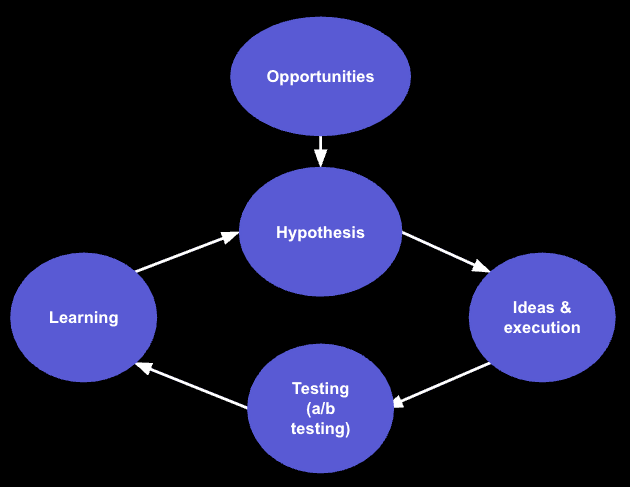
monday.com’s Growth group exists to accelerate user activation, boost adoption, and retain engagement through data-driven iterations. The work runs as a learning loop: analyze user data, form hypotheses about why metrics are lagging, suggest solutions, prioritize the best opportunities, build the smallest test that can validate the idea, and run A/B tests before polishing the feature.
A traditional engineer can measure success by whether a feature works as designed; a growth engineer is measured by whether the feature changes user behavior in the right direction. On monday.com, that means the team starts with a measurable problem, not a fully formed product vision, and uses a minimum viable test, or MVT, to prove or disprove the hypothesis before spending more time on refinement.
The growth workflow involves product managers, designers, developers, and analysts, which makes the role less like a solo engineering lane and more like a shared operating model. monday.com uses RICE, or another prioritization method, to sort opportunities, so the engineer is also helping decide where the next hour of work should go, not just how to implement it.
How the job differs from traditional software engineering
The biggest difference is the unit of judgment. In a conventional engineering role, the question is often whether the feature ships cleanly, scales reliably, and avoids bugs. In growth engineering, the question is whether the feature moved the metric that mattered, whether that is activation, adoption, or retention.
That shift changes day-to-day decision-making. Instead of spending weeks polishing a feature before release, the growth team at monday.com is meant to find the smallest version that can answer the question quickly. If the hypothesis does not hold up in the data, the team can move on without overbuilding, which is a very different muscle from the classic build-it-right-first mindset.
A useful way to think about the role at monday.com is as a hybrid skill stack:

- enough technical depth to build and instrument experiments
- enough product sense to frame the right hypothesis
- enough analytical judgment to read the metric without fooling yourself
- enough cross-functional fluency to work with product, design, and analytics as one team
That combination can appeal to engineers who like measurable outcomes and fast iteration. It is also distinct from marketing work, even though the goals may touch growth.
Why monday.com’s broader engineering culture makes this possible
In monday.com’s technical interview guide, engineers propose new features and develop them end to end, taking them from ideation to post-deployment analysis. Engineers are expected to think beyond implementation and into product impact.
monday.com uses feature flags to AB-test changes on clients, which lets teams compare variants without freezing the whole product process.
In its engineering blog, monday.com said it shortened development feedback loops from 30 minutes to 30 seconds and that its infrastructure runs on 100k+ vCPUs. That helps explain why faster, lighter-weight tests matter when the cost of waiting is multiplied across a large platform.
In an older engineering post, monday.com described its R&D organization as growing 2x every year. As teams get larger, end-to-end ownership can disappear unless the company keeps reinforcing product thinking, fast feedback, and ownership after deployment.
Why the role matters now for monday.com
In its fiscal 2025 results, monday.com said full-year 2025 revenue reached $1.232 billion, up 27% year over year, and fourth-quarter 2025 revenue reached $333.9 million, up 25% year over year. On February 9, 2026, the company said monday vibe became the fastest product in company history to surpass $1 million in annual recurring revenue.
In its fiscal 2025 results, monday.com also said customers with more than $50,000 in ARR represented 41% of total ARR, which points to a business that is increasingly standardized inside larger accounts. In that environment, growth engineering is not just about getting new users through onboarding. It is about making sure adoption sticks, expansion becomes easier, and the product keeps proving its value inside mission-critical workflows.
As of June 24, 2026, monday.com investor relations listed more than 250,000 customers worldwide using the platform. At that size, even small gains in activation or retention can matter materially for the MNDY story, because a fraction of a percentage point on a huge base can translate into meaningful revenue, especially as the company pushes deeper into enterprise and AI-led workflows.
The growth-engineering model fits monday.com’s current phase. The company is selling not just software, but a platform for people, workflows, and AI agents.
What the role asks for in practice
For engineers considering the role, the skill mix is narrower in one sense and broader in another. You do not need to treat every problem like a long-term architecture project. You do need to be comfortable building the smallest credible version of an idea, reading the numbers honestly, and deciding whether the result justifies more investment.
For product managers, the growth model clarifies where engineering can add leverage. The best growth engineers are not feature takers waiting for requirements. They are part of the mechanism that turns user behavior into the next hypothesis, which makes roadmap decisions more grounded and less opinion-driven.
For sales teams, the connection is just as practical. When activation, adoption, and retention improve, the product is easier to position in expansion conversations, especially with larger customers who expect measurable value.
This article was produced by Prism’s automated news system from verified source data, official records, and press releases, then run through automated quality and moderation checks before publishing. The system is built and supervised by the people who set the standards it runs under. Read our full AI policy.
Know something we missed? Have a correction or additional information?
Submit a Tip