How monday.com’s 10-K and 10-Q reveal the business behind earnings
monday.com’s filings show more than earnings: they reveal hiring pressure, customer momentum, and where product bets are headed next.
The filing is the company in plain sight
If you want to understand monday.com before a headline turns its earnings into a stock-market story, start with the 10-K and 10-Q. Those filings are where the company describes its business, the risks it sees, and the operating results that shaped the quarter or year. They are also signed off by the CEO and CFO, which makes them more consequential than a slide deck or a social post, even though the SEC reviews them for compliance and does not vouch for every number inside.

For employees, that matters because the filing is the business speaking in its own voice. It is not just finance housekeeping. It is the clearest public map of what the company thinks is working, what is fragile, and what deserves more investment. At monday.com, where product decisions, sales execution, and hiring all move quickly, the filing can tell you more about the next internal priority than a day of external commentary ever will.
What to read first
The trick is not reading everything. The useful habit is to compare the latest 10-Q with the last one and look for change. That means scanning customer growth, revenue mix, margins, operating expenses, guidance, and risk disclosures. Those are the sections that show whether the company is expanding efficiently, buying growth with heavy spending, or shifting resources toward a new product bet.
Risk factors matter because they show what management worries could slow the business down. Revenue mix matters because it shows where the company is actually monetizing, not just where it is getting attention. Operating expenses matter because they reveal whether monday.com is hiring into product, go-to-market, or infrastructure, and whether that spending is starting to outpace growth.
A 10-Q also matters because it turns earnings into an operational conversation. Engineers can read it as a signal about infrastructure load, platform investment, and product reliability. Product managers can read it as a clue about adoption, expansion, and which customer segments are deepening their use. Sales teams can use it to understand customer concentration, pipeline quality, and whether large accounts are becoming more important to the business.
What monday.com’s public numbers already suggest
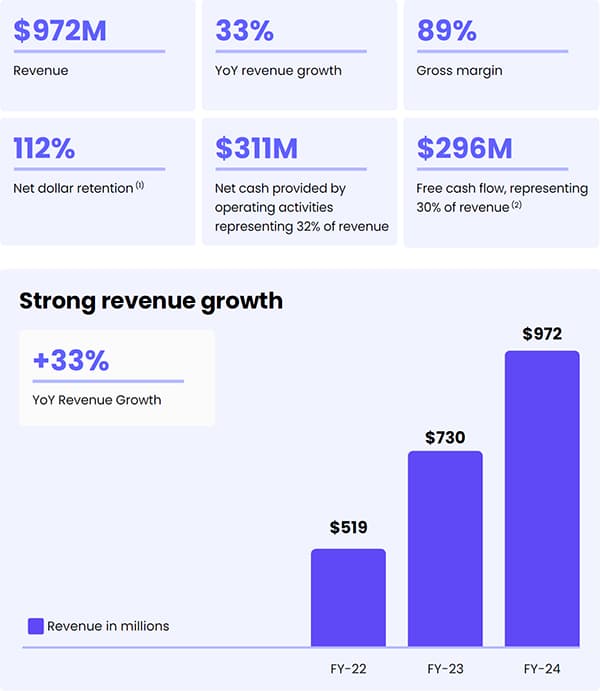
monday.com’s investor materials already give a useful frame for how to interpret its filings: more than 250,000 customers, 110 percent net dollar retention, 4,281 customers generating more than $50,000 in annual recurring revenue, and 3,155 employees as of December 31, 2025. Those are not just vanity metrics. Together, they show a company with broad adoption, meaningful expansion inside existing accounts, and a workforce large enough that every reporting period may hint at where the next wave of work is going.
The customer count points to scale, but the net dollar retention figure is the more revealing signal for workplace readers. A 110 percent net dollar retention rate means the company is not just replacing lost revenue, it is growing revenue from existing customers. That usually reflects product stickiness, upsell opportunities, and deeper workflow adoption. For product teams, that often means the platform is moving from one use case to multiple use cases. For sales teams, it suggests the account base has room to expand without relying entirely on net-new logos.
The 4,281 customers above $50,000 in annual recurring revenue are another important clue. That figure points to enterprise traction and tells you that larger accounts are becoming a meaningful part of the business mix. When that number rises, it can signal stronger enterprise sales execution, better product fit for larger organizations, or more success in turning departmental use into company-wide adoption. When it slows, it can hint at longer sales cycles or tougher competition for bigger contracts.
The employee count matters too. With 3,155 employees, monday.com is no longer a scrappy startup improvising quarter to quarter. Headcount at that scale usually means more specialization, more process, and more scrutiny over where the company adds people. A filing can show whether hiring is shifting toward engineering, sales, customer success, or general administration, and that shift often says a lot about where leadership expects the next growth to come from.
How to read the business through the sections that matter
Risk factors are where optimism meets constraint. If monday.com updates language around competition, macro pressure, customer concentration, AI-related product shifts, security, or regulatory issues, those changes are worth attention because they often foreshadow where the company expects friction. A new risk does not mean disaster is coming. It usually means management sees enough pressure to explain it publicly.
Revenue mix is where you can see whether the company is leaning more heavily into a particular customer segment or product motion. For a work-OS company like monday.com, that can reveal whether small teams are still the entry point or whether enterprise accounts are driving more of the growth. It can also show whether product expansion is broadening beyond core work management into other workflows that make the platform harder to leave.
Operating expenses tell a different story: discipline. If spending rises in sales and marketing, the company may be pushing harder for new customers or larger contracts. If research and development gets more weight, that usually suggests product acceleration, infrastructure investment, or new features aimed at widening the platform’s usefulness. If general and administrative costs climb too fast, the filing may hint at a company absorbing the overhead that comes with scale.
The most practical reading rule is simple: do not stop at the earnings headline. Look for what changed quarter over quarter. Did customer growth accelerate? Did the number of large accounts move? Did margins improve while hiring continued? Did the company add language about risk, or quietly remove it? Those are the clues that tell you whether monday.com is investing for the next stage of growth or tightening up around efficiency.
What the next report will tell you before the market does
For people inside monday.com, the next filing is less about whether Wall Street cheers and more about whether the company is building in the direction employees expect. Strong customer expansion can justify more product investment. Rising operating expenses can point to hiring plans or go-to-market pressure. A shift in risk language can hint at where leadership is bracing for trouble or opportunity.
That is why the 10-K and 10-Q matter so much in a software company. They are not just compliance documents. They are one of the few public places where you can see the company’s priorities, discipline, and vulnerabilities laid out together. Read them closely enough and you can often spot the business behind the earnings long before the headline version catches up.
This article was produced by Prism’s automated news system from verified source data, official records, and press releases, then run through automated quality and moderation checks before publishing. The system is built and supervised by the people who set the standards it runs under. Read our full AI policy.
Did this article answer your question?