Monday.com employees can use equity compensation to plan retirement
The biggest mistake is treating monday.com equity like a bonus. Vesting, taxes, concentration risk and liquidity should shape retirement planning from the start.
monday.com generated $972 million in fiscal 2024 revenue, and annual recurring revenue rose above $1 billion. At the public software company, equity is easy to misread as upside on top of salary, but stock-based pay can meaningfully affect a worker’s long-term net worth from day one.
Why monday.com equity belongs in a retirement plan
monday.com is a public application software company with 1,001 to 5,000 employees, which is the kind of scale where equity decisions stop being abstract. The company’s stock-based compensation was $129.21 million in 2024, up from $100.19 million in 2023. For engineers, product managers, and salespeople, that means every vesting date and every decision to hold or sell shares has a real effect on how much of retirement is funded by one company.
monday.com said second-quarter 2024 revenue reached $236.1 million, up 34% year over year, and that it achieved GAAP operating profitability and record non-GAAP operating income. In the third quarter, revenue rose to $251.0 million, up 33% year over year. Its 2024 annual report also showed 112% net dollar retention, $296 million in free cash flow, and $311 million in net cash provided by operating activities, all of which underscore how central equity can be to the compensation mix at a fast-growing SaaS business.
Think about equity by career stage
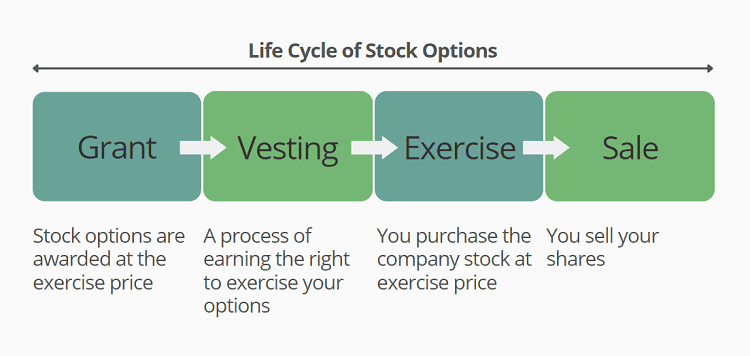
The best time to make equity part of retirement planning is before the grant feels valuable. Early in a career, the focus should be on vesting schedules, the tax treatment of grants and sales, and how company stock fits into total net worth. If you are joining a company like monday.com, where careers pages and job listings point to roles in Tel Aviv and New York and where remote work is part of the culture, your compensation may already be spread across geography, time zones, and work arrangements, so the paperwork matters as much as the headline grant number.
Mid-career employees need a different lens: concentration risk. By then, your human capital, meaning your paycheck and career prospects, may already be tied to the same company whose stock you own. That makes it easier to overestimate how much you can safely keep in monday.com shares, especially when the business is posting strong growth, closing large deals like its 80,000-seat agreement in the second quarter of 2024, and marketing itself as an AI work platform with products such as monday sidekick and monday vibe.
Near retirement, the emphasis usually shifts from growth alone to a mix of growth, income, liquidity, and tax efficiency. At that stage, the question is no longer whether the company is promising. It is whether a large block of shares, if held too long, could leave too much of your retirement exposed to a single stock and a single set of corporate results.
Taxes and liquidity can matter more than the stock price
A retirement-focused equity plan has to account for vesting timing, exercise decisions, and the date you actually sell shares. Taxes can be triggered at vesting or sale depending on the award type and your country of residence, and those obligations can arrive before the cash from the shares does. That is why employees often need a cash buffer, retirement accounts, and emergency savings outside of company stock.
Volatility is the other risk that gets missed when equity is treated like a bonus. A strong year in the stock can make a paper gain feel permanent, but tech stocks can reverse quickly, and a weak year can tempt people to hold on too long in hopes of a rebound. The safer framework is to decide in advance what share of company stock you are willing to keep after vesting, how much you want to diversify into broader investments, and what liquidity you need if you are planning a house purchase, a family expense, or an eventual retirement date.
monday.com’s annual report showed 33% year-over-year revenue growth in fiscal 2024, while the third quarter brought net dollar retention of 111% and the annual report later showed 112%.
Managers should keep equity education recurring
For managers, HR partners, and people leaders, the practical lesson is to talk about equity more than once. Morgan Stanley at Work’s 2022 State of the Workplace Financial Benefits Study found that 95% of HR leaders and 80% of employees viewed equity compensation as important, which helps explain why a one-time onboarding explanation is not enough. Workers want to know how grants fit into the rest of their financial lives, not just how many shares they received.
That is especially true in a company like monday.com, where remote and hybrid norms, a Tel Aviv base, a New York presence, and a distributed SaaS workforce all shape compensation.
This article was produced by Prism’s automated news system from verified source data, official records, and press releases, then run through automated quality and moderation checks before publishing. The system is built and supervised by the people who set the standards it runs under. Read our full AI policy.
Did this article answer your question?