monday.com expands AI help docs to clarify product capabilities
monday.com is turning its AI help docs into a product map, showing which workflows it wants to automate and how it plans to package the features.
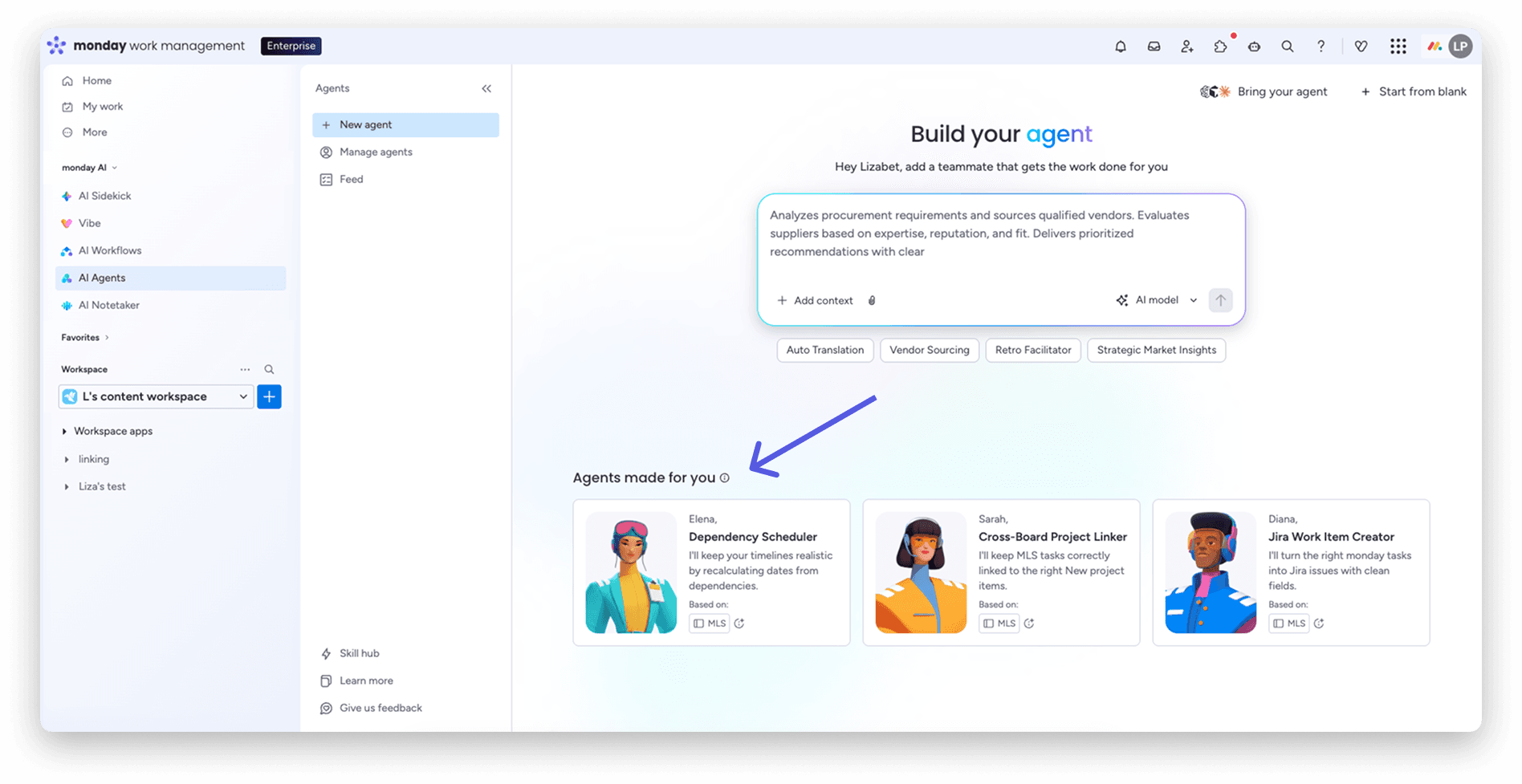
monday.com’s AI help center now reads like a product map, not just a support library. The AI Feature Catalog sits beside pages for getting started, FAQs, credits, blocks, agents, and monday CRM’s AI features, giving customers and employees a clearer view of what the company’s AI actually does. For product teams, sales, and support, that structure matters because it shows how monday.com wants the market to understand its AI story: as a bundle of specific capabilities, not a vague promise.
A catalog that reveals the packaging strategy
A feature catalog is never just a list. At monday.com, it is a packaging decision that separates everyday assistance from more advanced automation and frames AI as part of the core product experience. That matters in a SaaS business where buyers want to know whether a capability is a native feature, an add-on, or something that sits behind usage limits and enterprise controls.
monday.com already leans hard into that framing in its own corporate language. The company describes itself as an “AI work platform” and says every product runs on the same AI layer, spanning monday work management, monday CRM, monday service, and monday dev. Its investor relations overview goes one step further, saying the platform is built for teams and agents working together and that AI does not just assist, it executes.
That language lines up with the way the help center is organized. The AI Feature Catalog is not standing alone as a novelty page. It is part of a cluster of documentation that includes Get started with monday AI, AI FAQs, AI credits, AI blocks, AI Agents on monday.com, and monday CRM AI features, which suggests the company is trying to make the AI stack legible across multiple customer journeys.
What monday.com is choosing to automate
The most revealing part of the catalog strategy is the range of tasks monday.com is willing to automate. The clearest example is AI blocks, which a monday.com tutorial video posted on February 10, 2025 described as the new go-to tool for columns and automations on boards. The same video said the blocks can extract information from documents, translate text, detect sentiment, and assign labels.
That is a practical set of use cases, and it tells a product story. monday.com is not positioning AI only as a writing assistant or a chat layer. It is trying to own the everyday workflow moments where users sort data, normalize inputs, move work forward, and trigger automations across boards.
The documentation around AI agents pushes that further. If AI blocks handle discrete tasks inside boards, agents point to a more autonomous layer of execution, one that can work across products and workflows with less manual prompting. That fits the company’s broader message that AI spans work management, CRM, service, and development rather than living in a single feature silo.
Why credits and pricing matter to the customer story
The company’s separate pricing page for the monday AI portfolio and its dedicated AI credits page are just as important as the feature descriptions. Those pages show that monday.com is not treating AI as an abstract branding exercise. It is explicitly addressing how the product is metered, how usage is explained, and what buyers need to understand before they commit budget.
For enterprise buyers, that is often where AI conversations get stuck. Leaders want to know what the system can do, what it costs, how control works, and whether the setup will hold up in a larger deployment. By separating credits from the broader AI help material, monday.com is making the commercial model part of the product narrative instead of burying it inside procurement fine print.
That also helps the people who have to explain the product internally. Support teams can point to a central structure instead of improvising answers. Sales teams can frame the conversation around specific workflows, while product managers and solution engineers can show where AI fits into columns, automations, CRM, and agent-driven execution.
The roadmap hidden in the documentation
The documentation also hints at how fast monday.com has been expanding the AI layer. The company said in 2023 that it planned to incorporate transformative AI capabilities, and by 2025 it had moved from general intent to more defined packaging around AI blocks, agents, and portfolio-level pricing. In February 2025, monday.com also announced the full release of monday service, its AI enterprise service management platform, showing that AI is being extended into adjacent product lines rather than kept inside the original work management product.
That sequence matters because it shows a progression in the company’s product thinking. The earliest phase was about promising AI capabilities. The current phase is about mapping those capabilities to specific workflows, naming them clearly, and putting them into a commercial structure that customers can understand and buy.
The business backdrop supports that push. monday.com reported second-quarter 2025 revenue of $299.0 million and said monday CRM recently reached $100 million in ARR. Those numbers do not prove the AI strategy on their own, but they do show a company with enough scale to keep expanding its AI portfolio across multiple product lines while asking customers to absorb a more complex feature story.
For a company built around work OS messaging, the catalog is the real signal. It shows that monday.com wants AI to be understood as a layered system of assistance, automation, and execution, with credits, pricing, blocks, agents, and product-specific help pages all pointing in the same direction.
This article was produced by Prism’s automated news system from verified source data, official records, and press releases, then run through automated quality and moderation checks before publishing. The system is built and supervised by the people who set the standards it runs under. Read our full AI policy.
Did this article answer your question?