Monday.com frames enterprise growth around connected strategy and execution
monday.com is selling enterprise buyers a control layer that links strategy, governance, and AI execution, and the numbers show customers are buying in.
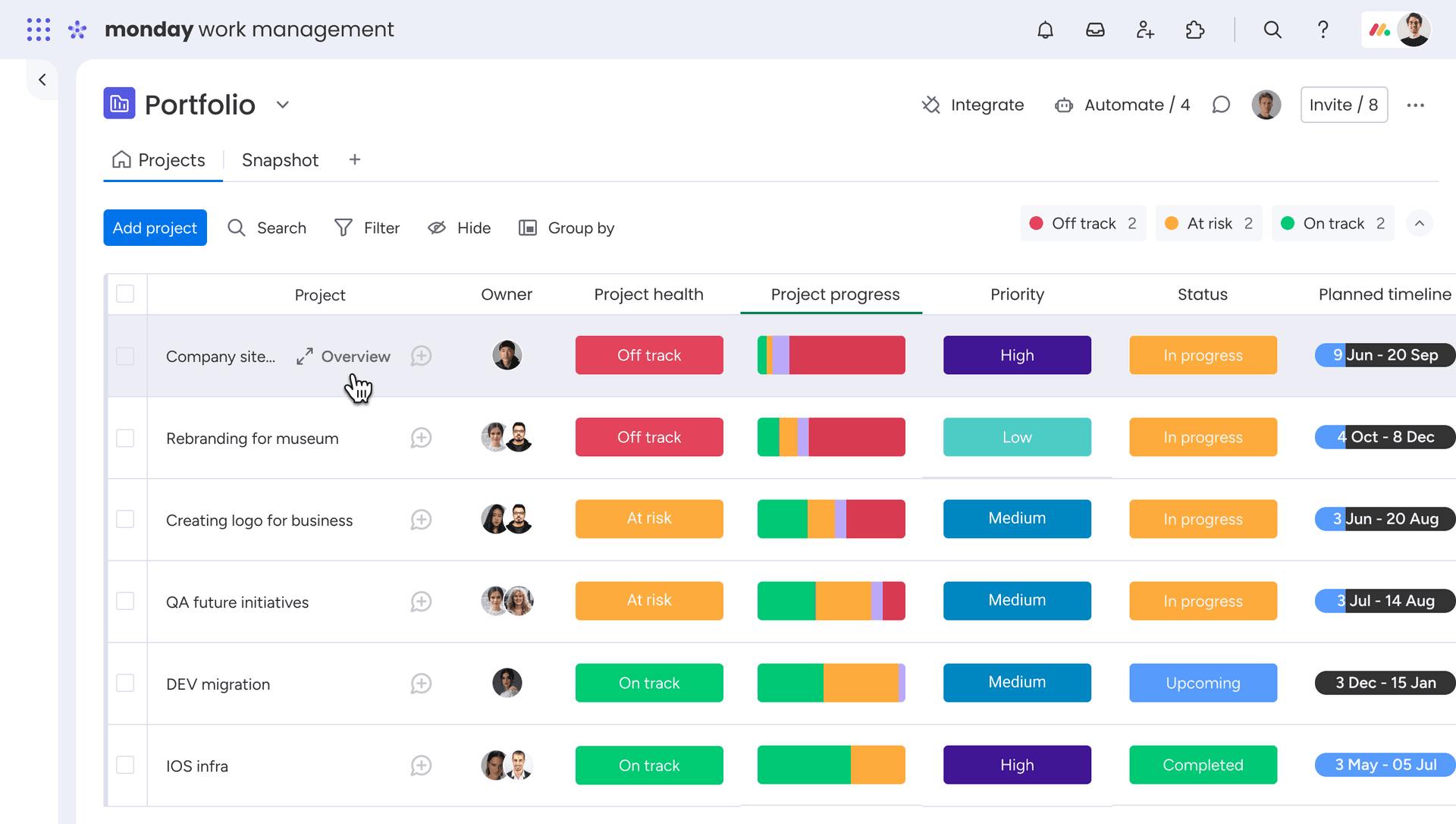
On July 31, 2024, monday.com released a ready-to-use Portfolio management solution for enterprise customers. The company is positioning its platform as the layer that connects strategy to execution, with governance, portfolio management, resource planning, and AI-driven workflows folded into the same system.
Connected strategy is the core message
monday.com’s enterprise positioning centers on connected strategy and execution, then stacks on portfolio management, standardized processes, agile platform infrastructure, operational efficiency, AI-powered workflows, resource management, and real-time risk identification. That is a much broader promise than project tracking. It argues that large companies need one operating layer that can show what is happening, where risk is building, and how plans are changing before the business drifts off course.
For engineers and product managers inside monday.com, the work shifts upward from features to system behavior. Reliability, governance, and scale become part of the product story, not just implementation details. For sales teams, the conversation is no longer about a team adopting a better task board, but about a business standardizing how work gets planned, routed, and measured across functions.
The platform story is broader than one product
monday.com organizes work through workspaces, boards, views, dashboards, and templates, and it does so across work management, CRM, dev, and service. That architecture defines scale as enough structure to standardize reporting and enough flexibility for teams to adapt workflows to their own needs.
Enterprise buyers do not want another isolated workflow app. They want fewer silos, cleaner handoffs, and a platform that can unify systems without forcing every team into the same rigid process. The company frames the platform around breaking down cross-team silos and speeding time to market, selling coordination as a business outcome, not just productivity as a feature.
The enterprise story has to span multiple surfaces, from work management to CRM to dev and service, as one system for planning and execution.
Portfolio management was the first clear step
The release was built to connect everyday work with high-level insights, work intake, templates, and governance, packaging strategic execution for enterprise customers moving up-market.
Chief Product and Technology Officer Daniel Lereya said monday.com was “democratizing project portfolio management methods,” and said the release would strengthen the connection between everyday work and high-level insights. The release aimed to make portfolio discipline usable for more teams, not just PMO specialists and executive operators. Chris Funk of Zippo Manufacturing captured the practical side of that idea, saying the tool helps teams understand “what today’s decisions mean for tomorrow.”
The release foreshadowed the current enterprise framing. monday.com was already packaging strategic execution in a way that enterprise buyers could buy, deploy, and govern. The current enterprise framing takes that logic further, with portfolio management as part of a wider operating model.
AI is being folded into the operating model
In February 2025, monday.com set out three AI pillars: AI Blocks, Product Power-ups, and the Digital Workforce. The approach was designed to help SMB and mid-market customers scale without adding resources, while also helping enterprise and Fortune 500 customers speed up processes that get slower as organizations get bigger.
Lereya said monday.com wanted to embed intelligence into products customers already know and use, while the company said its broader AI strategy was meant to democratize software and make anyone a builder of AI. AI is being treated as part of the core work system, not as a side feature tucked into the margins.
By September 17, 2025, monday.com had pushed that idea further with monday agents, monday campaigns, and more enterprise-grade capabilities. monday.com said the platform was evolving from one that manages work into one that does the work for its more than 250,000 customers. Then, in its first quarter 2026 update, monday.com said it had launched an AI Work Platform with native agents and moved to consumption-based pricing. AI is being wired into the economics and the workflow model at the same time.
The company is not just adding AI features; it is changing how the platform behaves and how customers pay for it. For sales teams, enterprise conversations will increasingly hinge on automation, throughput, and measurable productivity gains rather than seat counts alone.
The revenue mix is already tilting toward enterprise
In fiscal 2025, monday.com reported revenue of $1.232 billion, up 27% year over year, and a 14% non-GAAP operating margin. Customers with more than $50,000 in annual recurring revenue represented 41% of total ARR, and the company said it saw record net adds of customers with more than $100,000 in ARR.
Larger customers are adopting more solutions and standardizing on monday.com for mission-critical workflows, which is exactly the kind of expansion motion the platform design encourages. Once a company uses monday.com for one team, the next step is often governance, then portfolio visibility, then cross-functional rollout.
This article was produced by Prism’s automated news system from verified source data, official records, and press releases, then run through automated quality and moderation checks before publishing. The system is built and supervised by the people who set the standards it runs under. Read our full AI policy.
Did this article answer your question?