Monday.com guide explains AI basics, governance and trust at work
Monday.com is treating AI fluency as a core workplace skill, pairing plain-language basics with guardrails as it rebuilds products around agents.
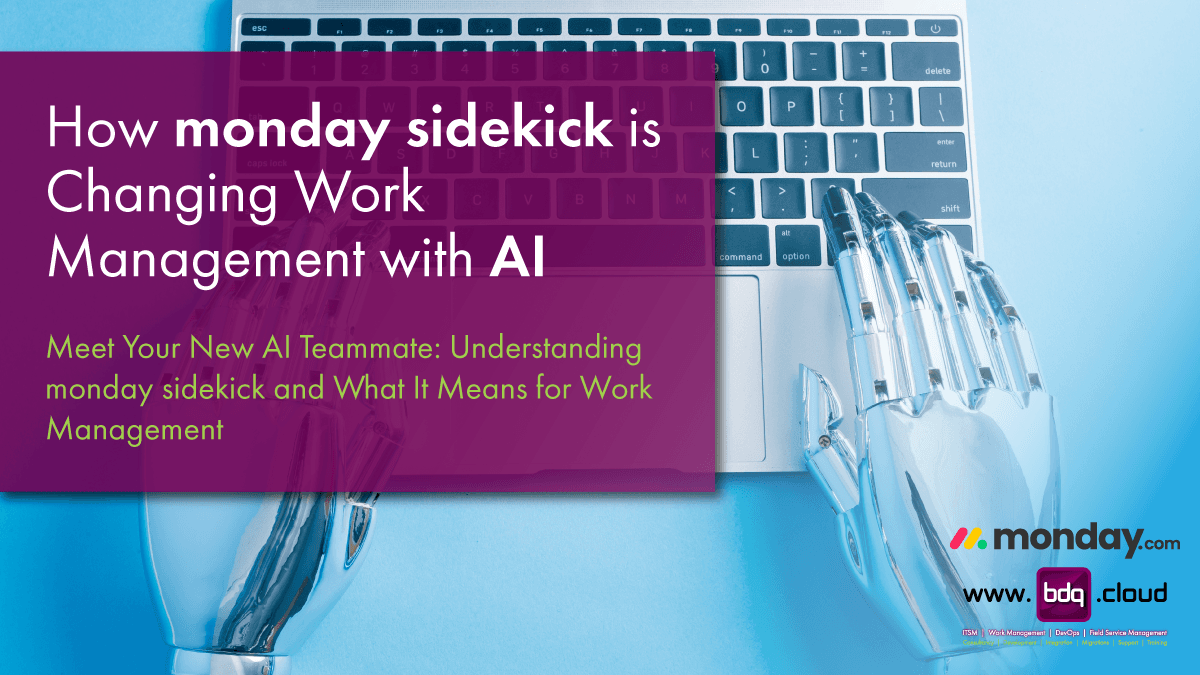
On July 10, 2025, monday.com introduced monday magic, monday vibe, and monday sidekick as part of a platform-wide AI shift. The push moves AI out of the specialist corner and into the everyday language of product reviews, sales calls, support escalations, and operations planning. If you are buying, building, or selling AI inside a work platform, you need to know the difference between a system that generates an answer and one that can actually take action.
What non-experts need to understand first
AI learns from data and patterns, not from hand-written rules alone. From there, the stack breaks into distinct layers that are easy to blur if you only use buzzwords, especially machine learning, deep learning, generative AI, and AI agents. Machine learning predicts from data, generative AI creates new text or other outputs, and agents move from response to execution by acting inside a workflow.
Not every useful AI feature is trying to do the same job. A feature that drafts a project update, one that forecasts a bottleneck, and one that moves work forward by assigning, updating, or escalating tasks are solving different problems. Teams need a shared vocabulary for those differences before they start spending money or redesigning process around them.
AI mistakes are normal, which is why human review remains part of the operating model. If a system is making decisions from patterns, the organization still needs people who can catch errors, confirm context, and override the machine when the work is sensitive.
Why governance sits at the center
monday.com says its AI Work Platform includes built-in guardrails, full transparency into agent actions, granular permissions, and human-in-the-loop controls. Those are the difference between AI that can be safely inserted into live work and AI that becomes a shadow system no one trusts.
monday agents act inside boards and workflows, monitor activity, make decisions based on defined rules and priorities, and execute tasks end to end. Permissions and audit trails are the mechanism that lets an agent operate without turning every workflow into a black box.
For product managers, the key product question is where automation stops and where human approval begins. For engineers, it becomes an architecture question about access control, observability, and escalation paths. For sales teams, it is the difference between selling “AI-powered productivity” in the abstract and explaining exactly how a customer keeps control when the software starts taking actions on its own.
How monday.com turned AI into strategy
In May 2025, monday.com said its AI strategy would rest on three pillars: AI Blocks, Product Power-ups, and the Digital Workforce.
By November 2025, more than 60,000 apps had been built on monday vibe in about three months. In February 2026, monday.com said monday vibe had become the fastest product in company history to pass $1 million in annual recurring revenue. By May 2026, the company said it was rebuilding the platform around people and agents working together and called it the biggest change in its history.
Inside the company, the internal standard for conversation changed. The question is no longer whether monday.com “has AI.” The question is which parts of the workflow should be augmented, which should be automated, and which should stay firmly human because the risk is too high or the context is too messy.
The commercial proof is in the numbers
In its fourth-quarter and full-year 2025 results, monday.com said revenue for the quarter was $333.9 million, up 25% year over year, and that customers with more than $50,000 in annual recurring revenue represented 41% of total ARR. In the first quarter of 2026, monday.com said revenue rose to $351.3 million, up 24% year over year. As of July 2026, monday.com’s investor relations page listed more than 250,000 customers worldwide.
The company also tied AI to specific commercial wins. In its September 2025 AI expansion announcement, monday.com said Pepsi cut low-impact work by 30% while meeting 100% of critical deadlines. It said Five9 reduced time to revenue by 25% through AI-powered workflows.
monday.com said monday CRM reached $100 million in ARR in 2025.
What this means inside monday.com
For engineers, the distinction between response and execution makes permissions part of the design, not an afterthought. For product managers, it draws a line between content generation, prediction, and autonomous workflow action.
For sales, the language is even more useful. Customers do not need a lecture on model families, but they do need a clear explanation of why monday.com’s AI is not just a generic chatbot bolted onto a work platform. The platform is designed to help teams understand where AI can be safely inserted, where human review still matters, and how governance keeps automation usable at scale.
This article was produced by Prism’s automated news system from verified source data, official records, and press releases, then run through automated quality and moderation checks before publishing. The system is built and supervised by the people who set the standards it runs under. Read our full AI policy.
Did this article answer your question?