Monday.com guide frames product development software as team alignment tool
Monday.com is recasting product software as the place where roadmaps, feedback, and releases stay in sync, with more than 60,000 monday vibe apps built in about three months.

On monday dev, product roadmaps, sprint management, bug tracking, incident management, release management, customer feedback, and AI-assisted workflows sit on one platform. monday.com is pushing product development software toward a simpler job: make product, engineering, and go-to-market teams look at the same truth. In practice, that means one place to see what is being built, who owns it, what customer need it serves, and whether the launch plan can actually support it. The payoff is fewer duplicate efforts, fewer approval bottlenecks, and fewer launches that slip because different teams were working from different versions of the plan.
From task tracking to alignment
The useful frame here is not tasks, it is coordination. The platform is meant to plan, prioritize, build, and launch products in a single workspace, with roadmaps, customer feedback, and execution data connected so product, engineering, and go-to-market teams stay aligned from idea to launch.
When a product manager loses the customer signal, engineering loses context. When engineering does not see the launch dependency, sales can promise timing the roadmap cannot support. When go-to-market teams do not know release readiness, enablement arrives late and the launch underperforms. The stronger product development platforms are designed to close those gaps by making dependencies, feedback, and release readiness visible in one place.
Teams want discovery and delivery in the same system, not split across tools that fragment the story.
What monday dev is built to do
monday dev is more than a team board. monday.com says that setup lets product, design, customer success, sales, marketing, and operations share one system for requests, prioritization, roadmaps, status updates, and AI-driven task execution.

Instead of a product team keeping one tracker, engineering keeping another, and customer-facing teams improvising in separate tools, monday dev is built to sync engineering with client-facing teams around feature releases and create organizational alignment through shareable roadmaps.
monday dev’s Standard plan includes sprint management, roadmap planning, the Roadmap tracker, Epic breakdown, sprint automations, GitHub integration, CircleCI integration, and an Engineering Performance dashboard. For engineers, that means sprint and release data can sit next to development workflows. For product managers, it means backlog decisions can be made with more context. For sales teams, it means launch timing and readiness are less likely to be a surprise.
Why the market is moving this way
Gartner’s 2025 Magic Quadrant summary for collaborative work management expects these platforms to improve planning, resource management, teamwork, strategic alignment, and governance, with key trends including AI-powered automation, contextual collaboration, and real-time insights. The market is moving past simple task tracking and toward systems that help teams make shared decisions with shared data.
For product organizations, that shift solves a real management problem. The more teams operate from different workspaces, the more time gets burned reconciling versions, rechecking assumptions, and redoing decisions. A platform that keeps roadmaps, feedback, execution, and release status in one place reduces the odds that product, engineering, and go-to-market drift apart just when the work gets expensive.
The AI shift is about work execution, not just admin relief
On July 10, 2025, monday.com introduced monday magic, monday vibe, and monday sidekick as part of a shift from work management to work execution. The company framed the launch as a response to customer needs and said the goal was to make AI accessible to every team. monday magic lets customers describe a need in plain language and generate a workflow or board. monday vibe lets users build secure custom business apps without writing code.
The AI features inside monday dev follow the same pattern. monday.com says AI can categorize bugs, summarize PRDs, and auto-assign new requests by team. Those functions cut down the manual admin that usually slows product operations and create a cleaner path from intake to execution. monday.com said more than 60,000 apps were built on monday vibe in about three months after launch.
What the business results say about the bet
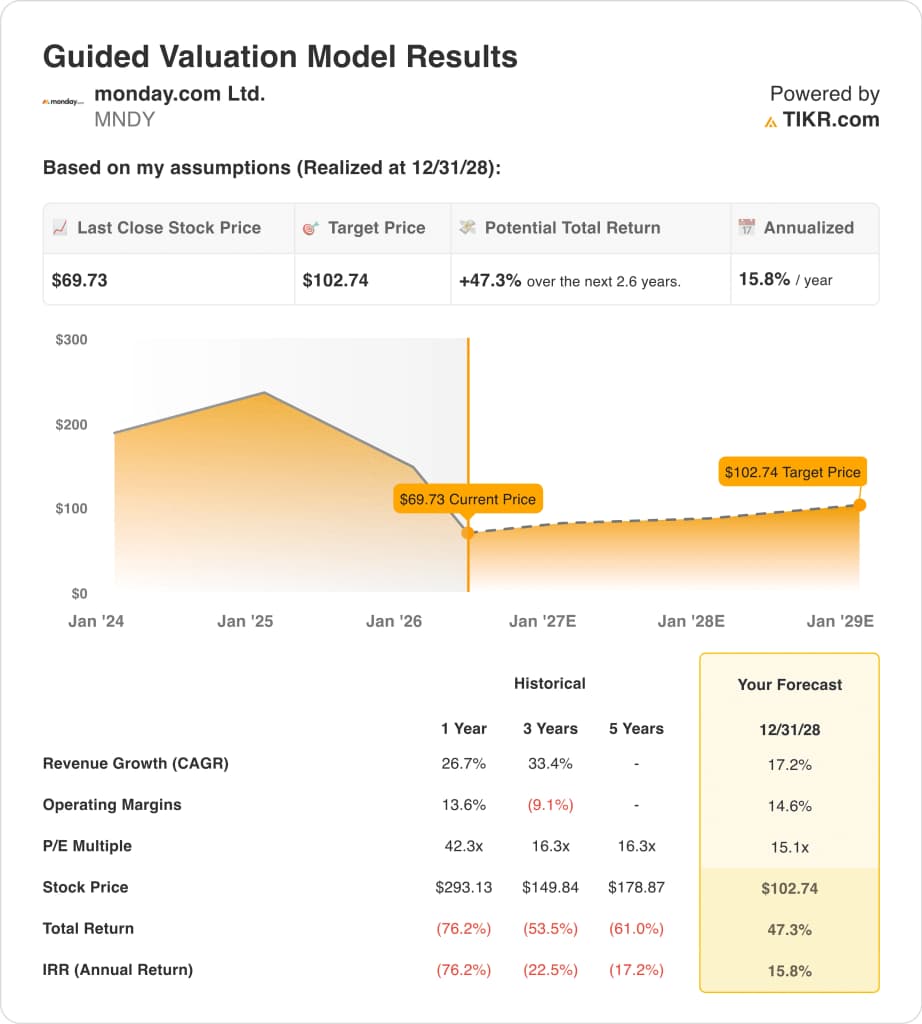
The company’s financial results suggest that this platform strategy is already pulling weight inside the business. monday.com reported $333.9 million in revenue for the fourth quarter of 2025, up 25% year over year. For the full year, revenue grew 27% and non-GAAP operating margin reached 14%. It also said customers with more than $50,000 in annual recurring revenue represented 41% of total ARR at year-end 2025.
The product suite is expanding as well. In the third quarter of 2025, monday.com said new products accounted for more than 10% of total ARR. Earlier in the year, it reported second-quarter revenue of $299.0 million, up 27% year over year, and said monday CRM had reached $100 million in ARR.
This article was produced by Prism’s automated news system from verified source data, official records, and press releases, then run through automated quality and moderation checks before publishing. The system is built and supervised by the people who set the standards it runs under. Read our full AI policy.
Did this article answer your question?