Monday.com guide says sales plans must adapt quarterly and monthly
Monday.com says sales plans should reset monthly, not annually, with weekly checks on pipeline health, rep capacity, and forecast drift.

monday.com says sales plans should be reviewed quarterly and adjusted monthly, tying revenue targets to the daily work that moves deals through the pipeline. For teams still celebrating activity counts while forecast quality slips, that is the difference between motion and momentum.
A plan that behaves like a management system
Strategic sales planning links market opportunity and team execution. The plan starts with market analysis, then turns into goals, territories, quotas, processes, compensation, and technology, all designed to align resources with where demand is actually moving. The key idea is simple but easy to lose in a quarterly planning cycle: a sales strategy only works if it can change when customer demand, competitive positioning, or performance baselines change.
A quarterly review gives leaders enough distance to see whether the market is still moving the way they expected; a monthly reset forces the plan to catch up before the quarter is already gone. In practice, that means a sales organization should treat the plan like an operating policy, not a forecast deck that gets revisited only when the number is already at risk.
What leaders need to inspect every week
The monthly rhythm only works if managers are looking at the right signals every week. The hard questions are operational: Is the pipeline healthy by segment and territory, or is it full of low-quality deals? Do reps actually have the capacity to carry the quota they were assigned? Is forecast accuracy holding up, or is leadership making quarter-end promises on stale assumptions?
This is where separate tools start to break the system. When marketing, sales, and finance plan in different places, teams spend their time reconciling definitions instead of managing demand. One group sees a campaign result, another sees a pipeline stage, and finance sees a revenue gap, but nobody is looking at the same live picture. In monday.com’s State of Sales Tech report, 42% of sales time is lost to inefficient tools, and 81% of sales leaders are considering replacing their CRM, which is exactly what happens when the operating model becomes fragmented.
The weekly review should expose where the plan is slipping, then push the team to fix territory design, rep coverage, or process bottlenecks before the miss becomes permanent.
Why automation changes the plan, not just the workflow
AI-powered tools can predict deal outcomes, automate repetitive work, and surface insights that help average performers improve faster. That shifts automation from a back-office convenience to a management tool. If the plan says the team should be focused on the right opportunities, automation is what clears away the admin work that hides those opportunities.
monday.com says every product runs on the same AI layer, putting planning, CRM, and automation in one operational system rather than in disconnected tabs. That is the practical difference between a platform that stores data and a platform that can flag risk, trigger follow-up, and keep leadership from flying blind. The company’s push into sales force automation reinforces that direction: in 2025, monday CRM was recognized in Gartner’s Magic Quadrant for Sales Force Automation for the first time.
Black Mountain said it improved conversion rates by 15% and saved more than 10 hours a month in admin work. Velv said it cut manual work by 60% and email volume by 80%. KC Petroleum said it saved more than 25 hours a month and realized an 18x ROI.
The company’s own numbers explain the urgency
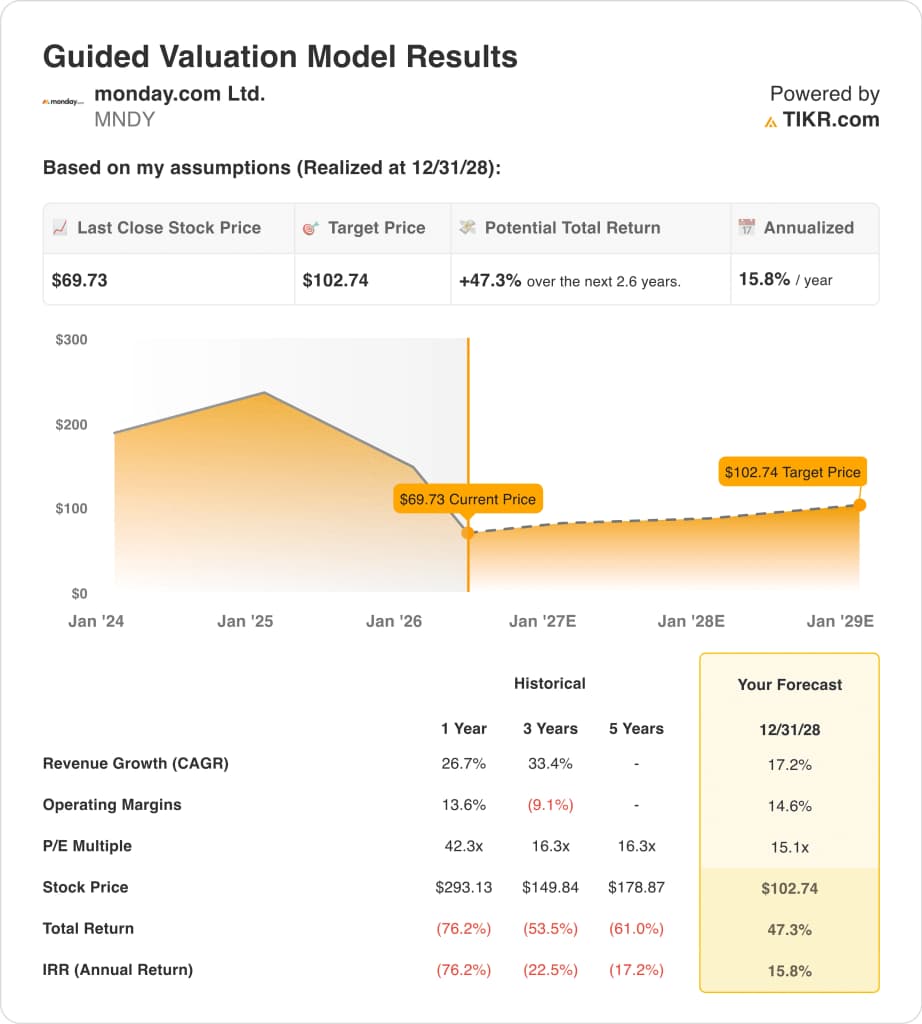
monday.com reported fiscal 2025 revenue of $1.232 billion, up 27% year over year, and customers with more than $50,000 in ARR represented 41% of total ARR at year-end. In the first quarter of 2026, monday.com reported revenue of $351.3 million, up 24% year over year, while net dollar retention held at 110% overall and the company posted record net adds of customers with more than $500,000 in ARR.
monday.com is moving upmarket. The company says its customer base is now more than 250,000 strong worldwide. monday CRM reached $100 million in ARR in less than three years, and monday vibe became the fastest product in company history to surpass $1 million in ARR.
This article was produced by Prism’s automated news system from verified source data, official records, and press releases, then run through automated quality and moderation checks before publishing. The system is built and supervised by the people who set the standards it runs under. Read our full AI policy.
Did this article answer your question?