Monday.com guide says talent strategy must unify hiring and growth
Talent management at monday.com looks less like an HR exercise and more like a scaling system for hiring, growth, and internal mobility.
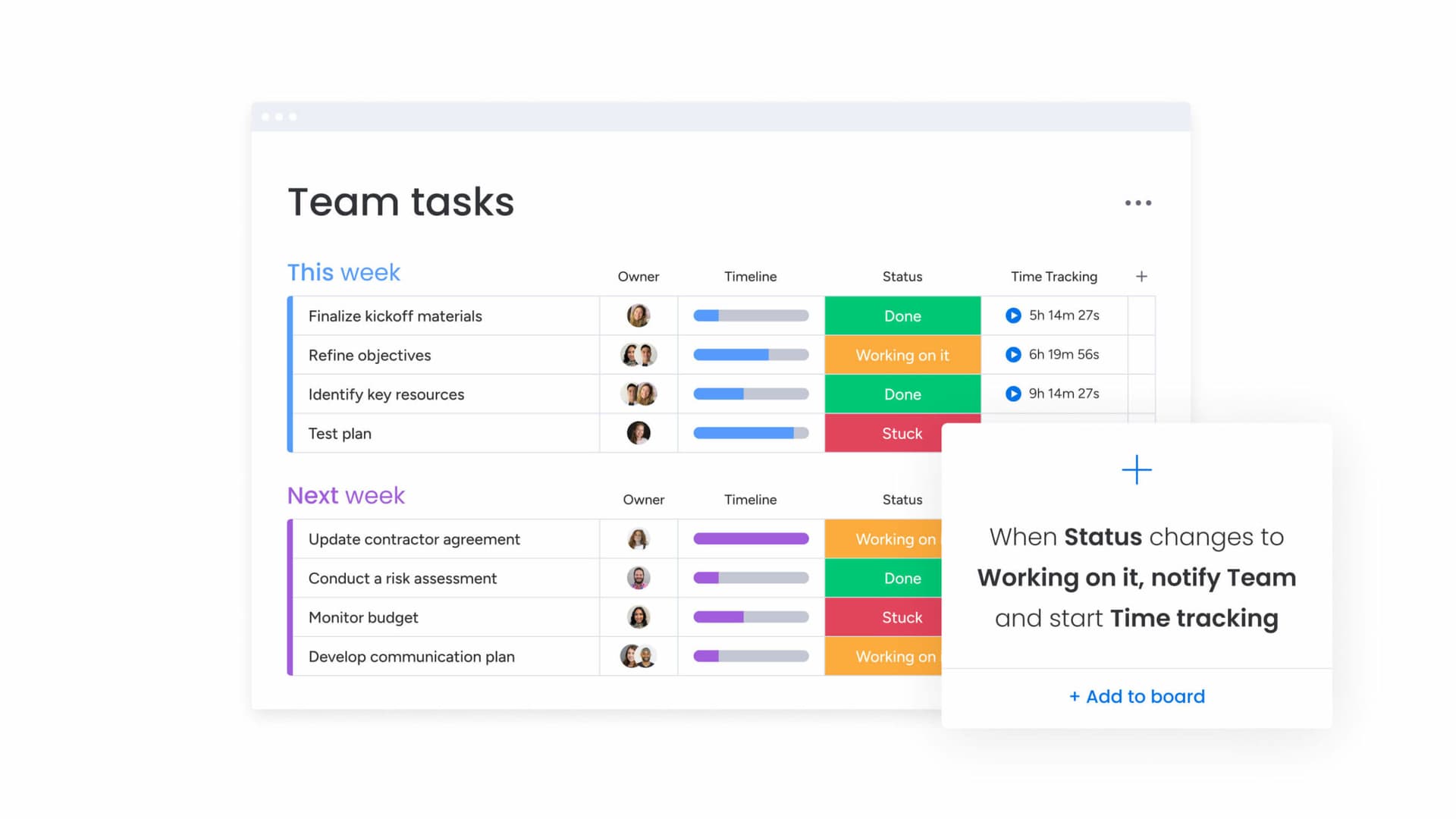
monday.com ended fiscal 2025 with 3,155 employees and reported first-quarter 2026 revenue of $351.3 million, up 24% year over year. At that scale, hiring, development, performance management, and succession planning stop working when they live in separate silos. Talent management has to align workforce decisions with business goals in a business where product, sales, and customer expansion all move quickly at once. For monday.com, that means people systems have to keep pace with the same kind of operational speed the company asks of its software.
Why talent strategy becomes an operating model
Talent problems rarely arrive in one clean break. They accumulate when a company adds headcount faster than it builds a consistent way to grow people, measure readiness, and move talent into the next role. That is an operations issue, because the cost shows up in slower execution, weaker cross-functional coordination, and managers who cannot tell whether the team has the capacity or the capability to deliver.
The framework is direct: align talent strategy with business goals, integrate the core people processes into one system, and break down the boundaries between HR, finance, and operations. It emphasizes metrics such as time to productivity and skills gap closure, which turn people management into something that can be monitored and improved instead of guessed at.
What unified hiring and growth looks like in practice
A unified talent strategy changes how a company thinks about growth after the offer letter goes out. Hiring is not the finish line; it is the start of a system that has to get someone productive, give them a path to expand, and prepare the next layer of leadership before the need becomes urgent. That is especially important in fast-growing SaaS companies, where a weak handoff between recruiting and development can turn into a talent bottleneck long before senior leaders notice.
For managers, the model is more deliberate: promotion ladders need to be clearer, succession planning cannot wait for a vacancy, and internal mobility has to be treated as an operating lever rather than a side benefit. Internal movement is often the fastest way to preserve institutional knowledge while filling critical roles. It also makes workforce planning more realistic, since a team that knows where skills are missing six months from now can plan for those gaps instead of reacting after launch dates slip.
What it means for engineers, product managers, and sales teams
For engineers at monday.com, the implication is straightforward: growth only works if the company can create clearer technical promotion paths and identify future leaders before teams outgrow them. As product complexity rises, engineering leaders need more than strong individual contributors; they need structured succession and a reliable way to move people into architecture, platform, and management roles without losing momentum. Skills gap closure fits that reality, because technical capacity tends to break first when a company grows faster than its leadership pipeline.
Product managers face a different version of the same challenge. Integrating business goals with talent planning means roadmap planning should account for the skills the company will need, not just the features it wants to ship now. In practice, that means more cross-functional coordination with engineering, operations, and finance, especially when a launch plan depends on capabilities that are still being built inside the company.
For sales professionals, the stakes show up in role design, ramp, and territory planning. A sales organization can hire aggressively and still underperform if new reps do not have a repeatable path to productivity or if the company keeps changing the shape of the role without changing the training, incentives, and support around it.
Why monday.com’s own scale makes the lesson concrete
monday.com says more than 250,000 customers worldwide use its AI work platform, and it reported fiscal 2025 revenue of $1.232 billion. monday.com says monday vibe became the fastest product in company history to pass $1 million in ARR, and by the end of 2025, customers with more than $50,000 in ARR accounted for 41% of total ARR. Those figures point to a business with larger customers, more complex account needs, and more pressure on internal coordination across product, customer success, and sales.
monday.com began as an internal Wix tool developed in 2010 to solve communication and transparency problems during rapid growth, then spun out as a separate startup in 2012. Roy Mann, who previously worked at Wix and has served as monday.com’s CEO since 2012, built the company in the shadow of that scaling challenge, while Chief People and Legal Officer Shiran Nawi now oversees the people side of the business.
This article was produced by Prism’s automated news system from verified source data, official records, and press releases, then run through automated quality and moderation checks before publishing. The system is built and supervised by the people who set the standards it runs under. Read our full AI policy.
Did this article answer your question?