monday.com pushes unified internal support to replace fragmented portals
monday.com says internal support works best as one front door, not a scavenger hunt across portals. The same logic now shapes how it sells monday service, as AI, self-service, and routing become workplace infrastructure.
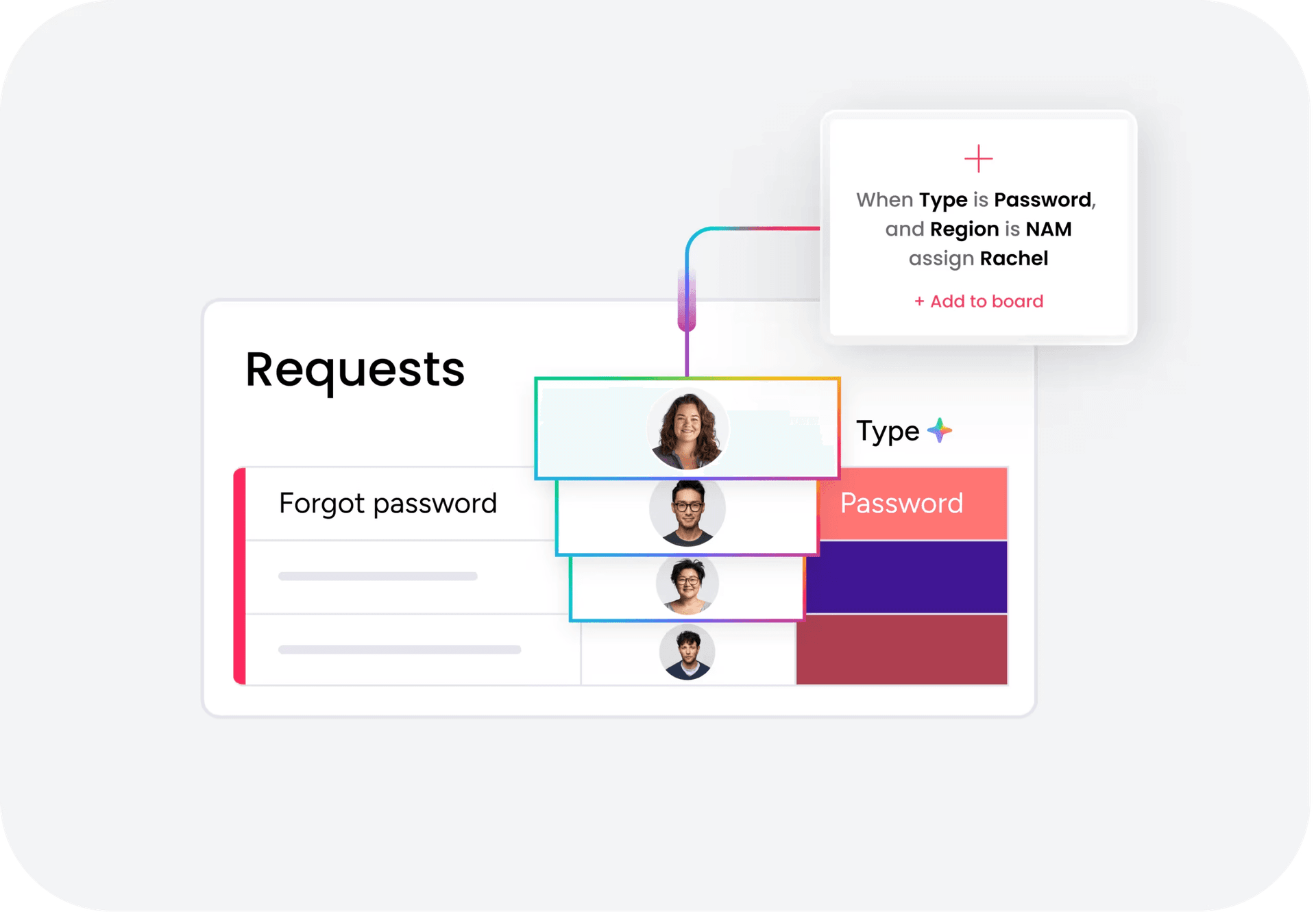
Internal support breaks down when employees have to remember which portal handles IT, which one handles HR, and which one routes a facilities request. That friction is more than a nuisance: it creates rerouting, delays, and blind spots for managers who cannot see where work is getting stuck. monday.com’s case for employee experience software starts there, with the argument that a single intake layer is now as important to operations as the systems behind it.
Why fragmented portals become a workplace tax
The modern workplace can turn a simple request into a relay race. An employee chasing a laptop replacement, a payroll correction, or a room-booking issue may have to move through separate systems for IT, HR, facilities, and finance, repeating the same details each time. That kind of fragmentation does not just waste time; it also hides patterns, making it harder for service owners to spot recurring bottlenecks before they spread.
For a company like monday.com, that matters on the inside as much as it does in the product. The business operates across multiple locations and functions, so internal service quality affects onboarding, retention, and day-to-day productivity. In a SaaS company where engineers, product managers, sales teams, people ops, and finance all depend on fast handoffs, internal support is not a side process. It is part of how the company keeps work moving.
What a single front door changes
The alternative monday.com lays out is a unified intake layer, where requests enter through one portal and are then routed intelligently to the right team. That approach uses self-service, analytics, and AI-assisted workflows to reduce back-and-forth and make resolution faster. It also gives leaders a clearer picture of what is happening across the organization, rather than forcing them to infer problems from scattered tickets and informal messages.
That shift matters because employee experience software is not only about clearing today’s queue. It can accelerate onboarding, improve collaboration, and help employees spend more time on meaningful work instead of chasing status updates. It also gives people teams and service owners measurable operational gains, including faster resolution times, lower costs, and higher satisfaction, which are the metrics that determine whether support feels reliable or merely available.
For engineers and product leaders, the bigger lesson is familiar: service design is a product problem. If internal systems are fragmented, the cost shows up as lost engineering time, slower decisions, and a quieter but real drag on morale. For sales teams, the effect can spill outward, because every minute spent fixing internal admin is a minute not spent on customers.
Why monday.com is building around that model
monday.com’s monday service product points in the same direction. The company says the platform is built for IT, HR, Operations, Finance, Facilities, Legal, Marketing, and other service teams that manage incoming requests or service workflows. Its toolkit includes a centralized customer portal, self-service, smart intake and triage, workflow automation, and AI agents that can help route and resolve requests.
That product framing reflects the same internal tension many growing companies face: support teams are asked to move faster, but the intake process is still split across tools that do not talk to each other. A centralized portal changes the role of support from reactive cleanup to organized flow management. It also makes it easier to standardize common tasks, which is where automation tends to deliver its clearest gains.
The appeal for a company like monday.com is not abstract. As a public company trading on Nasdaq since June 10, 2021, it now has to balance product ambition with operating discipline in front of shareholders as well as employees. Its February 9, 2026 fourth-quarter and fiscal 2025 results showed revenue of $333.9 million for the quarter, up 25% year over year, and customers with more than $50,000 in annual recurring revenue represented 41% of total ARR. That scale raises the stakes for internal execution, because inefficiency compounds quickly as teams and customer accounts grow.
The workplace signal behind the product
monday.com’s own office strategy underscores how seriously it treats employee experience as an operating issue. The company opened its North American headquarters in New York City on September 20, 2022, in a 110,000-square-foot, four-floor space at 225 Park Avenue South. It said the office tripled its overall footprint in New York City compared with its previous office, a signal that the company viewed physical space as part of the employee experience, not just overhead.
Mike Lamm, vice president of People, North America, said the office was an investment in employees and that team feedback shaped the design. That detail matters because it shows the same logic at work in the product: internal systems perform better when they are built around how employees actually move through the company, not around how separate departments prefer to collect requests. In a workplace spread across functions and locations, that is the difference between support that feels coordinated and support that feels like a maze.
Why AI and self-service are moving to the center
The industry trend line points in the same direction. Gartner said in November 2024 that by 2025, 60% of enterprise organizations would adopt a responsible AI framework for HR technology. It also identified AI in HR, AI-enabled skills management, internal talent marketplaces, and HR virtual assistants as top trends. In the same research, Gartner said employees continue to rank self-service HR portals above HR help desk portals, which is a strong sign that people want autonomy first and escalation second.
That helps explain why monday.com emphasizes self-service and AI agents alongside routing and analytics. The goal is not to replace human support, but to keep simple issues from clogging the system and to give managers better visibility into recurring problems. When those tools are connected, the platform can do more than process tickets. It can prevent them, which is where internal support starts to look less like a cost center and more like workplace infrastructure.
For monday.com, that framing fits both the company’s product line and its own internal reality. A business that sells work management software is making a broader claim about how organizations should operate: requests should have one entry point, service owners should have one view, and employees should not have to decode the company to get help. In a market where internal friction can quietly tax productivity, that is becoming a strategic advantage rather than a back-office convenience.
This article was produced by Prism’s automated news system from verified source data, official records, and press releases, then run through automated quality and moderation checks before publishing. The system is built and supervised by the people who set the standards it runs under. Read our full AI policy.
Know something we missed? Have a correction or additional information?
Submit a Tip