Monday.com remote work hub shows how distributed teams stay aligned
monday.com’s remote-work hub treats distributed work as an operating system, with templates for approvals, handoffs, crisis updates, and onboarding instead of vague flexibility.

The hub is really an operations manual
Remote work at monday.com is treated like an operations problem: who approves what, where async updates live, how crisis messages move, and how handoffs do not disappear between time zones. The company’s remote work hub bundles those frictions into templates and workflows, which is telling because it frames distributed work as something to be designed, not just tolerated.
That is the real value of the hub for people inside monday.com. It shows how the company thinks remote and hybrid teams stay aligned when they are not in the same room, and it does so through repeatable processes rather than motivational language about flexibility.
What the hub actually solves
The hub presents itself as a place for people working remotely to find templates, guides, and best practices. In practice, it covers the day-to-day mechanics that make remote work succeed or fail: approvals, documentation, visibility, and follow-through.
The template set includes remote work requests, a COVID-19 communications plan, a COVID-19 risk assessment, sync meeting summaries, daily team tasks, a log for 1-on-1 meetings, team time tracking, remote equipment checks, a knowledge library, a resource center, and employee onboarding. It also includes a remote work log, a remote work schedule template, and a remote work tracking template. That mix matters because it combines crisis communication with the ordinary routines that keep teams moving.
A manager looking at this collection sees a playbook for reducing coordination overhead. A team member sees a system for knowing where decisions live, when a task is due, and how to document work without chasing people across Slack threads or calendar invites. A new hire sees onboarding treated as a centralized workflow, not a pile of disconnected tasks.
The templates point to monday.com’s larger theory of work
The company’s template center says templates can be single items or bundled workflows with connected boards, automations, and views. That explains why the remote-work hub is organized the way it is. monday.com is not just handing out forms; it is showing how a process becomes visible, measurable, and repeatable inside the platform.

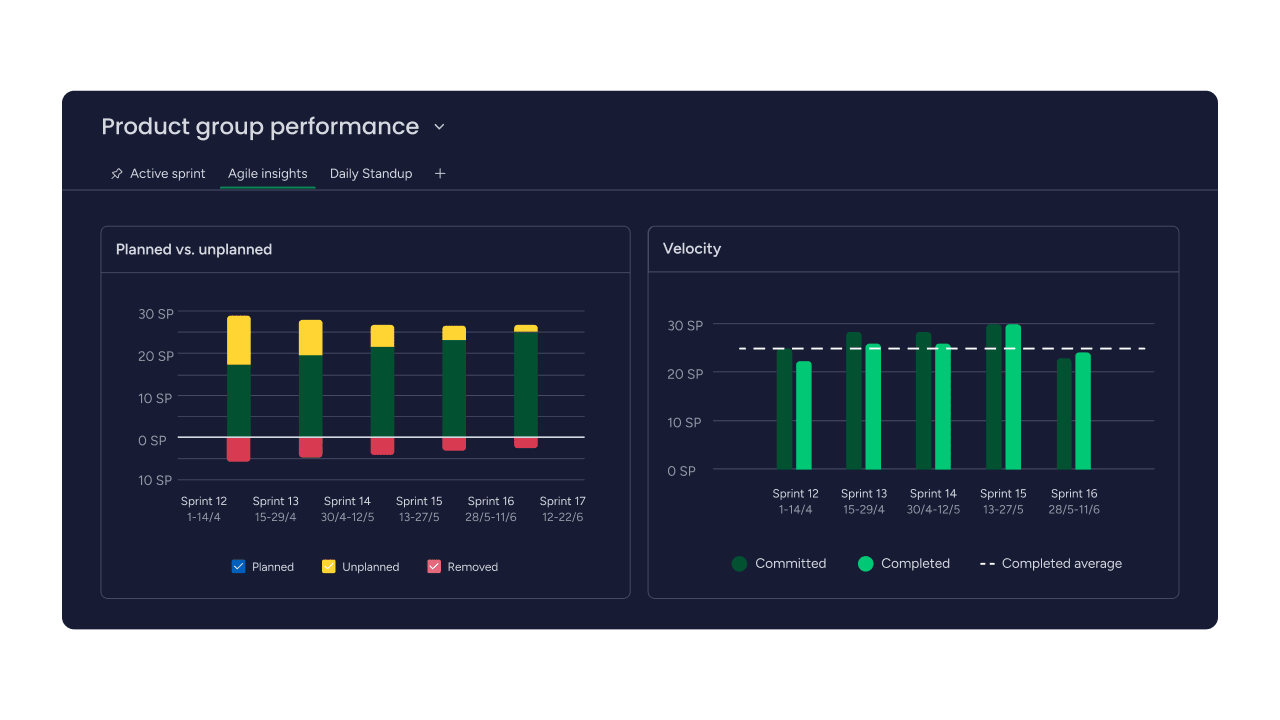
That same logic runs through its support documentation on dashboards, which pull data from connected boards into a concise format for projects, workflows, tasks, and more. In other words, the hub is not really about remote work alone. It is a demonstration of monday.com’s broader product idea: if work is distributed, the only way to keep it coherent is to centralize the signals.
For employees, that means communication has to be intentional. For managers, it means the debate is not whether to add more meetings, but whether workflows are defined well enough that meetings do not become the only place where work exists.
The product story and the work story are the same story
monday.com’s own support materials make the product connection even clearer. The platform supports communication through updates, notifications, team assignment, and email-to-board, while the World Clock column lets teams assign time zones to items and customize workday hours. Those are small features on paper, but together they solve the exact problems the hub keeps returning to: who knows what, when they know it, and how work moves across geography.
That is why the remote-work hub should be read as part of monday.com’s sales story as much as its workplace story. If the platform can coordinate remote requests, onboarding, team time tracking, and sync summaries internally, it can make a convincing case to customers dealing with the same friction. The company says more than 100,000 dynamic teams rely on its platform, which gives the remote-work framing a wider market context.
For sales and customer success teams, that is useful messaging, but also a reminder that buyers will test the gap between promise and practice. If monday.com says distributed teams need alignment, its own hub has to prove the product can actually deliver it.
This is not a new idea at monday.com
The hub looks current, but the thinking behind it has been around for years. A March 3, 2016 blog post on managing distributed teams spotlighted Zemanta, a content-marketing automation platform with 30 team members spread across San Francisco, New York, and Ljubljana, Slovenia. That detail still reads as a neat piece of early remote-work history, but it also shows how long monday.com has been mapping the same problem: distance creates coordination friction, and coordination friction has to be engineered away.
By 2020, the company was writing about the challenge of coordinating calls across time zones and keeping communication alive. Another 2020 post on working from home pushed the idea further, tying remote work to collaboration, accountability, and engagement. The language changed as the workplace changed, but the underlying argument stayed the same: distributed teams do not run on goodwill alone. They run on structure.

That evolution matters because it shows monday.com did not arrive at remote work through a sudden trend cycle. It built a long-running view of distributed work as a process discipline, then translated that view into product language.
The 2026 framework is concise, and probably the most revealing
monday.com’s 2026 remote collaboration guidance distills its thinking into three foundations: communication protocols, digital workspaces, and defined workflows. That is a compact framework, but it says a lot. It suggests strong remote teams do not just need more messages or more meetings; they need rules about how communication works, a shared place for work to live, and workflows that make handoffs visible.
That is the most current version of the company’s philosophy, and it still feels rooted in the same operational logic that appeared in the 2016 and 2020 posts. The difference now is polish. monday.com has moved from describing remote work as a challenge of time zones and communication to presenting it as a system that can be standardized.
For managers, that is practical. For product teams, it is a reminder that workflow design is itself a product decision. For employees, it is the difference between a week full of context switching and a week where async updates, live calls, and task ownership have clear boundaries.
What this says about monday.com’s culture
The remote-work hub is most useful when read as a window into how monday.com believes work actually breaks down day to day. It assumes that teams need more than flexibility. They need a shared operating model for approvals, status updates, crisis response, equipment tracking, onboarding, and every handoff in between.
That is a more demanding view of remote work than the familiar perks conversation. It treats distributed work as a coordination challenge with real costs, and it makes the product responsible for reducing those costs. For a company whose software is built around visibility and workflow, that is not a side message. It is the core message.
This article was produced by Prism’s automated news system from verified source data, official records, and press releases, then run through automated quality and moderation checks before publishing. The system is built and supervised by the people who set the standards it runs under. Read our full AI policy.
Did this article answer your question?