Monday.com Shares Down 52% in 2026, Valuation Models Signal Potential Discount
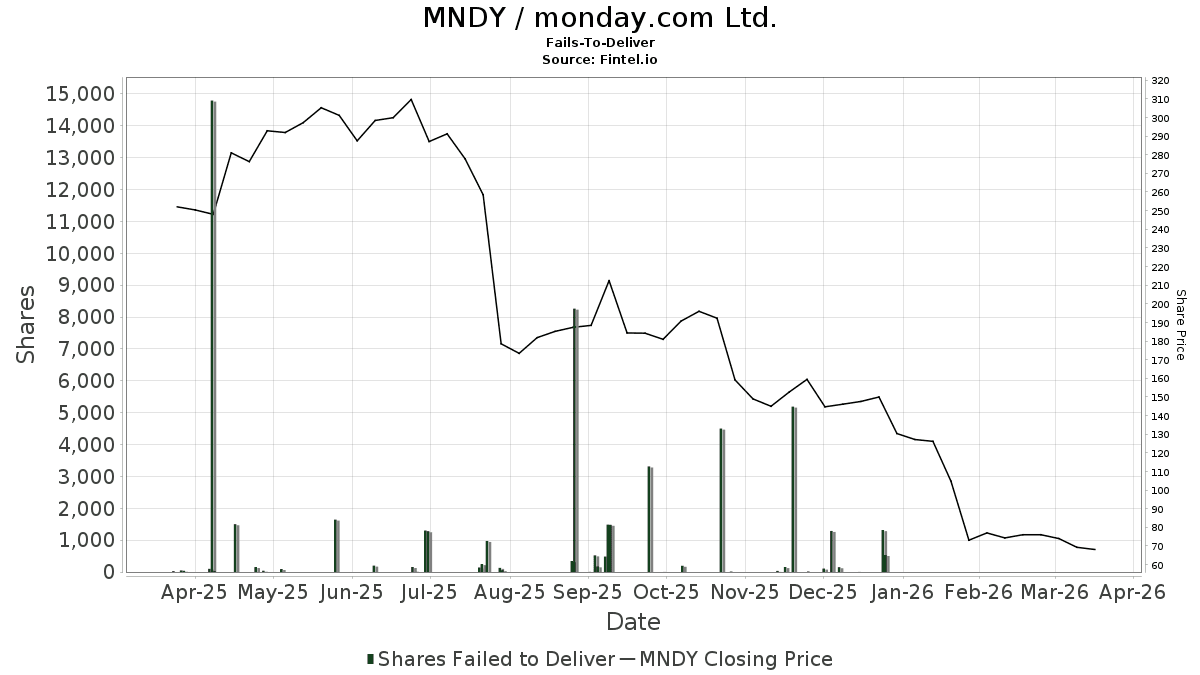
Monday.com shares have lost half their value in under four months, with a DCF model placing intrinsic value at $149 while the stock trades near $68.

A 52% collapse in share price in under four months is the kind of number that stops conversations at Monday.com's Tel Aviv and New York offices cold. A valuation analysis published April 3 put an intrinsic value of roughly $149 per share against a market price hovering near $68; the analysis described the stock as trading at a "54.1% discount to that intrinsic value" on its discounted cash flow model. For any enterprise team currently evaluating monday.com against competitors, that gap is not just an equity story worth filing away. It is a signal about vendor durability, roadmap investment pace, and pricing dynamics that belongs in the procurement conversation.
The selloff has a clear origin point. In February 2026, monday.com delivered a Q4 earnings beat on both revenue and profit, then guided FY2026 revenue growth at just 18 to 19 percent. The market had priced in more, and the stock dropped 17 percent on February 9 alone. The repricing accelerated through the first quarter as broader investor concern about AI disruption in work-management software compounded the guidance disappointment.
That AI concern is the part most consequential for buyers weighing monday.com against Asana, Notion, or the competitors still standing after Smartsheet was taken private by private equity. When investors question whether a work-OS platform can monetize AI at scale, they are really asking whether the roadmap produces compounding revenue or just demos well. Monday.com's current AI suite spans Sidekick, its personal assistant layer; monday Agents, still in early access; and monday Vibe, its no-code app builder. These products represent the company's clearest answer to that question. The market has made equally clear it is waiting for attach rates and expansion metrics, not launch announcements.
For enterprise procurement teams, the practical implications of a halved valuation cut both ways. Vendor durability becomes a legitimate diligence question: does a compressed market cap constrain R&D headcount, slow core product investment, or affect the company's ability to compete on deep enterprise integrations? The counterargument is pricing leverage shifting toward buyers. Monday's Pro tier at $19 per user per month already undercuts Asana's Advanced plan at $24.99, and a company focused on demonstrating net dollar retention and land-and-expand metrics has a structural incentive to win and hold enterprise accounts aggressively.

Switching costs complicate the picture further. Teams that have built automations, custom workflows, and CRM pipelines inside the monday.com platform face significant migration friction regardless of stock price. That stickiness is precisely why analysts distinguish between a business whose shares trade at a discount and one actually losing competitive ground. The DCF model, which is inherently sensitive to growth and margin assumptions, does not predict a return to $149; it maps the range of outcomes available to buyers of the thesis that the guidance trough represents a floor.
Inside monday.com, the pressure is now on product and go-to-market teams to translate that thesis into verifiable proof. Enterprise deal expansion, agent monetization attach rates, and cohort-level net dollar retention are the numbers that will either close the credibility gap or, in their absence, bring the model down to meet the price rather than the other way around.
Know something we missed? Have a correction or additional information?
Submit a Tip