Monday.com Short Interest Surges 47%, Reaching 14% of Float by March 2026
MNDY short interest jumped 47% in three months to 5.73M shares, 14% of float. Here's what that volatility signal means for vest-date planning and RSU tax prep.
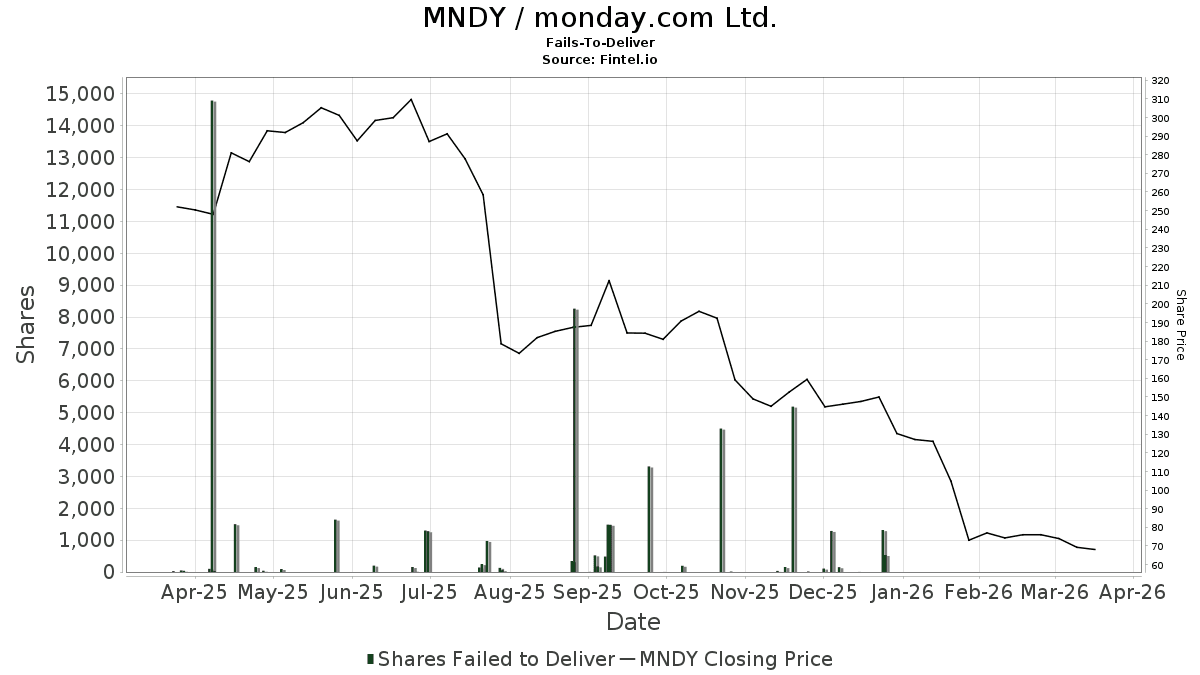
The number that should concern every Monday.com employee holding RSUs or participating in the company's ESPP isn't only the stock's 52% year-to-date decline, steep as that is against a 52-week high near $317. It's the 47% surge in short interest over roughly three months that defines what kind of market MNDY has become.
As of the March 13 reporting date, approximately 5.73 million shares of Monday.com were sold short, representing about 14.42% of the public float. That figure climbed from around 3.89 million shares at the end of 2025. The accompanying short interest ratio, commonly called days to cover, sits at roughly 3.3, meaning it would take approximately three full trading sessions at average volume for short sellers to buy back and close all their positions.
Understanding why that number matters is the first step in planning around it. A days-to-cover reading of 3.3, layered on top of 14.4% of float sold short, creates conditions where any news catalyst can produce outsized price moves in either direction. When short sellers race to cover simultaneously, upward swings are amplified. When fresh shorting hits on disappointing news, declines accelerate. February 9, 2026 already illustrated this dynamic: corrective disclosures about decelerating customer growth and extended enterprise sales cycles erased approximately one-fifth of MNDY's equity value in a single session. The company now faces a securities class action with a lead plaintiff deadline of May 11, 2026, adding another category of potential disclosures capable of moving the stock before short sellers can exit in an orderly way.
For engineers, product managers, and salespeople with RSU vests scheduled in coming months, that volatility has concrete cash consequences. RSU income is taxed as ordinary income at vest, calculated on the closing share price that day, regardless of what the stock does in subsequent hours or weeks. If MNDY shifts 10% or more around a vest date because short covering or renewed short positioning hits the tape, the supplemental federal withholding rate of 22%, or 37% for annualized income above the top bracket, can leave an employee materially under-withheld. A financial professional can model projected vest values across a range of share prices, not just the current market price, to size that tax liability accurately and avoid a surprise payment the following April.
Staged selling after vest distributes price risk across multiple sessions rather than concentrating it on a single day. Given MNDY's days-to-cover of 3.3, any one trading session is susceptible to distortion from covering activity or fresh short positioning. Selling in tranches across several days reduces exposure to any single session's technical volatility. The time to structure that plan is before vest, not during a reactive decision on a volatile afternoon.

Blackout windows create a harder constraint. Monday.com's insider trading policy restricts employee stock transactions during defined periods around earnings releases and material events. With short interest at 14.4%, the post-earnings reaction window now carries meaningfully more volatility than in prior quarters. Confirming the next blackout window with Legal or the equity administration team well in advance of a vest date, rather than after the fact, preserves the maximum number of options for managing proceeds.
Compensation teams modeling equity value for new hire offers face a parallel challenge: grant packages communicated during periods of elevated short interest should carry range-based estimates rather than single-price assumptions, given how quickly the stock can reprice on a single disclosure.
The March 13 snapshot is already backward-looking. The next bimonthly short interest release will capture what short sellers did in response to subsequent legal filings and any guidance updates. Tracking that figure alongside daily trading volume is the clearest early indicator of whether the volatility environment surrounding upcoming vest dates is narrowing or widening further.
This article was produced by Prism’s automated news system from verified source data, official records, and press releases, then run through automated quality and moderation checks before publishing. The system is built and supervised by the people who set the standards it runs under. Read our full AI policy.
Did this article answer your question?