monday.com sidekick guide shows AI built into everyday work
Sidekick is monday.com’s test case for practical AI: draft updates, summarize context, and cut setup time, while the company builds a broader people-and-agents platform.
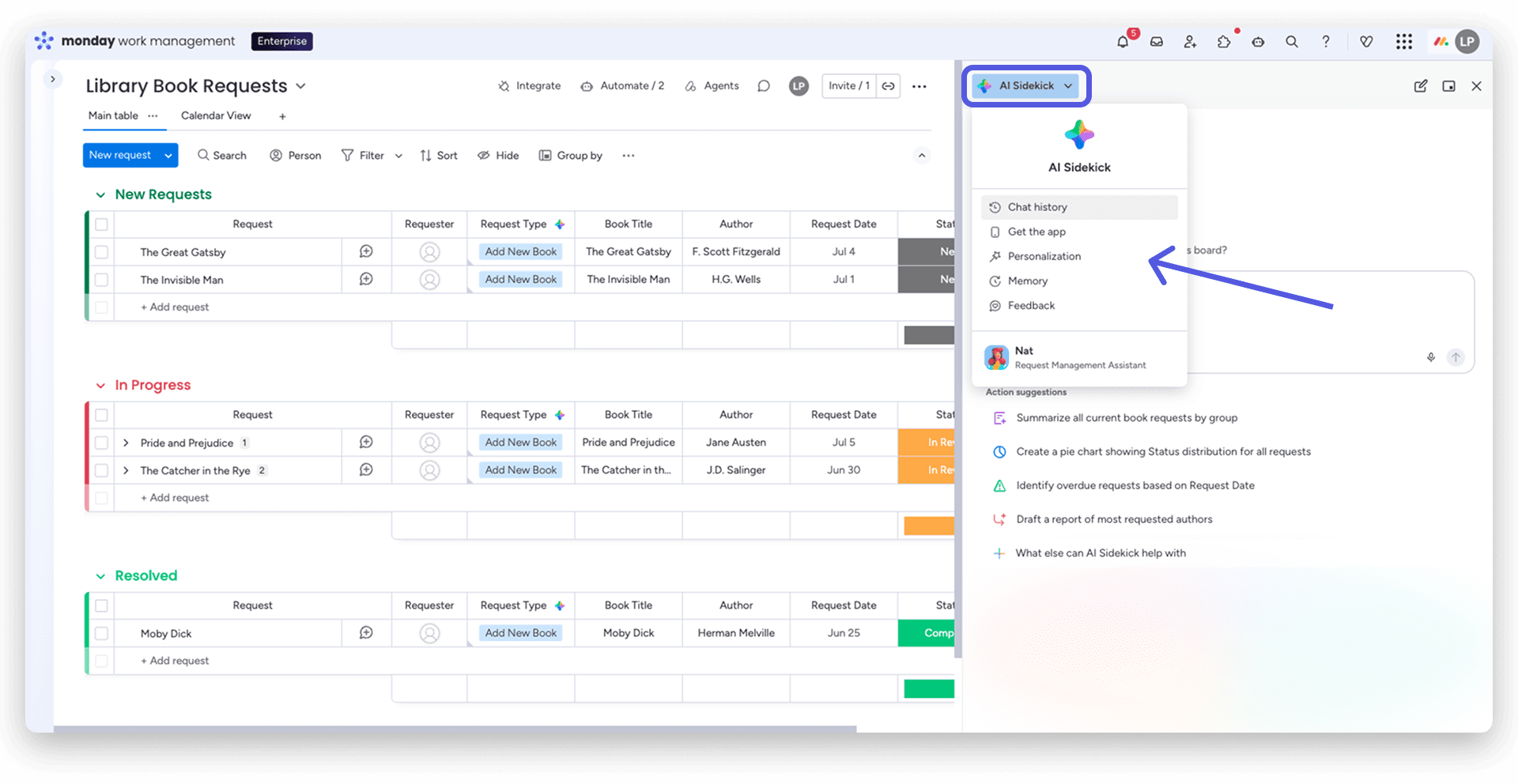
Sidekick is monday.com’s clearest bet that AI adoption starts with boring work. The assistant is built to shave friction off the daily grind, from turning rough notes into a usable update to helping users organize work and move faster inside the product they already know.
What Sidekick is actually for
The core idea is not novelty, it is compression. Sidekick is meant to help users generate, organize and act on information more efficiently, which puts it squarely in the middle of routine work management rather than at the edge of it. In practical terms, that means drafting content, summarizing context, assisting with workflow setup and helping people get from a blank page to a structured work artifact faster than they could by hand.
That is the right way to think about AI inside a work OS like monday.com. A useful assistant does not need to replace judgment or rewrite an entire workflow; it needs to make the first 80 percent easier. For a product manager, that might mean turning scattered notes into a clean project update. For an engineer, it might mean pulling together context before a handoff. For sales, it might mean turning a call recap into something that can be shared internally without another half hour of admin.
The most repeatable Sidekick use cases are the ones that show up every week, not once in a demo:
- drafting status updates and internal summaries
- condensing project context from multiple work items
- organizing notes into a structured brief or task list
- helping set up or reshape workflows
- reducing the admin load that builds up around execution
That focus matters because AI features only become habits when they save time inside ordinary work, not when they ask people to adopt a new ritual.
Why embedding matters more than flash
For engineers and product managers at monday.com, Sidekick is a reminder that AI value depends on where it lives. If people have to leave the product, learn a new interface or switch to a different mental model, adoption slows. The more Sidekick behaves like a native layer in the flow of work, the more likely it is to stick.
That same logic shapes the sales story. Prospects do want AI, but they are also wary of buying another tool that adds complexity, training overhead or fragmented workflows. Sidekick is more compelling when it lowers the barrier to entry and makes AI feel like something teams can use without a heavy implementation burden. In a crowded SaaS market, that is a sharper pitch than promising a magical assistant that sits outside the system of record.
The company’s own product language backs that up. In 2025, monday.com introduced three AI-powered capabilities together: monday magic, monday vibe and monday sidekick. That framing matters because it places Sidekick inside a broader product family, not as an isolated chatbot feature that can be turned into a slogan and left there.
Sidekick now sits inside a bigger AI strategy
The broader direction became even clearer in 2026, when monday.com described itself as an AI Work Platform and said it was rebuilding the platform around people and agents working together. In another 2026 release, monday.com said new infrastructure would let AI agents sign up, authenticate and operate directly within the platform.
That is a bigger shift than a single assistant. It suggests monday.com is preparing for a work environment where software agents do not just answer prompts, but participate directly in workflows alongside humans. Sidekick becomes one piece of that architecture, a way to make AI feel present in everyday execution rather than bolted on as a separate layer.
For employees inside monday.com, that should change how Sidekick is explained. It is not only a productivity feature. It is a bridge between the company’s current work management model and the future it is trying to build, where users and agents collaborate in the same system. That also fits monday.com’s long-running product promise: make work visible, actionable and easier to move forward without losing accountability.
How to use it without expecting magic
The trust question is where AI tools win or lose daily use. Sidekick can save time, but only if people know when to rely on it and when to check its work. The right mental model is not blind delegation. It is assisted drafting, assisted summarizing and assisted setup, followed by review where the stakes are real.
monday.com’s support center hints that the company understands this. It now includes a Prompt library for monday sidekick, a Historical trends in monday sidekick article, a Guide to prompting best practices with monday AI and a Get started with Sidekick tools in the monday marketplace article. That is not just documentation. It is an adoption strategy built around teaching users how to ask better questions, how to use the assistant over time and how to extend it into the broader marketplace ecosystem.
That kind of education is usually what separates an AI feature that gets used from one that gets ignored. People do not need endless hype. They need a few reliable patterns they can repeat every day. Sidekick looks most valuable when it becomes part of the standard operating rhythm:
- use it to get to a first draft faster
- use it to compress context before a meeting or handoff
- use it to reduce repetitive admin work
- use it to keep work inside monday.com instead of scattering it across tools
- verify anything customer-facing, decision-critical or policy-sensitive before it leaves the team
The trust issue is not a sign that the tool is failing. It is the normal filter any workplace AI has to pass. If Sidekick cannot help people move faster while staying accurate enough for work that matters, it becomes a novelty. If it can reduce friction without asking employees to surrender judgment, it becomes a habit.
Why the business context matters
The timing of all this matters because monday.com is not layering AI onto a struggling core. In its second-quarter 2025 results, the company reported revenue of $299.0 million, up 27 percent year over year, and said monday CRM had recently reached $100 million in ARR. That gives the AI push a different feel from a desperate pivot. monday.com is building AI on top of a business that is already scaling.
For the company’s public-market story, that matters too. Investors do not need another generic “AI transformation” narrative. They need evidence that new AI features can deepen product usage, improve retention and raise the value of the platform people already pay for. Sidekick is one way monday.com can argue that AI is becoming part of the core product, not a separate experiment.
The bigger takeaway for employees is straightforward: Sidekick is useful when it cuts the time between intent and output. The company’s own product roadmap suggests that monday.com wants AI to live in that gap, where everyday work actually happens.
This article was produced by Prism’s automated news system from verified source data, official records, and press releases, then run through automated quality and moderation checks before publishing. The system is built and supervised by the people who set the standards it runs under. Read our full AI policy.
Did this article answer your question?