Monday.com spotlights in-house marketing, transparency and customer-led product changes
Monday.com’s culture playbook rewards visible process: in-house marketing, customer-built features and a no-commission sales model all point to tighter coordination.
On June 10, 2021, monday.com became a publicly traded company on Nasdaq. It keeps marketing in-house, runs major events on its own product, and lets customer requests shape features such as its Gantt chart. For engineers, product managers and sales teams, that means the company is describing a workplace built around visible handoffs, fast feedback and less internal rivalry. The harder question is whether that structure still works as monday.com scales as a public company under more scrutiny from customers, candidates and investors.
What the monday presents hub is really doing
The company’s monday presents hub is more than a polished values page. It packages office culture, social impact, creativity and data into a public-facing stream of stories that doubles as recruiting material and brand storytelling. It shows how monday.com wants outsiders to understand the company: not just as a software vendor, but as an operating system for work that also wants credit for how it works internally.
That framing sits in a different environment now than it did as a private company. Once a company has a ticker and quarterly scrutiny, culture messaging stops being a side project. Every public claim about transparency, collaboration and customer focus now lands in a more visible market where employees, customers and shareholders can all judge whether the day-to-day reality matches the pitch.
The hub also stretches beyond hiring language. monday.com positions its community and podcast as ways to share experiences with startups, which is a subtler move than simply posting employee testimonials.
How customer feedback becomes product work
The most concrete proof of monday.com’s customer-led story is the community. The official community lets users connect, ask questions and stay close to what is happening around the platform. In the feature-requests area, product teams regularly review ideas and share status updates when there are meaningful changes. That creates a feedback loop that is much more legible than the usual corporate promise to “listen” to users.
The model gives structure to a question every SaaS company faces: which requests become roadmap commitments, and which remain wish-list items? monday.com’s community model keeps that decision visible, not hidden behind customer success calls or private account escalations. When users can see that requests are being reviewed and tracked, it becomes easier to separate real product demand from one-off noise.
The Gantt chart story shows how that loop can turn into a shipped feature. A customer asked for a better Gantt chart, and the Gantt chart view and widget are available on the Standard plan and up. monday.com describes Gantt charts as a way to turn spreadsheets into visual boards and improve coordination across teams.
Why the operating model matters inside the company
The culture series also makes a strong case for end-to-end ownership. Doing marketing in-house means the people shaping the message are closer to the product, the launch rhythm and the customer response. That can speed up iteration, reduce the lag between product changes and marketing claims, and create tighter product-marketing alignment. It also removes a layer of interpretation, which can be useful in a company whose product story depends on showing rather than telling.
Running major events on monday.com itself pushes that logic further. It turns the platform into both the product and the operating layer for the company’s own work, which can sharpen internal discipline. If the company is using its own software to coordinate events, it has a built-in stress test for whether the product actually supports the kind of complex cross-functional work it sells.
The no-commission sales model points in a different direction, but with the same theme: reduce internal competition, reward collaboration, and keep customer fit at the center. For sales teams, that can mean fewer incentives to fight over credit and more pressure to work as part of a broader account strategy. For managers, it shifts the burden to coaching, shared goals and cleaner performance definitions, because a model without commissions still needs a strong way to distinguish effective selling from merely active selling.
Transparency as a hiring practice, not a slogan
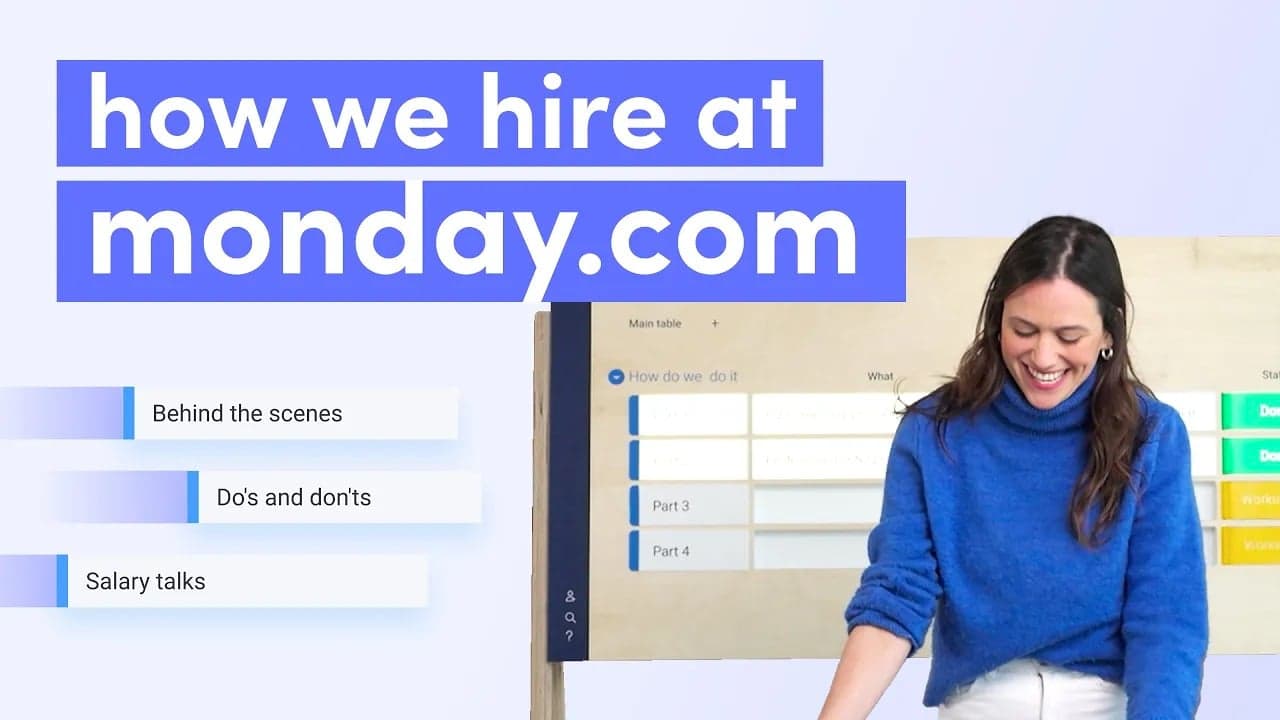
The company’s careers page gives the transparency message a more practical edge. monday.com publicly outlines a hiring process that includes resume review, recruiter chat and a skills task or interview. That is not unusual on its own, but paired with the rest of the culture series, it reads as part of the same operating philosophy: make the process visible so candidates know what is coming and teams know what standards they are working toward.
That visibility can be useful inside the company as well. When hiring steps are explicit, managers have a clearer language for evaluating talent and a more consistent way to compare candidates. It also tells employees something about how the company wants decisions to be made: through process that can be explained, not through opaque gatekeeping that only makes sense to insiders.
This article was produced by Prism’s automated news system from verified source data, official records, and press releases, then run through automated quality and moderation checks before publishing. The system is built and supervised by the people who set the standards it runs under. Read our full AI policy.
Did this article answer your question?