monday.com touts AI agents as workflow tools, not add-ons
monday.com is recasting AI agents as workflow infrastructure, not add-ons. The frame puts governance, integrations, and business outcomes ahead of chatty features.
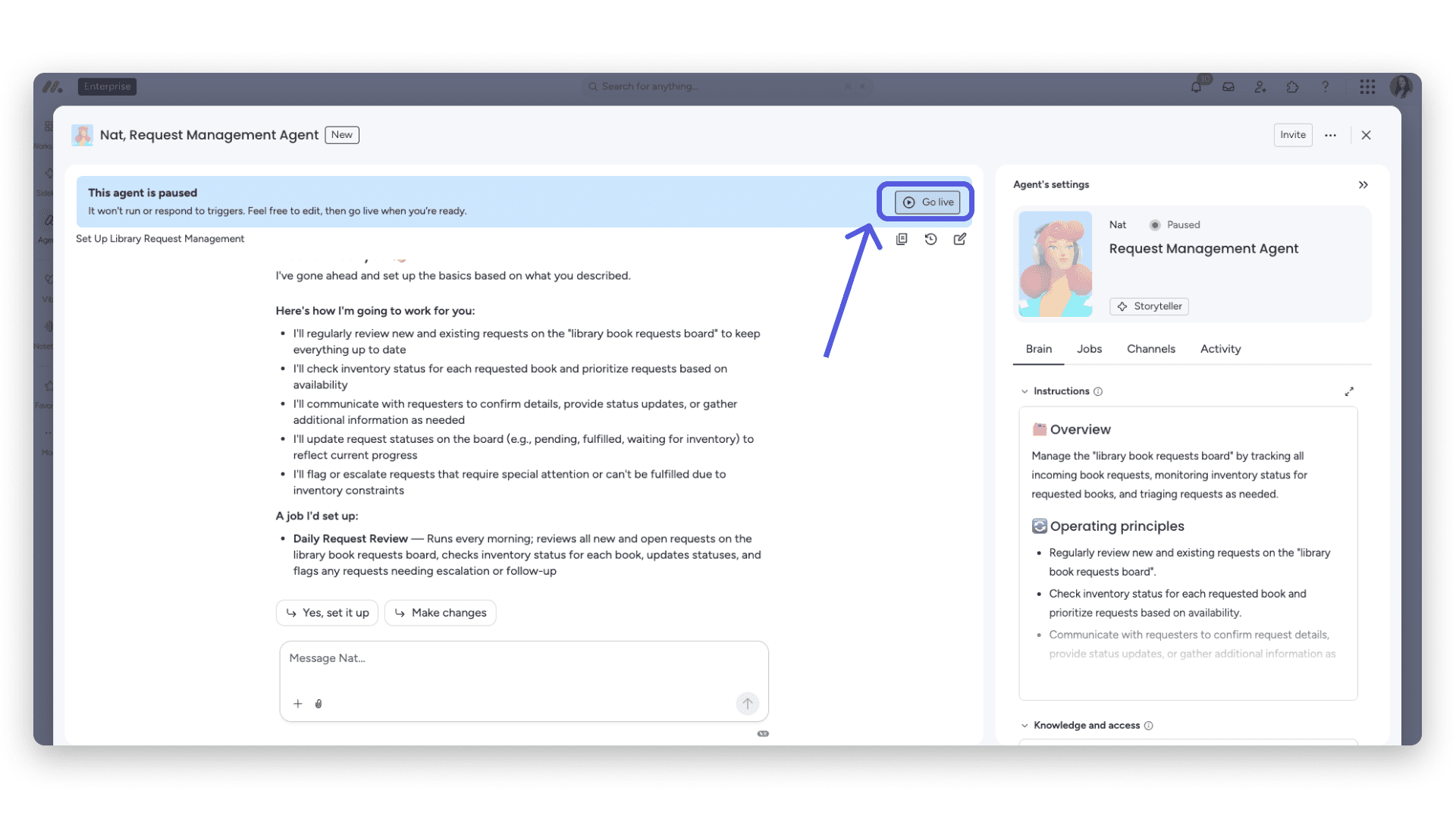
monday.com is trying to redraw the map for AI agents. Its latest comparison piece argues that the best platform is not the one with the longest feature list, but the one that fits existing workflows and reliably gets work done, a standard that pushes buyers away from novelty and toward operational control.
That framing matters inside monday.com as much as outside it. For engineers, it puts orchestration, permissions, memory, and integrations at the center of the product story. For product managers, it signals a roadmap built around coordinated agent behavior and measurable output. For sales, it creates a clean enterprise message: the buyer is not shopping for a chatbot, but for an execution layer that lives where work already happens.

A category defined by workflow, not hype
The company’s argument is straightforward: AI agents have moved from experimental to operational, and the strongest platforms are the ones that slot into real work systems instead of sitting beside them. monday.com says specialized agents outperform a single general-purpose assistant, and that the most capable setups are coordinated systems in which agents pass context between one another.
That is not a neutral buyer’s guide. It is a category-setting move that privileges the very qualities monday.com is built to sell: workflow integration, governance, and context sharing across departments. If those become the measuring sticks, then a work OS with embedded automation looks less like a project management tool that added AI and more like the place where agentic work should naturally live.
Why monday.com wants the benchmark to be governance and execution
The article’s criteria lean hard toward enterprise concerns that usually decide budget approvals. It emphasizes control, integrations, memory, and the ability to coordinate multiple agents rather than rely on one generic assistant, which shifts the debate away from flashy demos and toward operational reliability.
That standard also happens to favor monday.com’s product worldview. The company is not positioning AI as a separate destination app, but as infrastructure inside its work OS, where project management, CRM, and workflow layers already connect. Once that is the frame, the key question is no longer whether AI can answer a prompt. It is whether AI can move a task forward without breaking permissions, losing context, or drifting outside the process.
From work management vendor to AI Work Platform
monday.com made that philosophy explicit on May 6, 2026, when it said it had become an AI Work Platform. The company said native agents can be configured, deployed, and directed by any team member without a technical background, and that those agents draw on live data across departments while staying inside existing permissions and governance.
That is a notable shift for a company with a large installed base. monday.com said it had more than 250,000 customers worldwide as of year-end 2025, and in the first quarter of 2026 it reported $351.3 million in revenue, up 24% year over year, alongside a 110% net dollar retention rate. In practical terms, the AI repositioning is being pushed from inside a sizable SaaS business that already has cross-sell motion, not from a small feature launch looking for a wedge.
The product arc behind the rebrand
The current pitch did not appear overnight. On July 10, 2025, monday.com introduced monday magic, monday vibe, and monday sidekick as new AI-powered capabilities, and it said its broader AI strategy would rest on AI Blocks, Product Power-ups, and the Digital Workforce. By March 11, 2026, the company said it had added infrastructure so AI agents could sign up, authenticate, and operate directly within the platform.
That March update matters because it changes the product from AI-assisted to agentic. monday sidekick was described as the first operational AI agent embedded in the platform, and monday agent builder was in beta. Together, those moves show a fast evolution from AI features users can touch to AI workers users can direct.
What the platform can actually do
monday.com says its agents can draft campaigns, qualify leads, close support tickets, onboard new hires, and process purchase requests under human supervision. That breadth is deliberate: it spans revenue, service, HR, and procurement, which are the exact cross-functional areas where workflow software can prove whether an AI layer is helping or just creating more noise.
The company is also tying its platform to outside AI ecosystems. Its stack includes one-click connectors for Anthropic’s Claude, Microsoft 365 Copilot, and OpenAI’s ChatGPT, and its support documentation says the Model Context Protocol integration is available on all plans. The message is that monday.com does not want to be boxed in as a closed AI island. It wants to sit between major models and the work that people actually need them to do.
Governance is the real sales pitch
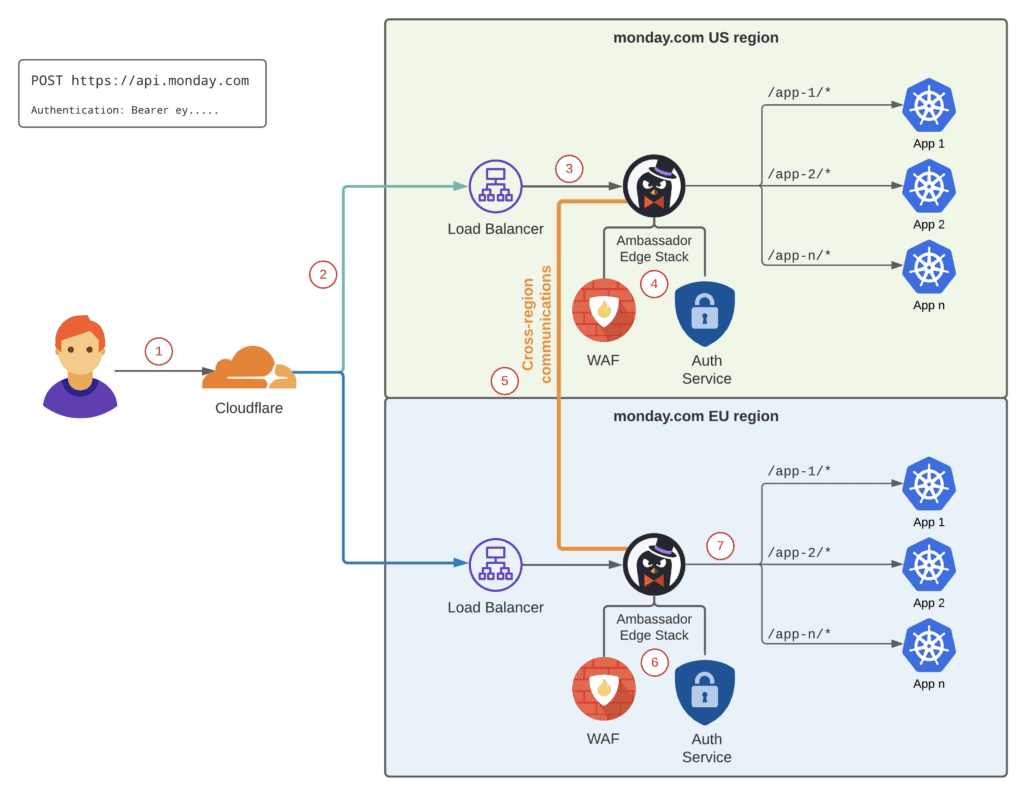
For enterprise buyers, the trust story is doing as much work as the agent story. monday.com’s AI trust center says AI follows the same permissions as the customer account, which means an agent cannot retrieve data from boards or columns a user could not already access. It also says data residency rules are respected, and that managed APIs through Microsoft Azure and AWS Bedrock use zero-retention policies.
That structure is crucial because it turns governance into a feature, not an obstacle. The company is telling CIOs, security teams, and line managers that agents can be useful without becoming a shadow layer that bypasses controls. In a market where many AI pilots stall at the security review stage, monday.com is betting that permissioning and residency will be part of the product value, not just the legal fine print.
Pricing shows where the company sees the value
The monetization model is evolving alongside the product. monday.com’s support documentation says that for customers who joined the monday Work Platform on or after May 6, 2026, the company introduced a seats-plus-AI-credits pricing model for the AI Work Platform, with credits applying across the monday AI portfolio.
That matters because it shows AI is not being treated as a free layer bundled on top of the core subscription. monday.com is creating a separate usage signal for agent activity, which gives the company more room to monetize workload intensity as customers lean into automation. For sales teams, that likely means a more nuanced conversation about adoption, consumption, and return on investment.
The larger story is that monday.com is not just adding agents to a work app. It is trying to define the rules of the category so that AI agents are judged by whether they fit into governed workflows, coordinate across systems, and deliver business outcomes. If that definition sticks, monday.com will not simply have joined the AI race. It will have helped write the scorecard.
This article was produced by Prism’s automated news system from verified source data, official records, and press releases, then run through automated quality and moderation checks before publishing. The system is built and supervised by the people who set the standards it runs under. Read our full AI policy.
Did this article answer your question?