Monday.com uses its own platform to coordinate global growth
monday.com’s biggest coordination tool is its own software: internal work runs in the platform, giving teams one system for requests, roadmaps, and handoffs.
The real monday.com story is not just product adoption. It is internal coordination at scale.
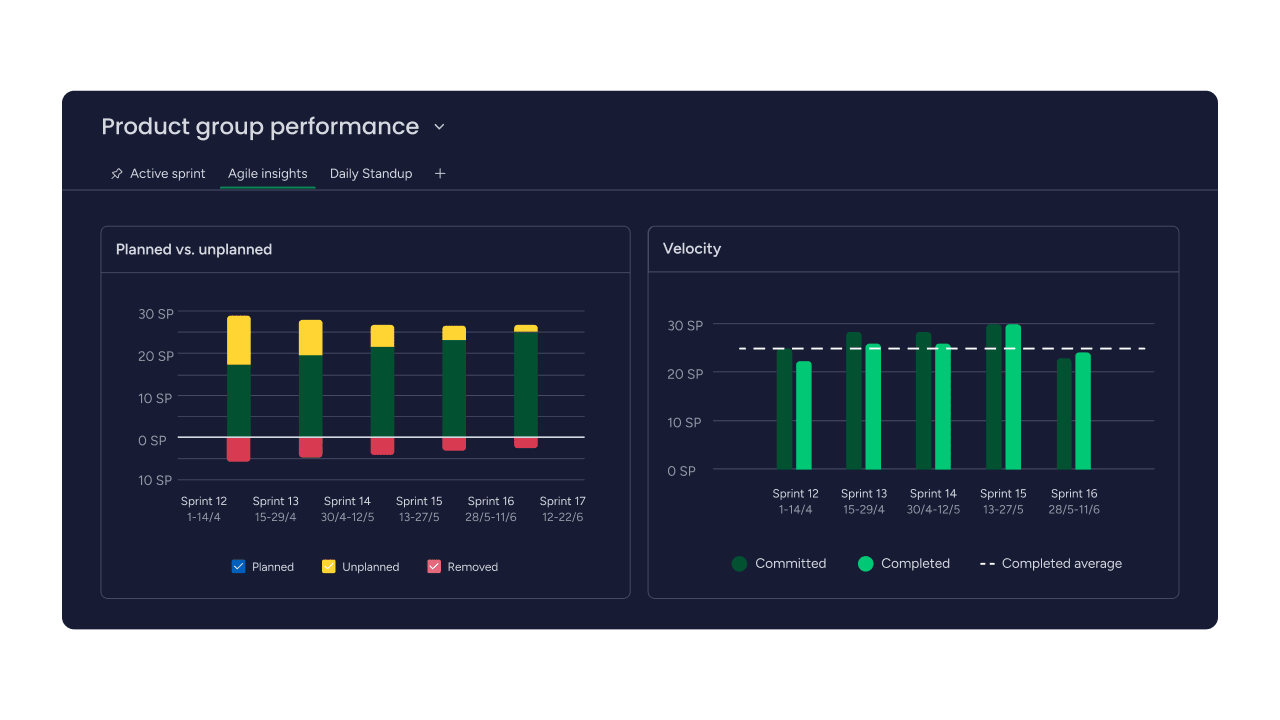
The clearest lesson from monday.com’s own operating model is that the company uses the same kind of work system it sells to customers. With roughly 2,900 employees, more than 250,000 customers, and users in 200+ countries and territories, the company cannot rely on informal check-ins or siloed spreadsheets to keep work moving. It processes about 2 million board actions every day, which gives a sense of how much activity has to stay visible, trackable, and accountable in one place.
That matters for anyone inside the company, whether the job is shipping code, managing a roadmap, closing deals, or answering customer escalations. At monday.com, the platform is not just a product category. It is the coordination layer that lets distributed teams work from the same source of truth.
How the company built its own operating system
monday.com’s origin story explains why this model feels so central to the business. The company says co-founders Roy Mann and Eran Zinman founded it in 2012 after running into the problems that come with scaling organizations. They secured a $1.5 million seed round that same year, then launched the product in 2014. That sequence matters because the company’s internal workflow is an answer to the same pain point it started with: how to keep growing without losing alignment.
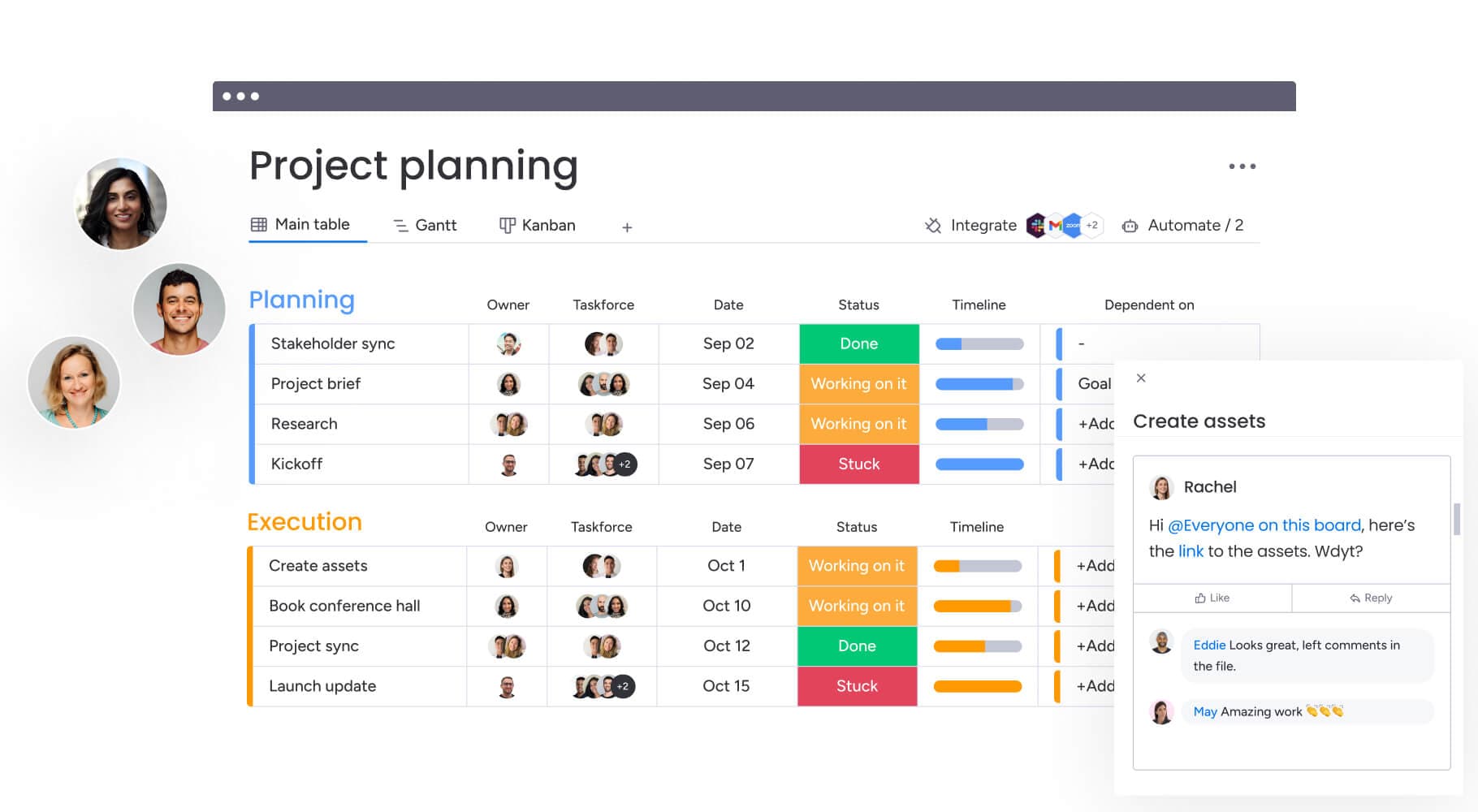
Its Work OS explanation makes the operating model explicit. Internal and cross-team communication happens inside the platform. Product owners manage feature requests, roadmaps, and prioritization there. Developers update product owners on progress and problems in the same system. Customer success teams bring customer requests back into context instead of scattering them across inboxes, chats, and meetings.
For engineers and product managers, that creates a practical standard: decisions should live where the work lives. For sales and customer success, it means a customer issue is not just a note in a CRM or a one-off message. It becomes part of a trackable workflow that can be routed, prioritized, and resolved with context intact.
One platform, four products, multiple workflows
monday.com describes its platform as a Work OS with four end-to-end products: work management, CRM, software development, and services. That structure is important because it shows how the company thinks about internal coordination. Different functions do not need separate systems that create handoff friction. They need a shared platform that can support each team’s work while still preserving visibility across the whole organization.
The company’s launch of monday dev in 2022 fits that logic. It extended the platform’s multi-product vision into software development, which is exactly where coordination breaks down quickly when product, engineering, and customer teams use different tools. When a feature request comes in through customer success, gets evaluated by product, and turns into an engineering task, the system should not require extra translation just to keep the work moving.
That is the operating lesson hidden inside the product strategy. A platform designed for cross-functional work has to reduce the number of places where information gets lost. The more functions that can work from the same structure, the less time teams spend reconciling competing versions of reality.
Why visibility replaces status meetings
The company’s homepage says more than 100,000 organizations worldwide rely on monday.com and that the platform helps remote teams stay closely aligned and highly empowered. That language is easy to skim past, but it points to a concrete management choice: if alignment is happening in the platform, then status meetings should become shorter, narrower, and more decision-focused.
That is the biggest copyable idea for other teams. Instead of using meetings to collect updates, monday.com’s model suggests using boards to surface them first. Managers can review progress, blockers, and ownership before the meeting starts, then use live discussion only for decisions, trade-offs, and escalations. That shifts the burden away from memory and toward visible execution.
- a single intake path for requests
- clear ownership for each step
- shared status fields that everyone can see
- comments and updates tied to the actual work item
- handoffs that happen in context, not in separate threads
A practical internal workflow built this way usually includes:
That structure reduces the friction that often slows cross-functional teams: duplicated asks, missed dependencies, and updates that only one department sees. It also makes accountability easier to manage because everyone can see who owns the next move.
A global company needs one coordination language
The scale of monday.com’s footprint makes this even more relevant. Built In’s company profile points to a global team and offices in places such as Tel Aviv, New York, San Francisco, Miami, Chicago, Denver, London, Kiev, Sydney, São Paulo, and Tokyo. That kind of spread means work is happening across time zones, functions, and local business realities. A shared operating system becomes less of a preference and more of a necessity.
The hybrid model matters here too. Built In job listings show a three-days-per-week in-office expectation for some New York roles. That is a useful clue about how the company balances flexibility with coordination. In a distributed environment, the office can support collaboration, but the system still has to hold the work together when people are not in the same room.
For candidates, that signals a culture that expects ownership as much as autonomy. For current employees, it suggests that good collaboration is not defined by proximity. It is defined by whether teams can hand off work cleanly across functions and locations without losing context.
What teams inside monday.com can copy from monday.com
The strongest lesson from this model is not that every company should adopt the exact same tool. It is that the mechanics of coordination should be deliberate. If internal and cross-team communication lives inside the platform, then teams can build habits around traceability instead of chasing updates.
That approach is especially useful in a company selling workflow software because dogfooding is part proof and part pressure test. Product, engineering, customer success, and revenue teams are not just describing how collaboration should work. They are living inside the system every day, under the same conditions of scale that customers face.
- keep requests, priorities, and progress in one visible system
- make customer feedback part of the same workflow as product decisions
- require teams to update work where the work actually sits
- use meetings to resolve issues, not to reconstruct them
- treat cross-functional coordination as a product design problem, not an admin task
For teams trying to reduce status meetings and handoff friction, the playbook is straightforward:
That is what monday.com’s own setup makes clear. The company was built to help teams get more work done, but its most telling feature may be internal: a shared operating system that turns coordination into execution and makes global growth manageable without turning every update into another meeting.
This article was produced by Prism’s automated news system from verified source data, official records, and press releases, then run through automated quality and moderation checks before publishing. The system is built and supervised by the people who set the standards it runs under. Read our full AI policy.
Did this article answer your question?