Snap cuts 1,000 jobs, signaling tougher AI-driven efficiency demands
Snap is cutting about 1,000 jobs as AI becomes the new efficiency doctrine. For monday.com workers, the warning is clear: productivity targets are rising even in growing SaaS.

Snap’s decision to cut about 1,000 jobs, or 16% of its full-time staff, is the latest sign that AI efficiency has moved from a slogan to a management doctrine across tech. The company is also closing more than 300 open roles as it tries to run with smaller teams, move faster and lean on automation to do more of the work that once sat with headcount.
The numbers are what make the move hard to ignore. Snap said advances in artificial intelligence are helping it streamline operations, and that AI is already generating more than 65% of new code. The company said the cuts should reduce its annualized cost base by more than $500 million by the second half of 2026. North America employees were asked to work from home on the day the announcement was made, a detail that underlined how quickly the company moved from planning to execution.
The pressure around Snap did not come only from inside the company. Activist investor Irenic Capital Management has an economic interest of about 2.5% in Snap, and the layoffs land in a market where investors are increasingly impatient with slow-moving software businesses. AJ Bell investment director Russ Mould warned that cost cuts may placate activists in the short term, but the longer-term business model still has to prove itself.
That is the part monday.com employees should watch closely. In March, monday.com said more than 250,000 customers worldwide use its platform and that every product runs on the same AI layer. On March 11, the company announced new infrastructure that lets external AI agents sign up, authenticate and operate directly inside the platform. For engineers, product managers and sales teams, that puts AI in two places at once: as a product promise to customers and as a benchmark for how lean the company can become.
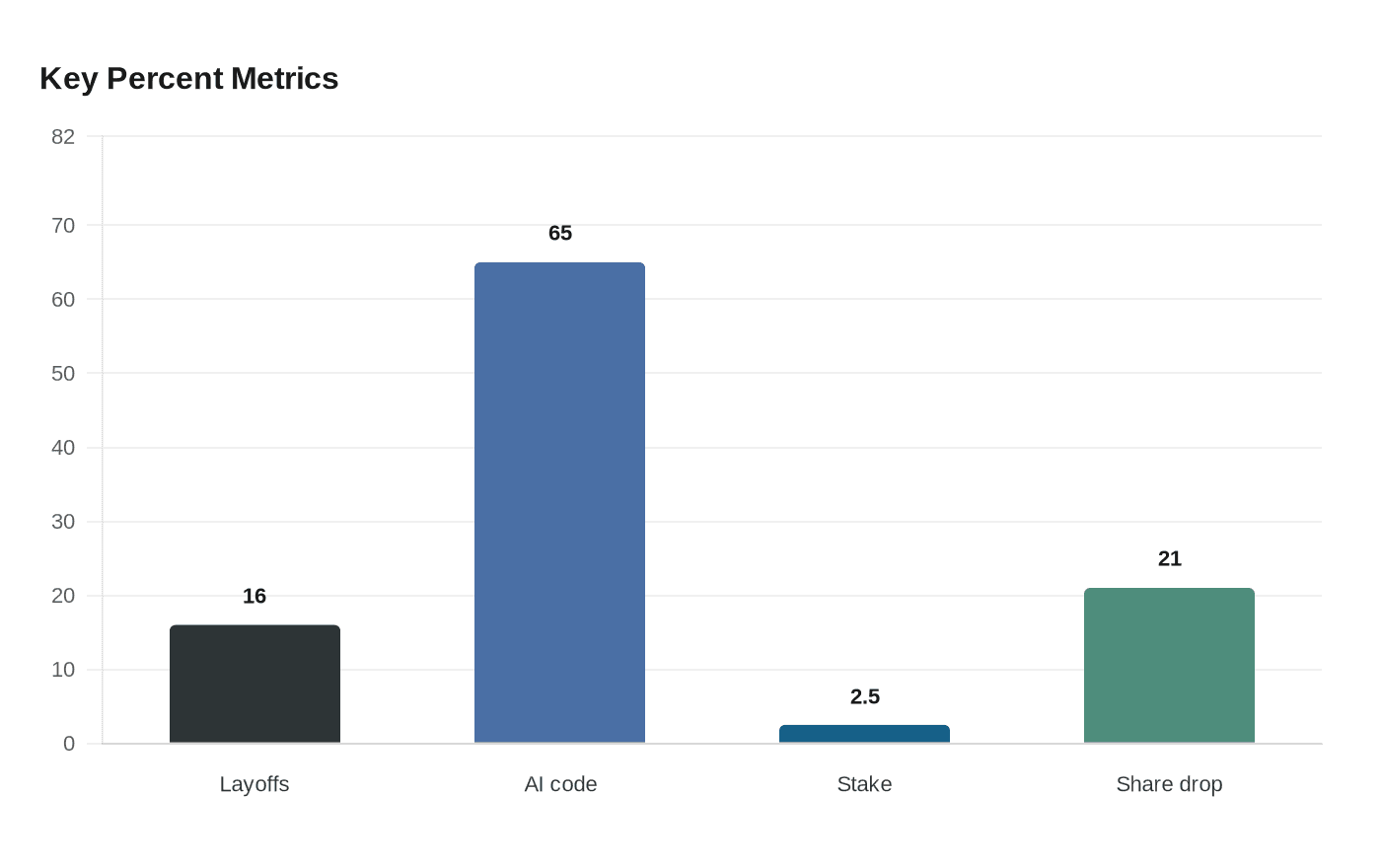
The market has already shown how unforgiving that benchmark can be. After weak guidance in February, monday.com shares fell about 21%, after the company forecast first-quarter revenue of $338 million to $340 million, below analyst estimates of $343 million, and full-year 2026 revenue of $1.452 billion to $1.462 billion, also below expectations. The company said it was shifting messaging and advertising to become more AI-focused and highlighted new capabilities including agents and a vibe feature. By then, the stock had already lost about half its value in 2026 and more than three-quarters from its November 2021 high.
For public SaaS companies, the message is increasingly blunt: AI is no longer just a feature to sell, it is a standard for how many people it takes to build, ship and support the business.
Know something we missed? Have a correction or additional information?
Submit a Tip