Why monday.com should use 30-60-90 plans for faster onboarding
New hires stop guessing when monday.com turns the first 90 days into a shared workflow. The model fits engineers, PMs, and sellers, not just HR.
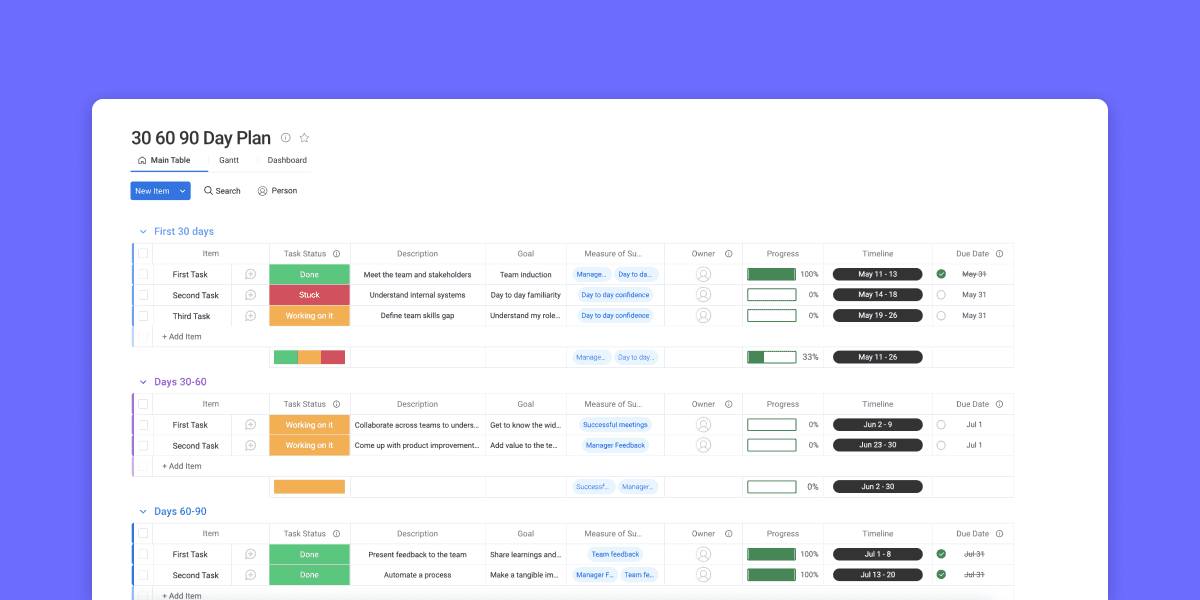
monday.com’s employee onboarding template, published March 20, 2026, calls the first 90 days the operating system for onboarding. New hires need a clear path through that window, with milestones that show what good looks like, who owns each step, and when support should taper off.
Why the first 90 days need a script
Asana’s 30-60-90 day plan guide breaks the first three months into a structured progression. The first 30 days focus on learning company policies, products, team structure, and role expectations. Days 31 through 60 shift into practice, when the new hire starts taking on real work while still learning the team’s rhythms. Days 61 through 90 are about mastering core responsibilities and beginning to contribute to longer-term goals.
monday.com’s March 27, 2026 onboarding guide says a 30-60-90 day roadmap can reduce guesswork and help HR, IT, and hiring managers stay aligned. Its employee onboarding template, published March 20, 2026, says the framework should coordinate cross-functional workflows, assign responsibilities, and track progress.
What the framework means inside monday.com
For engineers, a 30-60-90 plan is a way to get into a new codebase or product area without relying on tribal knowledge. The first month can be about architecture maps, build systems, incident rituals, and the small technical decisions that are easy to miss in a fast-moving SaaS company. By the second month, the engineer should be shipping against real tickets. By the third, they should be moving with enough confidence to own part of a roadmap or release cycle.
For product managers, the same structure forces the company to spell out the context that usually lives in hallway conversations. A PM needs domain background, stakeholder relationships, launch cadence, and a sense of which customers and internal teams matter most. A 30-60-90 plan makes those dependencies visible from the start, which is especially useful in a product organization that keeps adding surface area, including newer bets like monday vibe, which monday.com said in February 2026 reached $1 million in ARR faster than any product in company history.
Sales roles benefit just as much. Territory learning, product fluency, and pipeline expectations all need to be sequenced, or new hires end up pretending to be ramped before they are ready. A strong plan can separate early listening from early selling, then define the point at which the rep is expected to forecast, prospect, and close with less supervision.
The same logic also applies to internal transfers, promotions, and manager changes. Those transitions create the same basic problem as a new hire: smart people need a way to become effective quickly without being overwhelmed. monday.com already sells software designed to coordinate work across teams, so using that mindset on people operations is a natural extension of the product itself.
Why monday.com has to get this right
monday.com is not operating like a small startup that can survive on ad hoc onboarding and tribal knowledge. The company says more than 250,000 customers worldwide use its AI work platform. It reported fourth-quarter 2025 revenue of $333.9 million, up 25% year over year, and full-year 2025 revenue growth of 27% with a 14% non-GAAP operating margin.
The company was founded in 2012, Roy Mann has served as CEO since 2012, and monday.com went public on Nasdaq on June 10, 2021.
How to turn a 30-60-90 plan into actual workflow
The plan works best when it is written like a shared operating document, not a feel-good checklist.
Days 1-30: learn the map
This phase should cover the basics: policies, products, team structure, and role expectations. For monday.com, that can mean product architecture, customer segments, internal tools, escalation paths, and the key people in HR, IT, and the hiring team. A manager should own the plan, a peer or buddy should answer day-to-day questions, and the success signal should be simple: the employee can explain how the team works and where their role fits.
Days 31-60: practice in public
This is the point where the new hire starts doing real work, but with guardrails. Engineers should own smaller tickets or components, product managers should lead defined discovery or launch tasks, and sales hires should work real territory motions with coaching. Weekly check-ins matter here because they show whether support is helping or getting in the way.
Days 61-90: own the lane
The final phase should move from guided work to independent contribution. The employee should be able to handle core responsibilities, speak to priorities without constant translation, and connect day-to-day work to a longer-term goal. Success signals can include shipping without heavy oversight, running a customer or internal meeting end-to-end, or carrying a clear metric or deliverable into the next quarter.
A strong plan also needs visible ownership. Each milestone should have one accountable manager, one backup for process questions, and one check-in cadence. That keeps onboarding from disappearing into a chain of private conversations, which is where confusion usually starts.
monday.com’s March 2026 materials describe onboarding as a cross-functional workflow, not a single HR event, and say the roadmap should work for both in-person and remote teams.
This article was produced by Prism’s automated news system from verified source data, official records, and press releases, then run through automated quality and moderation checks before publishing. The system is built and supervised by the people who set the standards it runs under. Read our full AI policy.
Did this article answer your question?