How to write bug reports Nintendo-style teams can act on fast
The fastest bug reports at Nintendo pin down the build, device, and player state before anyone argues about cause. That precision saves QA, design, localization, and engineering time, and can prevent save-data loss.
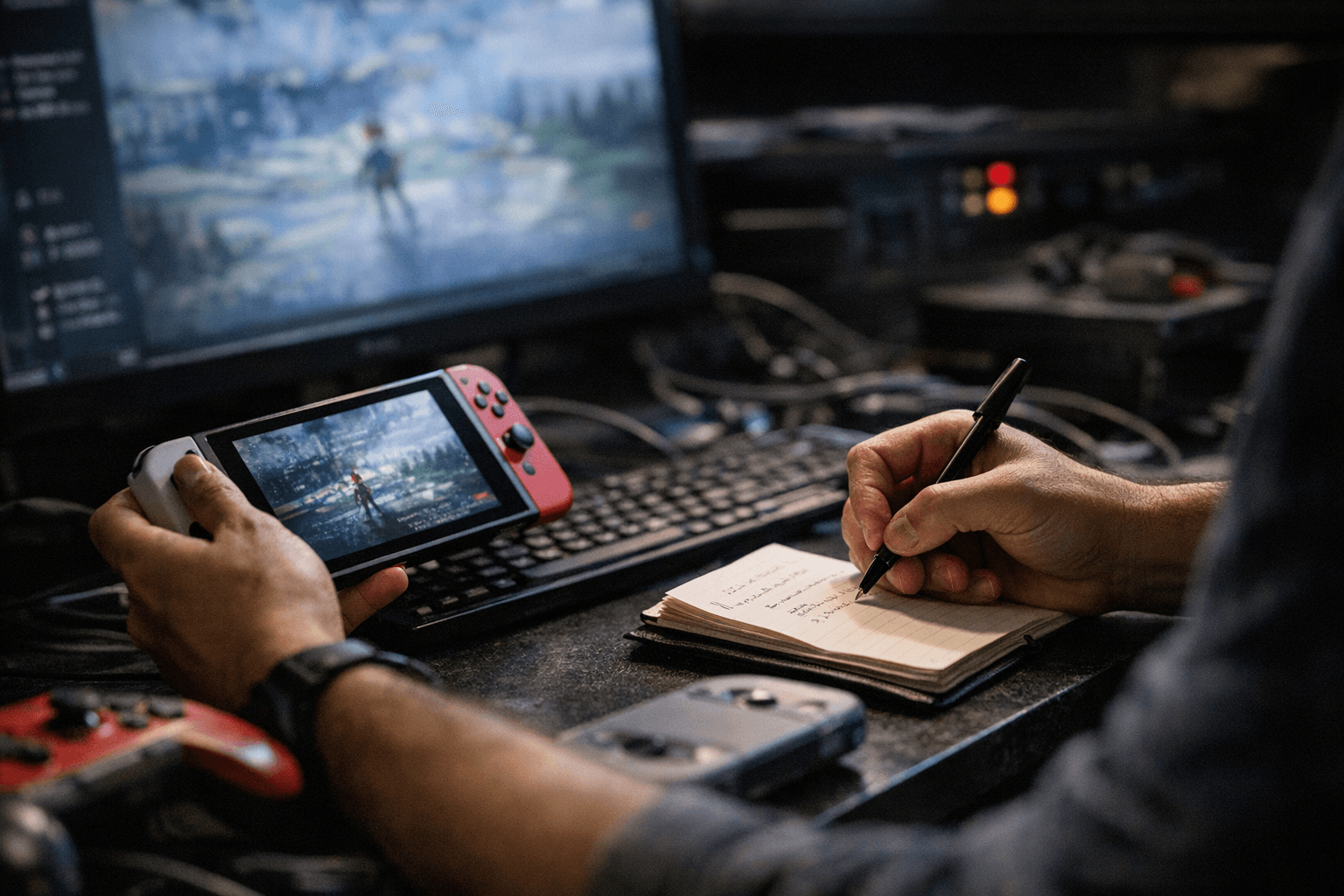
A bug report at Nintendo does not have to sound clever. It has to get fixed.
That is the real standard behind Nintendo-style quality work: the report should turn confusion into action. Nintendo’s own recruiting language frames game development as a process that includes a dedicated QA verification phase, and that phase is not limited to “does it crash.” It is also about reducing user harms, including save-data loss, motion-play injury, guideline noncompliance, legal or regulatory problems, ethical concerns, and photosensitivity issues.
Start with the conditions, not the theory
The strongest reports begin with the exact build, environment, account state, controller setup, language, and save conditions. Those details are not decorative. They are often the difference between a one-off glitch and a real regression, especially when the same behavior may depend on region, saved progress, input method, or a specific controller configuration.
That is why reproduction on the same device and in the same environment matters so much. External QA guidance makes the point plainly: if developers can recreate the issue under the same conditions, they can identify where the problem lives and reduce the odds of seeing the same bug again elsewhere. For a Nintendo-style team, the report is most useful when it narrows the field before anyone starts speculating about root cause.
Write the path like a player would hit it
The next job is to make the reproduction steps painfully clear. A useful report reads like a clean sequence of player actions, with no leaps, no hidden assumptions, and no “do the usual thing” shortcuts. If the bug appears after a save reload, a menu switch, or a language change, say so in order, one action at a time.
That sequence should also include the expected behavior and the actual behavior. The expected result describes what the game should do under intended design; the actual result describes what the player saw, heard, or experienced. If the problem happens every time, say that. If it appears only once in ten tries, say that too. Frequency is part of severity, and severity is part of scheduling.
Evidence helps the report travel faster. Screenshots, video, and logs let a developer, designer, or tester confirm the issue without replaying guesswork in a chat thread. The goal is not to sound technical for its own sake. The goal is to remove the back-and-forth so someone can spend time fixing the bug instead of decoding the ticket.
Separate the symptom from the suspected cause
At Nintendo, that distinction matters because the same visible failure can come from very different parts of production. A player may see text overflow, a broken line break, or a tutorial prompt blocked by UI, but the underlying cause could sit in localization, layout, rendering, or a region-specific formatting rule. A good report names the symptom clearly and then, if needed, flags a suspected cause as a suspicion rather than a conclusion.
That style fits Nintendo’s broader development culture. Developer-facing materials from the company emphasize the unusual details teams hone in on when making products, and bug reporting should reflect that same discipline. Small observations, such as whether the failure only appears in one language or only after a specific save condition, can point the whole team in the right direction.
Make the report usable for localization as well as engineering
Localization is not just translation, and Nintendo of America’s job postings make that plain. One localization manager role says the team provides detailed and summary reports to upper management about localization status and changes. Another technical localization quality role focuses on feedback during quality control, maintaining style guides, terminology lists, version-control history, workflow coordination, and corrective actions.
That means a localization bug report should be written so it reaches the right owner immediately. If text is spilling outside a UI box, if a glyph is missing, if a line break is breaking a message, or if a region-specific format is blocking a prompt, say that directly. The report should make clear whether the problem is in wording, layout, display, or flow, because those are different fixes and different teams.
Nintendo of America’s localization roles also emphasize collaboration with Japanese development teams and other Nintendo subsidiaries. That makes the bug report a cross-language handoff document as much as an internal note. The cleaner the report, the less time teams in Japan, Redmond, Washington, and the wider Americas spend translating confusion into work.
QA, design, and engineering all read the same ticket differently
A well-built report is useful because each discipline extracts something different from it. QA uses it to verify the failure and test for related regressions. Design reads it for clues that a mechanic is confusing, that feedback timing is off, or that the player can get trapped in an unintended state. Engineering uses the same report to isolate the code path, confirm the environment, and reproduce the defect under controlled conditions.
Nintendo’s recruiting materials reinforce that these are distinct tracks, not one blurred responsibility. The company’s QA course is explicitly separate from the game-development course, which is a useful reminder that verification is its own discipline. The better the handoff, the less friction each team absorbs when the bug moves from discovery to fix.
A clean report protects time, budget, and morale
Good bug reporting also has a business effect. Nintendo of America’s localization manager posting says the role tracks project spend, alerts management when deadlines or budgets are at risk, and helps with post-mortem meetings and reports. That is a useful reminder that unclear bugs do not stay inside QA. They ripple into repeated test passes, schedule slips, and expensive rework.
In practice, the best reports are concise but complete, neutral in tone, and specific enough that no one has to guess what happened. They do not accuse. They do not over-explain. They give the team enough structure to move fast, which is exactly how a quality-first company keeps its standards intact without turning every issue into a meeting.
At Nintendo, that unglamorous handoff between discovery and fix is where quality is either protected or diluted. A strong bug report does not just log a defect. It preserves the pace of the whole production pipeline.
This article was produced by Prism’s automated news system from verified source data, official records, and press releases, then run through automated quality and moderation checks before publishing. The system is built and supervised by the people who set the standards it runs under. Read our full AI policy.
Did this article answer your question?
