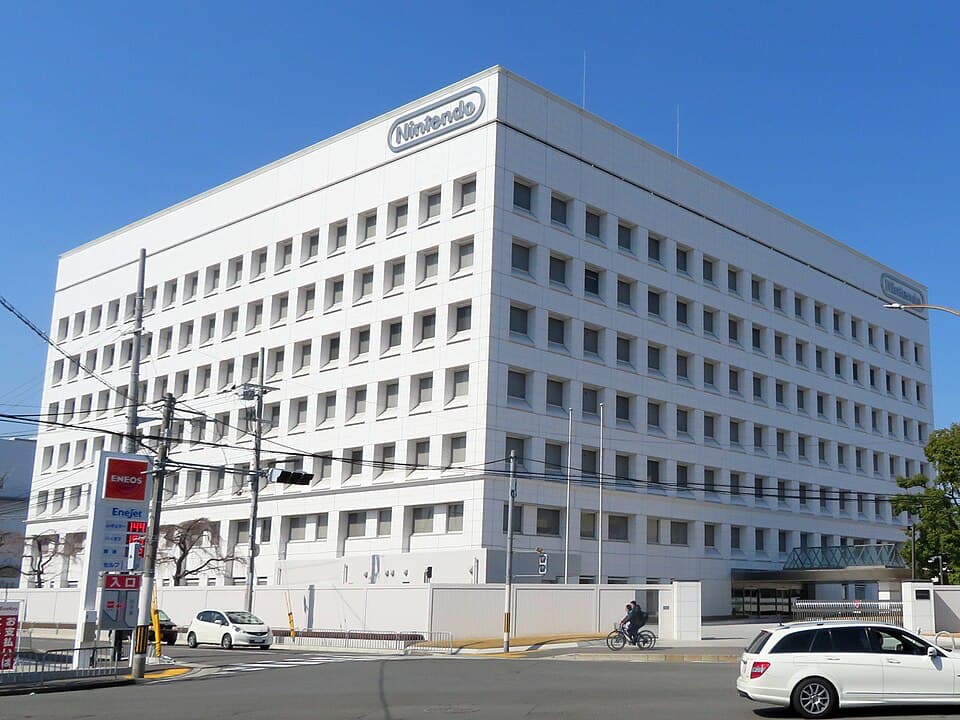
Nintendo showcases inclusion, employee groups, and diversity as business strength
Nintendo’s culture page is more than recruiting copy: it turns inclusion, employee groups and training into a case for why the company can keep talent.
A 10-year average tenure at Nintendo of America is the kind of number that turns a culture page into a credibility test. When paired with the company’s own language about inclusion, mutual respect and employee development, it suggests Nintendo is trying to sell something bigger than brand prestige: a workplace that can keep people for the long haul.
What Nintendo is signaling to candidates
Nintendo’s people-and-culture messaging is built around a simple idea: employees should be able to contribute their knowledge, ideas and perspectives while finding ways forward and delivering with care. That framing matters because it tells prospective hires what the company values inside the building, not just what it ships to consumers. For developers, localization teams, QA, hardware staff and marketers, the message is that creative judgment and collaboration are part of the job, but so is discipline.
The broader signal is that Nintendo wants candidates to see culture as part of the employer brand, not a separate HR brochure. The company says it aims to be a workplace where employees can reach their full potential and be mutually respectful. For a business built on long-lived franchises and cross-functional coordination, that is not a throwaway line. It points to a workplace model where stability, trust and continuity are treated as operational advantages.
Employee resource groups are being used as infrastructure
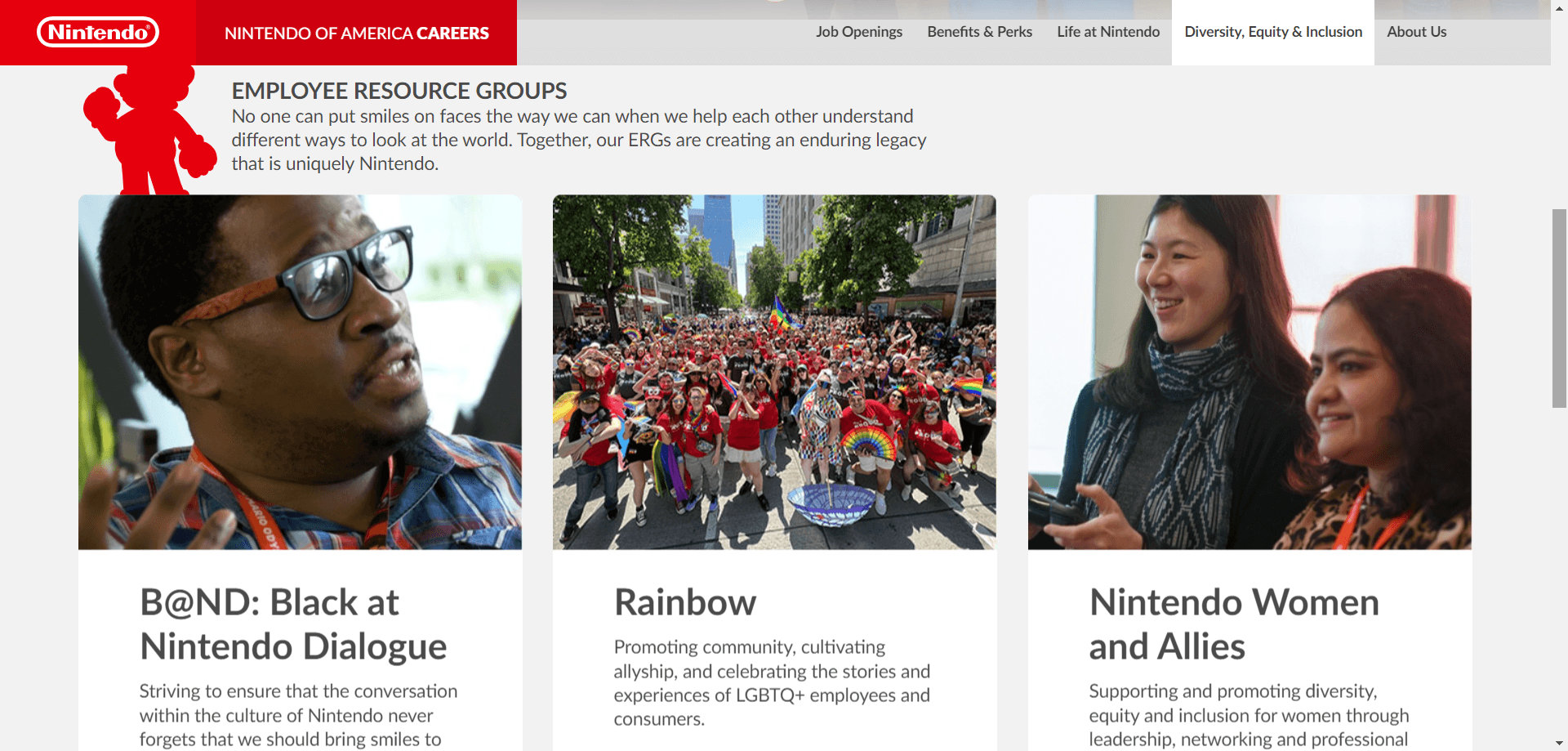
Nintendo of America says it has six employee resource groups, and the lineup is revealing: the Women’s Initiative Network, Rainbow, B@ND for Black employees, eNable for the disabled community, API for Asian and Pacific Islander perspectives, and HOLA for Hispanic and Latin American communities. Those groups are not just social clubs. In practice, they are a sign that Nintendo wants internal communities to help shape belonging, feedback and retention across a large and varied workforce.
That matters in a company where employees often work across disciplines and regions on projects that can span years. Employee groups can create informal support systems, surface blind spots and make it easier for workers to stay engaged through the slower, more iterative parts of game development and publishing. For people inside Nintendo, especially at the U.S. office far from Kyoto, the presence of formal groups suggests that the company understands culture has to be built deliberately, not assumed.
There is also a practical message in the categories Nintendo chose to name. Inclusion is not being framed narrowly around one kind of employee experience. It is being treated as a network of different identities and needs, which is consistent with a company that sells to a global audience with many different expectations, play habits and access needs.
Diversity is presented as a business capability, not a slogan
Nintendo makes one of its clearest claims in plain business language: diversity matters because consumer interests and preferences continue to diversify. That is the key idea prospective employees should take seriously. The company is not saying diversity is only about representation; it is saying a varied workforce helps Nintendo understand its market better and make better decisions.
That framing has real implications inside development, localization, marketing, hardware and operations. In a company with a quality-first reputation, diverse perspectives can reduce blind spots in testing, improve communication across regions and sharpen how products are adapted for different audiences. Nintendo is effectively telling workers that inclusion is part of how the company protects franchise legacy and maintains relevance, not a side project.
The company’s CSR materials deepen that message. Nintendo says its human-rights policy was adopted by a Board of Directors decision after advice from external experts, and that it supports the United Nations Guiding Principles on Business and Human Rights. Nintendo of America employees also receive annual training on the Code of Business Conduct. Taken together, those details show that the company is trying to connect values, governance and daily behavior, which is a stronger signal than broad language about good intentions.
The U.S. footprint gives the culture claims historical weight
Nintendo’s North American operation is not an afterthought. Nintendo of America was established in New York in 1980, moved its headquarters to Redmond, Washington, in 1982, and launched the NES in North America in 1985. That history matters because the culture page is not describing a young subsidiary experimenting with employer branding. It is describing a long-established U.S. organization that has spent decades adapting a Japanese company’s standards for a North American workforce.
That legacy also makes the inclusion message more credible. Nintendo of America says it introduced the Hands Free Controller in 1988 for people with physical limitations, a reminder that accessibility has a real precedent in the company’s U.S. story. For current employees, that history suggests Nintendo’s focus on disability inclusion is not new language added for the present moment. It is part of a longer pattern of trying to think about who gets to play, and by extension, who gets to work there comfortably and productively.
The numbers suggest a sticky employer brand
Nintendo’s company profile says it had 8,572 employees on a global consolidated basis at the end of September 2025, with 3,078 at Nintendo Co., Ltd. alone. That is a large enough workforce for culture to become a management issue rather than a soft benefit. Once a company reaches that scale, employee experience, consistency and internal trust become part of how it protects execution across regions and product lines.
A separate employee-data report adds another layer: average tenure was reported at 14.4 years in Japan, 10 years at Nintendo of America, 11.1 years at Nintendo of Europe and 8.5 years at Nintendo Australia. Those are not the numbers of a company built on constant churn. If those figures hold, they suggest Nintendo’s culture, compensation mix and internal mobility may be giving it a stickier employee base than many game-industry employers, where burnout and turnover often break continuity before a project ships.
For prospective hires, that may be the sharpest takeaway of all. Nintendo is not just asking people to join a famous brand. It is asking them to buy into a workplace where inclusion is treated as an operating principle, employee groups are part of the structure, and diversity is framed as a source of business strength. In an industry where talent can leave at any time, that is a message aimed squarely at permanence.
This article was produced by Prism’s automated news system from verified source data, official records, and press releases, then run through automated quality and moderation checks before publishing. The system is built and supervised by the people who set the standards it runs under. Read our full AI policy.
Did this article answer your question?