Nintendo Tomodachi Life Team Used Idea Board, Near Misses Over Schedule
A team-wide idea board kept Tomodachi Life inventive, but it also pushed Nintendo right up against the schedule, forcing hard choices about what gave the game its character.
The idea board was the real collaboration engine
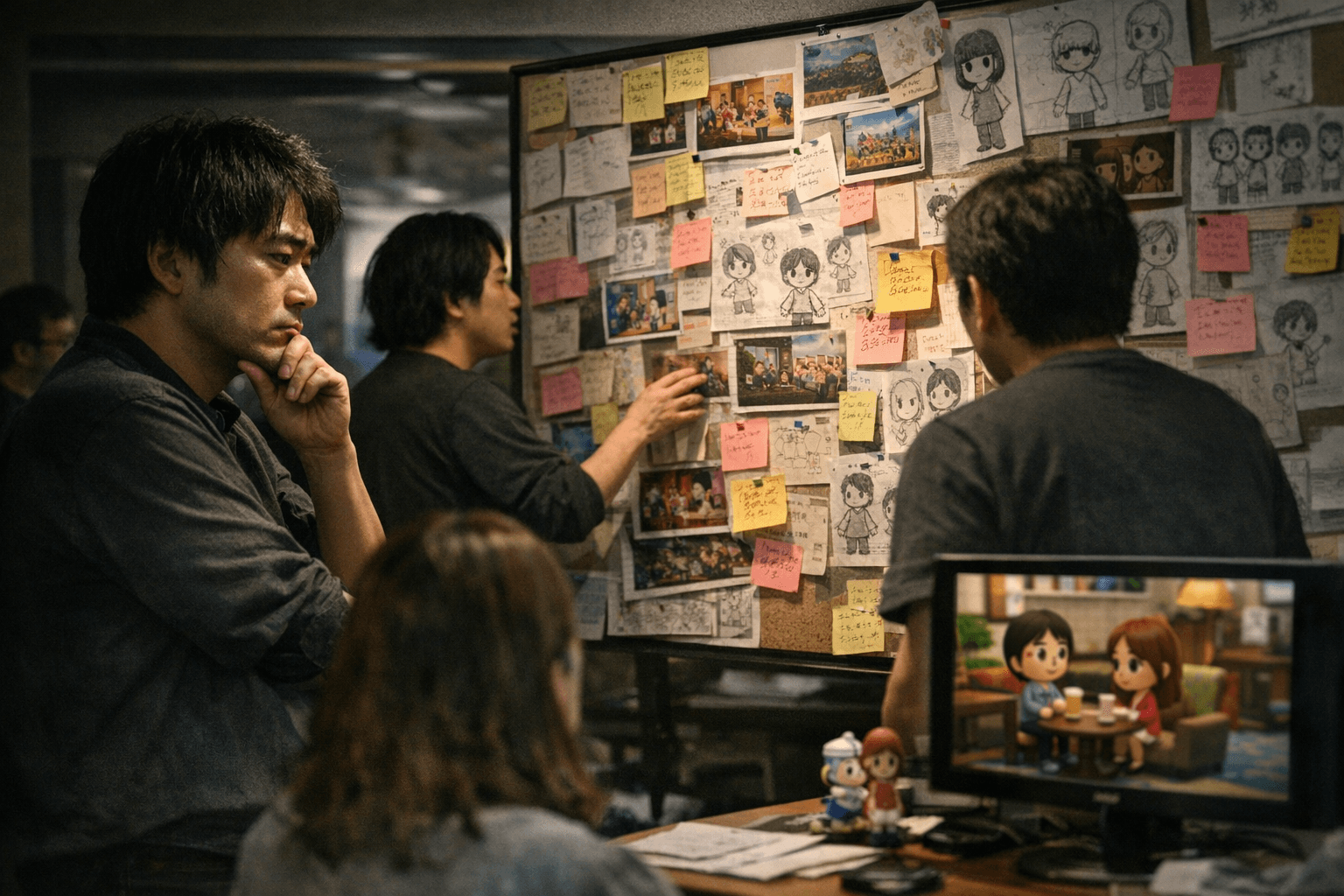
Daisuke Kageyama’s biggest reveal is simple and revealing: the Tomodachi Life team set up an idea board that anyone on development could use, and ideas did not stay in one department for long. A concept posted by one person could be picked up by someone in a completely different role and turned into a feature, which tells you a lot about how Nintendo likes to build these games. It is not a rigid pipeline where each group protects its own lane; it is a cross-functional system where programmers, artists, planners, and leads are expected to react to good ideas wherever they appear.
That matters because Tomodachi Life is built from small, strange, human moments rather than a single linear campaign. The team’s workflow had to support dozens of scenario beats, room details, and tiny interactions, all of which could be improved by someone on the ground who noticed a better joke, a funnier animation, or a more distinctive visual touch. Kageyama’s description suggests Nintendo still values a culture where creative ownership can move sideways through the team, not just downward from the top.
Why the late-stage pressure was so dangerous
The same system that encouraged invention also created real production pressure. Kageyama says that once an idea was posted, bringing it to life required a proper workflow, and that became harder as the project grew and the schedule tightened. Directors and leads were focused on getting development across the finish line, while passionate staff members kept arguing that certain ideas could not be dropped. That is the familiar tension in shipped games: the more people care, the harder it can be to say no.
This is where the story becomes more than a pleasant behind-the-scenes anecdote. The team was not just juggling scope in the abstract. It was making judgment calls under deadline pressure, with some people thinking, correctly, that a feature might not make it, and others pushing back because they believed the game would lose something essential if it disappeared. For Nintendo employees, especially anyone working near QA, planning, or production, that is the real lesson: creative enthusiasm is an asset only if someone also protects the schedule from collapsing under it.
Mii News nearly fell out of the game, and that tells you a lot
The clearest example is Mii News. The team almost dropped it because there was not enough time to fit it in, but a younger designer argued that without it, Tomodachi Life would not feel complete and would lose part of its character. That is not just a feature-level decision. It is a statement about how Nintendo treats series identity, where a quirky recurring system can matter as much as a bigger technical upgrade.
That kind of choice also shows how legacy works inside the company. Newer team members who grew up with Tomodachi Life on Nintendo DS and Nintendo 3DS came in with strong opinions about what had to stay, and their familiarity with the series became a creative force rather than a nostalgic distraction. In practice, that means Nintendo’s development culture can reward staff who know the emotional shorthand of a franchise, because they are often the ones best positioned to defend the details that fans immediately recognize.
The room details show how ambition can spill into chaos
Kageyama also admits the team may have gone a bit overboard with room design. Those little touches, while energizing for the developers, created headaches for the graphics team as more objects moved, made noise, and filled scenes with extra effects. Ueno’s description of the project getting “pretty wild” makes the same point from another angle: enthusiasm was not abstract, it showed up in smoke, motion, sound, and visual clutter that had to be built, tested, and shipped.
For a workplace audience, this is one of the most useful parts of the interview because it connects taste to labor. Every extra joke in a room, every odd sound effect, and every bit of environmental nonsense someone insisted on keeping became extra work for another team somewhere else. That is exactly how Nintendo’s quality-first reputation is built, but it is also why the company’s best games often seem to emerge from a constant negotiation between delight and cost.
What this says about Nintendo’s preferred development culture
Taken together, the interview points to a Nintendo culture that trusts people closest to the work, but does not let hierarchy disappear. Leaders were still trying to get development over the line, and they were still the ones weighing whether something had to be cut. At the same time, the team clearly valued people who would step up, own a feature, and argue that it mattered to the soul of the game. That combination, structure plus trust, is what kept Tomodachi Life from becoming either over-managed or completely undisciplined.
That balance is especially relevant for Nintendo because its biggest franchises are judged not only on polish, but on personality. A game like Tomodachi Life lives or dies on tiny, unmistakable choices that make it feel odd, warm, and handmade. The interview shows that those qualities do not appear by accident. They come from a development culture that lets ideas travel across roles, then asks people to fight for the right ones all the way to the end.
Know something we missed? Have a correction or additional information?
Submit a Tip