Nintendo's Indie World Spotlight Highlights MotionRec Launch and Internal Curation Pipeline
PLAYISM's 16-language MotionRec reached Nintendo Switch on April 2 as Nintendo's Topics spotlight revealed the coordinated pipeline every indie feature requires behind the scenes.
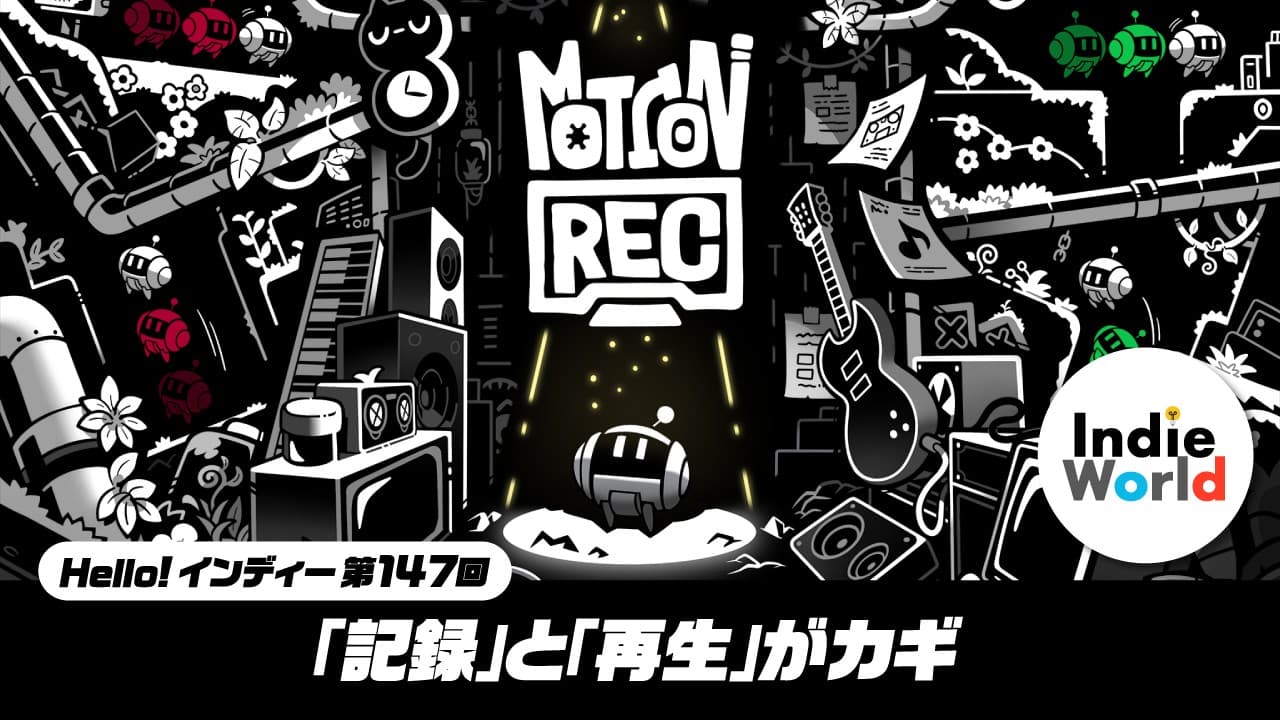
When Nintendo's Japan-facing Topics page published its Indie World writeup on MotionRec on April 2, the spotlight went live alongside the game's actual Switch release — meaning every team involved had to be finished at the same time. That simultaneity is what makes Indie World features operationally significant inside Nintendo, and MotionRec is a clean case study in how the pipeline runs.
MotionRec is a tape recorder-themed puzzle action game developed by HANDSUM and published by PLAYISM. The game's protagonist is a small robot named Rec who progresses through platform stages by recording and playing back his own movements. Previously released on Steam in October 2025, the title arrived on Nintendo Switch and PlayStation 5 on April 2 at $9.99, with a 20% launch discount applied at release. The Switch build comes in at 214 MB.
The localization scope signals exactly how much coordinated work precedes a Topics spotlight. PLAYISM shipped MotionRec in 16 languages: Japanese, English, Traditional Chinese, Simplified Chinese, Korean, French, Italian, German, Spanish for both Spain and Latin America, Polish, Portuguese for Portugal and Brazil, Russian, Turkish, and Ukrainian. Every one of those language builds had to clear Nintendo's lotcheck certification process before the eShop page could go live. For a small studio porting from Steam to console, that string count creates real dependency on publisher pipelines and on Nintendo's own metadata validation cycle.
The Topics entry itself represents the downstream convergence of parallel workstreams. For eShop operations, a same-day spotlight requires confirmed pricing across regions, verified availability windows, and a validated match between the certified build and the version the Topics entry links to. If those elements do not align, the feature either slips or goes live with a broken link; neither is acceptable when the platform holder has put its name on the recommendation.
QA's scope narrows precisely in this context. Regression priority during an indie spotlight shifts to store-page experience: download size accuracy, launch-sale pricing by region, and build version parity between what passed certification and what Nintendo's editorial team referenced. Those are distinct test cases from a standard stability pass and require a separate sign-off sequence timed to the editorial calendar.
For localization teams, projects at MotionRec's scale offer a structural advantage. The content volume is low relative to a first-party release, but the workflow from string freeze to eShop publication follows the same sequence. Efficient pipelines built on a 214 MB indie with 16 language packs are directly transferable to larger launches.
Developer relations, meanwhile, sees the April 2 MotionRec feature as evidence of something broader. Nintendo's willingness to spotlight a $9.99 title from a small Japanese studio is an active investment in software breadth, not a passive one — and it demands a fully operational cross-team process on Nintendo's side that runs identically regardless of whether the title carries a nine-dollar price tag or a franchise banner above it.
This article was produced by Prism’s automated news system from verified source data, official records, and press releases, then run through automated quality and moderation checks before publishing. The system is built and supervised by the people who set the standards it runs under. Read our full AI policy.
Did this article answer your question?
