Super Mario Galaxy Movie Sets Record as 2026's Biggest US Debut
The Super Mario Galaxy Movie debuted to $190M domestically and $372.5M globally, putting Nintendo's licensing, QA, and brand teams on notice that the IP machine just shifted into a higher gear.

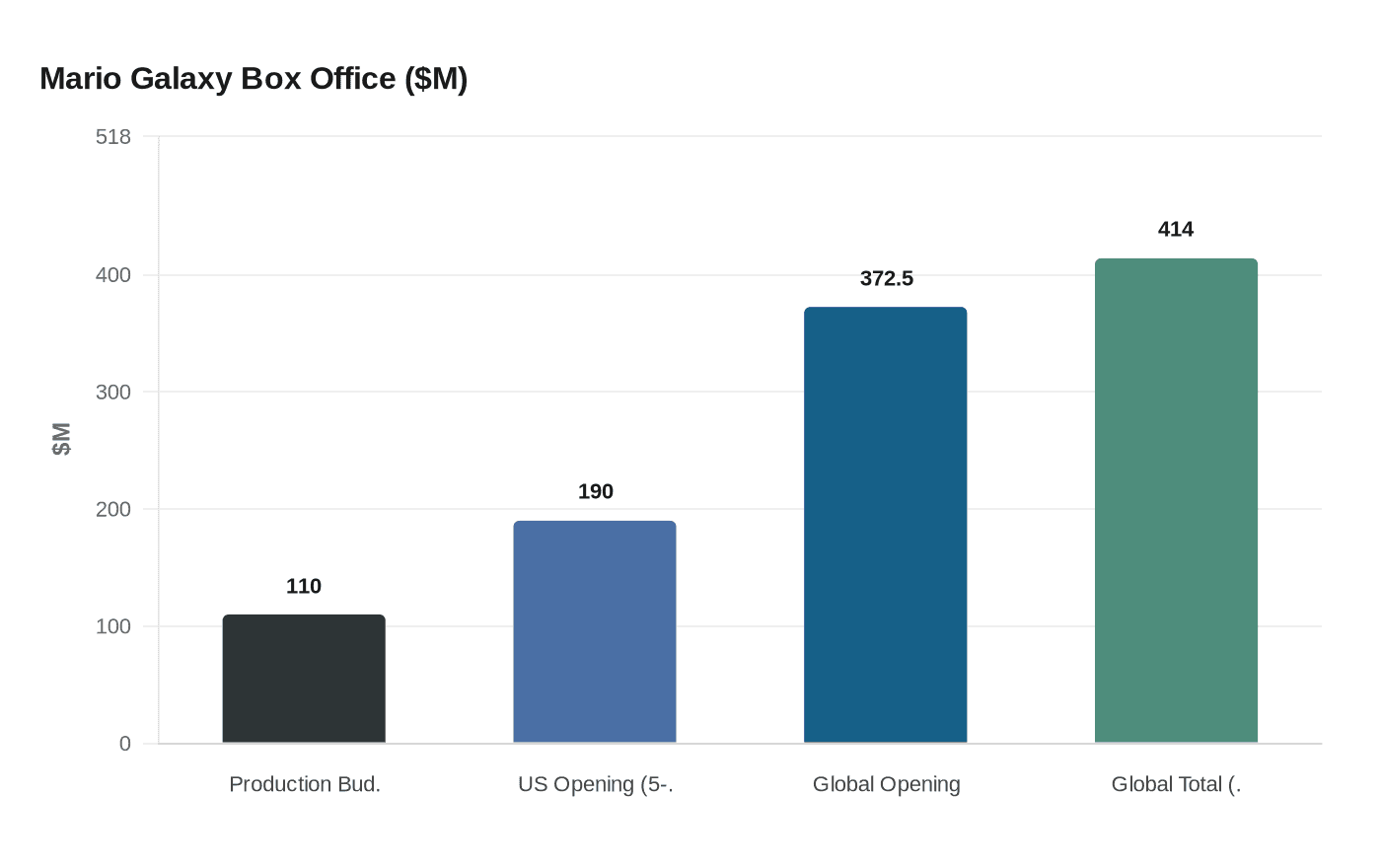
The Super Mario Galaxy Movie pulled in $190 million domestically over its five-day Easter opening and $372.5 million worldwide, clearing 2026's previous best debut, "Project Hail Mary," by more than double. Produced on a $110 million budget through the Nintendo-Illumination-Universal partnership, the film crossed $414 million globally by April 6, ranking as the fifth-biggest global opening for an animated film of all time and the second-biggest opening ever for a film based on a video game. For the teams inside Nintendo who spent months building toward this window, those numbers are not just a win to celebrate; they are a mandate to execute faster and at greater scale.
The opening-week campaign showed just how coordinated the cross-functional machinery had become. MAR10 Day on March 10 generated more than 160 million media impressions in a single day, timed to a Nintendo Direct showcasing the film's final trailer and the simultaneous launch of ticket sales in Japan. Physical activations placed Peach's stained-glass window at New York's Columbus Circle and a giant Luma sculpture at LA's Westfield Century City mall, while exclusive theater merchandise, including Bowser's cauldron popcorn bucket, the new Guinness World Record holder for smallest popcorn container, drove concession lines and social chatter. Every one of those touchpoints required approvals, legal sign-offs, and asset localization from teams across Nintendo's global offices.
The operational footprint of a $372 million opening stretches well beyond marketing. Licensing and consumer products teams face accelerated SKU fulfillment cycles as retailers demand restocks for high-velocity merchandise. QA and certification teams absorb compressed submission windows whenever in-game promotional content, cosmetic drops, or companion app updates need to clear platform holders within a theatrical release window. Localization staff handling trailers, in-game tie-ins, or regional marketing assets work against the same calendar, with legal checks and region-specific compliance reviews running in parallel. The sequel's first full day globally, $68.4 million, outpaced the original Super Mario Bros. Movie's first-day figure of $66.4 million, a signal that audience appetite is growing rather than plateauing, which sustains the pressure on those pipelines well into the film's theatrical run.
For franchise and IP producers, the record reinforces Nintendo's negotiating position on every multimedia deal in development. The company that once treated character licensing with near-surgical caution now has two films opening to over $350 million globally, a distinction no other animated franchise holds. That leverage shapes sequel conversations with Illumination, live-experience expansions at Universal theme parks, and the volume of inbound licensing requests that brand management teams will need to triage. The harder internal question is how IP stewards maintain the quality controls that produced this result when commercial scale creates pressure to approve faster and license more broadly. The $190 million answer is that the demand is real; the Monday morning task is building the approval infrastructure to match it.
Know something we missed? Have a correction or additional information?
Submit a Tip