Nintendo’s workforce data shows long tenures, high retention, strong leave return rates
Nintendo's latest workforce snapshot points to a company built for staying power: long tenure, low turnover, and unusually high leave return rates across its regional offices.
Nintendo’s workforce data shows a company that keeps people
Nintendo’s clearest internal signal is not a slogan about culture. It is the employee data showing that people stay, return, and keep building careers inside the company. Across Japan, the United States, Europe, and Australia, Nintendo’s April 2024 through March 2025 workforce snapshot points to long service, low churn in the largest markets, and a strong return-to-work pattern after parental leave.
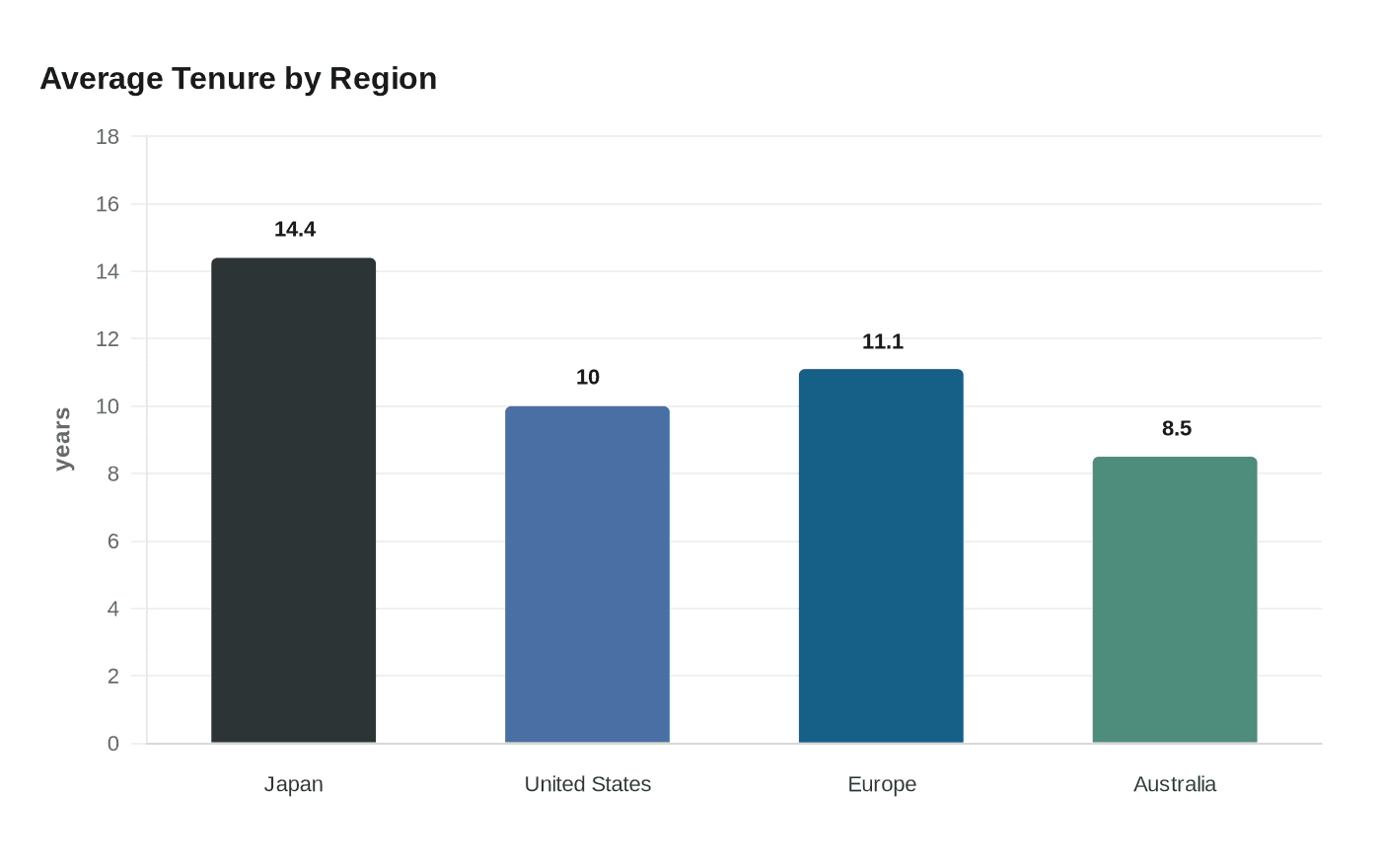
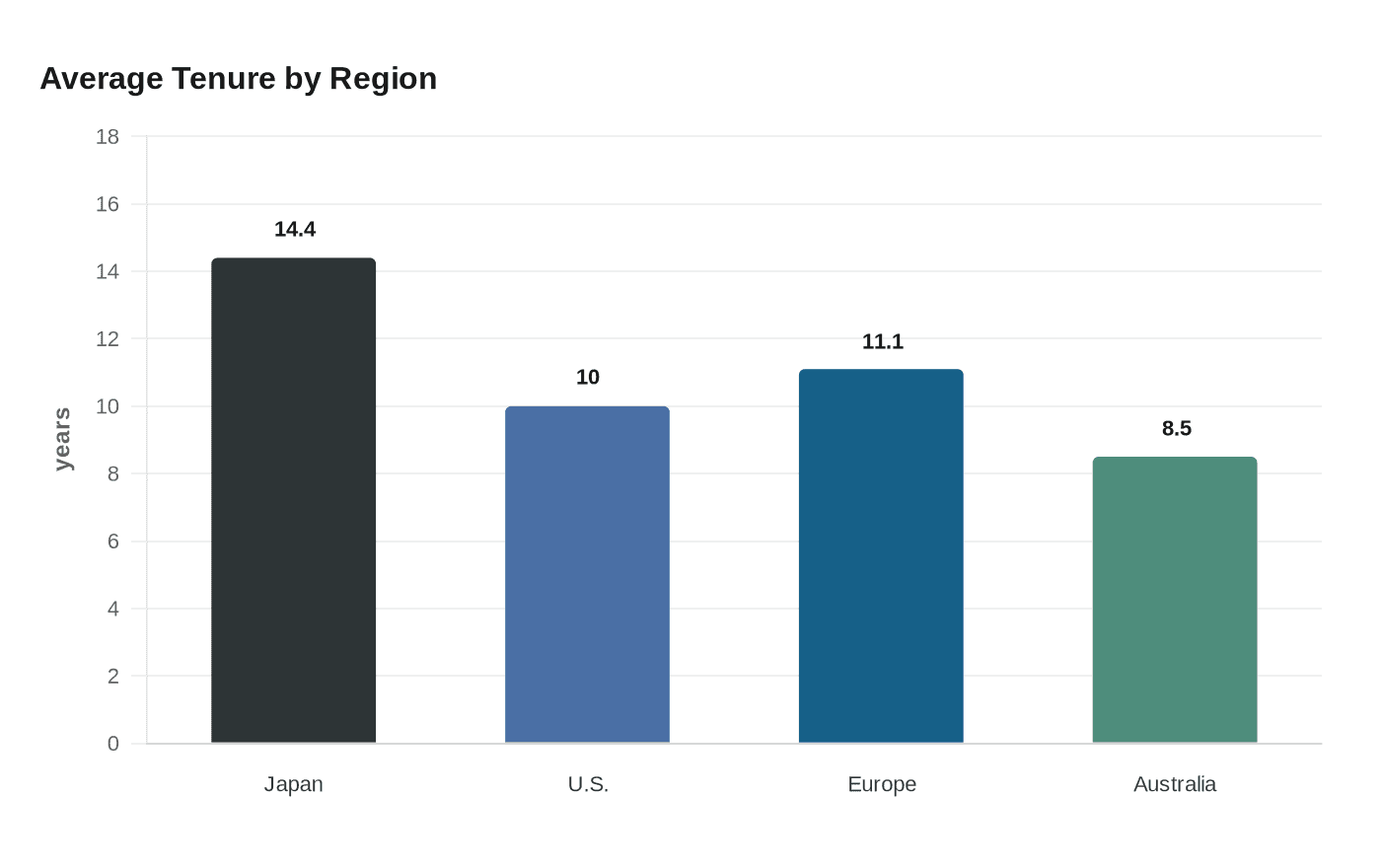
That matters because Nintendo is not hiring for short bursts of output. It is a business built on franchise continuity, hardware transitions, and quality standards that depend on institutional memory. When average tenure runs 14.4 years in Japan, 10.0 years in the United States, 11.1 years in Europe, and 8.5 years in Australia, the company is showing that it has teams that can carry knowledge across multiple product cycles instead of resetting every few years.
What the company is actually reporting
Nintendo’s CSR employee data for the April 2024 through March 2025 reporting period covers Japan, the United States, Europe, and Australia. The page also says that, from 2024 onward, reporting has been expanded to the Nintendo group, with some exceptions for environmental metrics. That makes the newer workforce numbers more useful than older snapshots for understanding how Nintendo operates across regions.
The company reported 5,630 permanent employees in the workforce snapshot tied to this period, along with 455 full-time hires. Hiring was spread across the business, with 182 new hires in Japan, 237 in the United States, 28 in Europe, and 8 in Australia. That is a meaningful amount of growth for a company known more for continuity than rapid expansion.
Turnover stayed low in Japan at 1.9 percent. It was 5.1 percent in the United States, 6.0 percent in Europe, and 16.7 percent in Australia. The regional spread matters because it shows this is not one monolithic labor market. Nintendo’s offices move at different speeds, but the overall pattern still leans toward stability rather than constant replacement.
Why the tenure numbers matter for workers
Average tenure is the strongest signal in the package because it tells current employees and candidates how work is likely to be rewarded. At Nintendo, long service appears to be normal rather than exceptional, especially in Japan, where the average employee has been with the company for 14.4 years. Even in the United States and Europe, averages of 10.0 and 11.1 years suggest careers that can stretch across multiple hardware generations and product eras.
For people inside the company, that usually means advancement depends less on job hopping and more on earning trust over time. In a hardware and software business, that can be a benefit if you want deep craftsmanship and durable teams. It can also be a warning if you are looking for fast-moving promotion ladders, because long-tenure organizations tend to reward patience, consistency, and alignment with established standards.
This is where Nintendo’s brand of quality-first development becomes visible in the labor data. A company that protects franchise continuity and expects reliable execution is likely to value employees who can carry lessons from one project to the next. That is especially true when the work touches familiar series, tightly managed release schedules, or cross-functional coordination between Japan and overseas offices.
Leave return rates point to a more stable working life
Nintendo’s parental leave return data is another concrete measure of workplace stability. The company reported a 100 percent post-leave return rate in Japan and Australia, 97.5 percent in the United States, and 100 percent in Europe. Those are unusually strong numbers, and they suggest that leave is not treated as a career-ending interruption.
For employees, that matters in daily life. It tells parents that stepping away for caregiving does not automatically mean falling off the path internally. It also tells managers something important: retention is not only about compensation or creative prestige, but about whether people can handle real life and still come back to meaningful work.
The page also reports strong paid-leave utilization and regular career-development reviews. The review rate is 100 percent in Japan, 87.0 percent in the United States, 90.0 percent in Europe, and 100 percent in Australia. Taken together, those figures suggest Nintendo treats formal development conversations as part of normal operations rather than as an optional perk, which is exactly the kind of process that helps keep long-tenured teams from going stale.
Nintendo’s structure helps explain the pattern
The retention story makes more sense when you look at Nintendo’s history. The company was founded in 1889, a scale of longevity that still shapes how it presents itself today. Nintendo of America Inc. was established in New York in 1980, then in Washington state in 1982. Nintendo of Europe was established in Germany in 1990, and the company’s current structure includes Nintendo of America Inc., Nintendo of Canada Ltd., Nintendo of Europe SE, Nintendo Australia Pty Limited, Nintendo of Korea Co., Ltd., Nintendo of Hong Kong Limited, Nintendo of Taiwan Co., Ltd., and Nintendo Singapore Pte. Ltd.
That is not a startup-style footprint. It is a mature multinational business built around a Kyoto headquarters and long-running regional operations. Nintendo’s company profile identifies its headquarters in Kyoto, Japan, and says its business is the manufacture and sale of home entertainment products. The opening of the Nintendo Museum in Uji, Kyoto, in 2024 reinforces how much the brand leans on institutional memory and continuity, not just nostalgia.
The company’s FY2025 annual report, dated July 7, 2025, covers the fiscal year ended March 31, 2025. That puts the employee snapshot in the same broad reporting frame as Nintendo’s most recent annual disclosure, making the workforce data a useful companion to the company’s financial and operational picture.
What managers should take from it
Nintendo’s numbers do not say every office is identical. The Australia turnover rate of 16.7 percent is a reminder that local labor markets and regional dynamics still matter. But the overall shape of the data is clear: Nintendo appears to favor stable teams, long horizons, and a relatively durable internal knowledge base.
That has direct implications for anyone managing creative work inside the company. In an organization tied to legacy franchises and exacting standards, deep bench strength is a competitive advantage. Long service, high leave return rates, and near-universal career review coverage are not decorative human resources metrics. They are signs that Nintendo is trying to keep expertise in-house long enough for it to compound, which is often how the company protects quality across generations of hardware and software.
This article was produced by Prism’s automated news system from verified source data, official records, and press releases, then run through automated quality and moderation checks before publishing. The system is built and supervised by the people who set the standards it runs under. Read our full AI policy.
Did this article answer your question?
