Domino's CEO succession adds pressure to Pizza Hut's turnaround plans
Domino's is changing CEOs on Oct. 1 while Pizza Hut is being sold for $2.7 billion, raising the stakes on price, speed and digital ordering.

Domino's said on June 22 that Joe Jordan will become chief executive officer on October 1, 2026, with Russell Weiner moving into the role of executive chairman. For Pizza Hut employees, the handoff matters because Domino's remains the category leader, and shifts at the top of the market's strongest rival can quickly reshape pricing, delivery expectations and the pace of promotion wars.
The succession comes just days after Yum! Brands announced on June 16 that it will sell Pizza Hut for $2.7 billion in two pieces, with LongRange Capital buying Pizza Hut outside mainland China for $1.5 billion and Yum China Holdings acquiring Pizza Hut China for $1.2 billion. Yum said the move was meant to help Pizza Hut reach its full potential and benefit franchisees, consumers and employees, but it also underscored the pressure on a brand that has spent years fighting for traction in a crowded pizza market.
Domino's framed its leadership change as continuity, not a reset. Jordan has spent nearly 15 years at the company across marketing, U.S. and international operations, technology and franchisee support, a background that points to more of the same emphasis on execution, digital ordering and store-level discipline. In the company's succession announcement, Domino's described itself as the largest pizza company in the world.

The competitive pressure is already visible in the numbers. Restaurant Business reported that Domino's U.S. same-store sales rose 3.7% in 2025 and that the chain gained a point of market share over rivals. Another analysis found Domino's accounted for 30% of the fast-food pizza market last year, up from 26% in 2019, while its share of sales from the 10 largest pizza chains climbed from 32% to 36%.
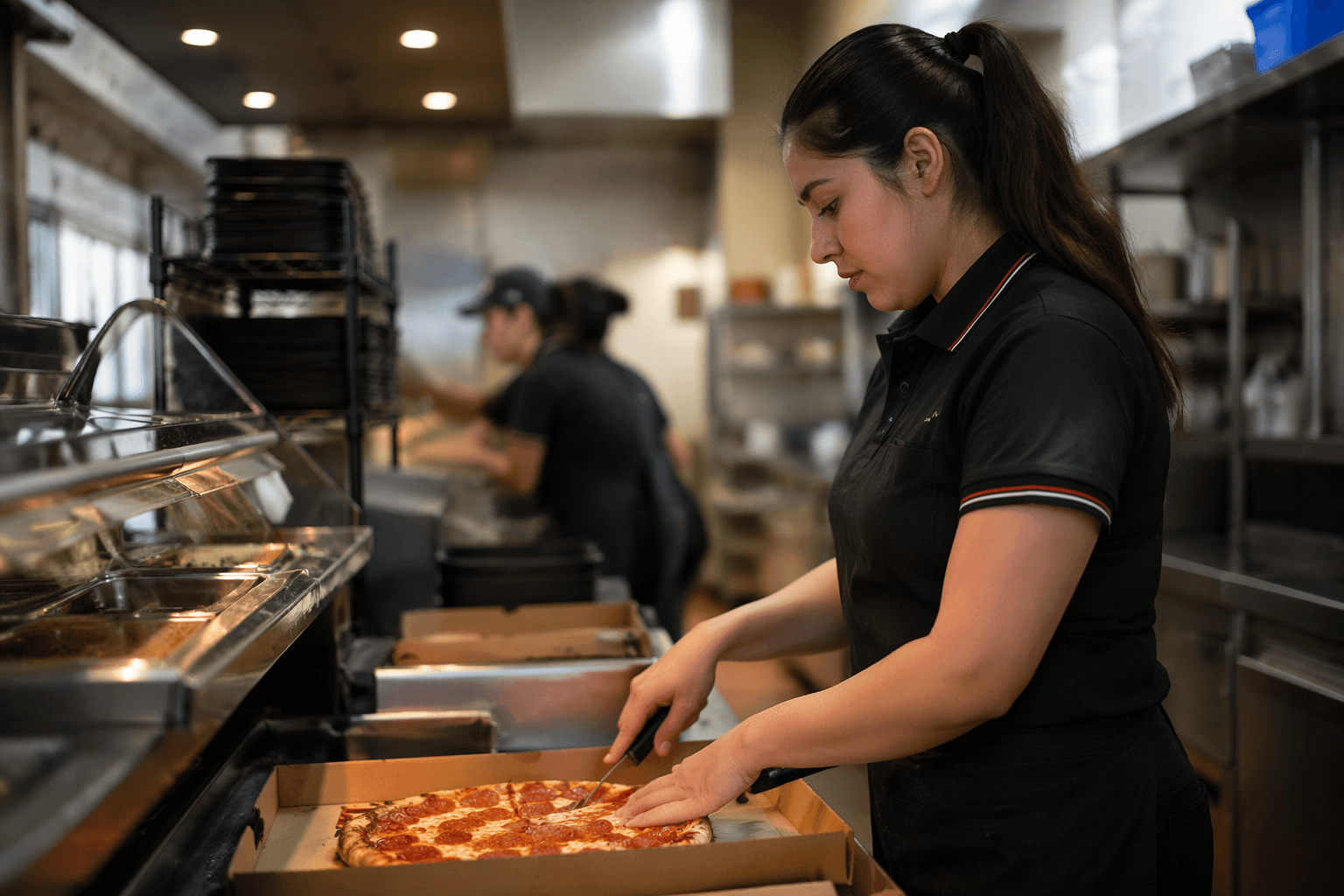
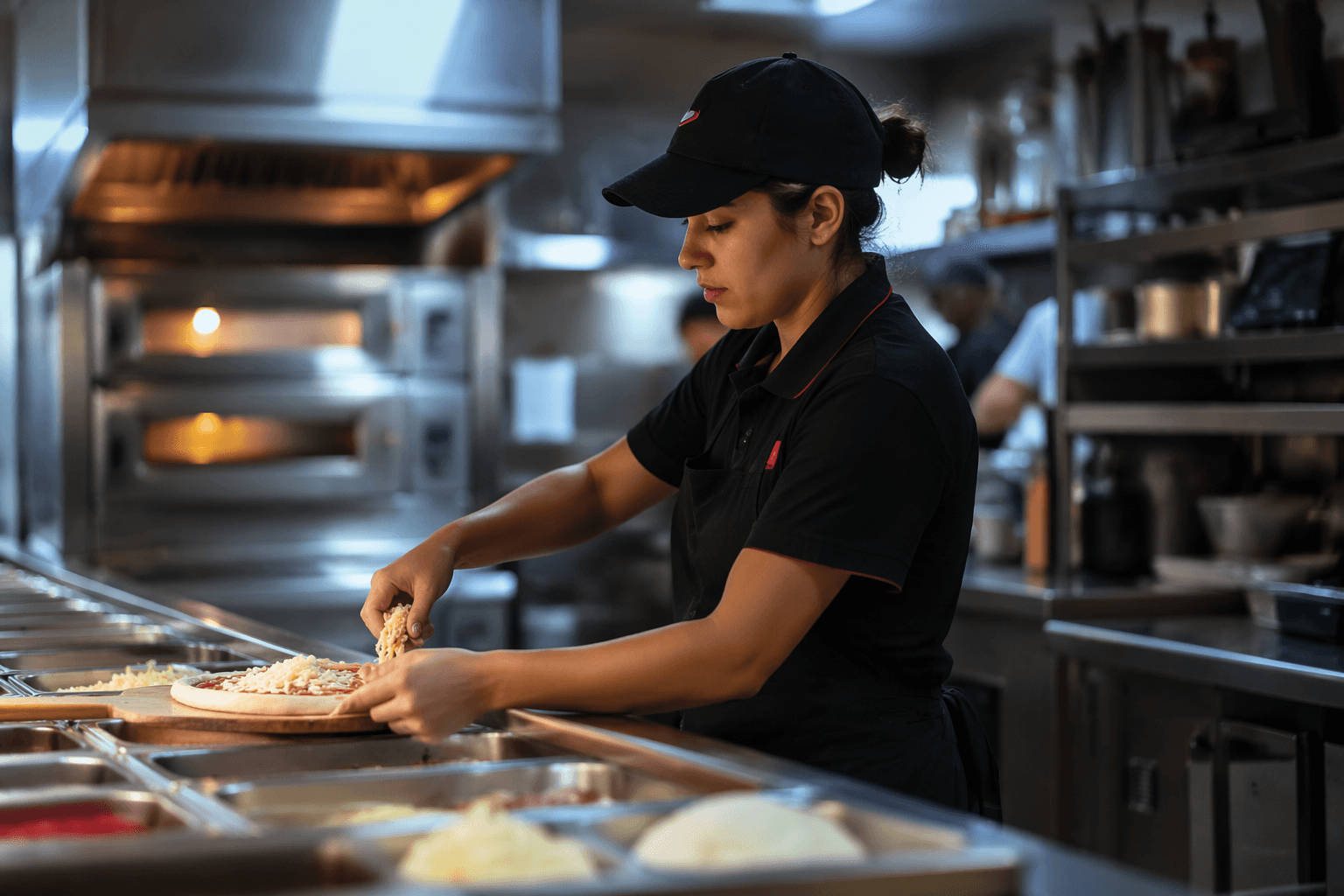
That matters on the Pizza Hut floor. When Domino's pushes harder on value, speed or app-driven ordering, Pizza Hut operators often feel it in customer complaints, coupon questions and pressure from local managers to tighten ticket times and keep labor in the right places. For drivers, kitchen crews and shift managers, the response usually shows up as more focus on delivery timing, order accuracy and how quickly a store can explain a deal without slowing down the line.
The market around them is still huge, and unforgiving. Statista estimated the U.S. pizza restaurant industry at just over $50 billion in 2024, with more than 74,000 pizza restaurants competing for the same customers. In that kind of field, a CEO change at the category leader can ripple far beyond one corporate boardroom and straight into the workday at Pizza Hut stores.
This article was produced by Prism’s automated news system from verified source data, official records, and press releases, then run through automated quality and moderation checks before publishing. The system is built and supervised by the people who set the standards it runs under. Read our full AI policy.
Did this article answer your question?